
Hawaiian Hawk
Buteo solitarius
Order: Accipitriformes / Family: Accipitridae
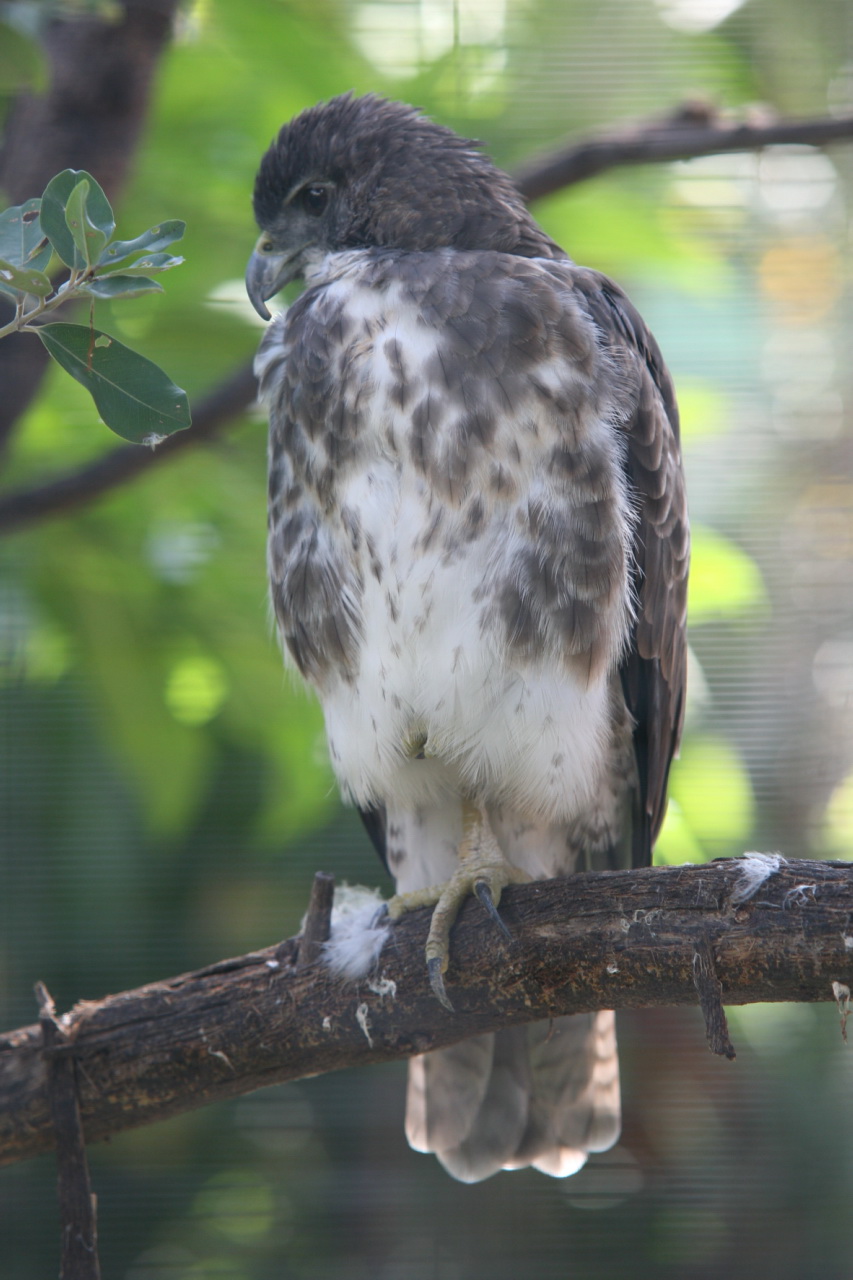
Wikimedia Commons
About the Hawaiian Hawk
The Hawaiian Hawk, scientifically known as Buteo solitarius, is a raptor endemic to the islands of Hawaii, specifically the Big Island. This bird holds a significant place in Hawaiian culture and mythology, often seen as a symbol of royalty. As a member of the Accipitridae family, the Hawaiian Hawk is a vital part of the ecosystem, acting as both predator and scavenger. It plays a crucial role in controlling the populations of various small mammals and birds, thus maintaining ecological balance. This hawk is a medium-sized bird of prey, with females typically larger than males, a common trait among raptors. The Hawaiian Hawk exhibits two distinct color morphs: a dark morph and a light morph, with the former being more prevalent. The dark morph showcases a rich, chocolate-brown plumage throughout, whereas the light morph has a lighter, buff-colored underbelly with brown streaking. Despite its limited range, the Hawaiian Hawk is a versatile hunter, adept in various environments from dense forests to open fields. It primarily inhabits the Big Island, though historical records suggest that it once roamed other islands. Its presence in diverse habitats illustrates its adaptability. The Hawaiian Hawk's ecological role extends beyond predation. As an apex predator, it influences the distribution and behavior of other species, contributing to the overall health of the ecosystem. Seasonal behaviors of the Hawaiian Hawk include increased vocalization during the breeding season, which occurs from March to September. During this period, these hawks become more territorial and visible as they engage in courtship displays, often involving aerial acrobatics and vocal exchanges.
The Hawaiian Hawk belongs to the family Accipitridae, within the order Accipitriformes. These birds typically live average 10-15 years, with a maximum recorded of 18 years..
How to Identify a Hawaiian Hawk
The Hawaiian Hawk is a medium-sized raptor, typically measuring 40-46 cm in length with a wingspan ranging from 88-110 cm. Adults exhibit two color morphs: the dark morph is uniformly dark brown, while the light morph has a white underbelly with brown mottling. Juveniles often appear similar to adults but may display a more streaked appearance. Sexes are similar in plumage, though females are generally larger. The Hawaiian Hawk can be confused with other Buteo species; however, its distinctive range and plumage variations aid in identification. In flight, the Hawaiian Hawk has broad, rounded wings and a short, broad tail, creating a silhouette typical of Buteo hawks. When perched, it appears robust and compact, often observed scanning its surroundings from a high vantage point.
Having trouble telling birds apart? Upload a photo to our bird identification tool for an instant species match.
Hawaiian Hawk Habitat and Range
Preferred Habitat
The Hawaiian Hawk inhabits a range of habitats on the Big Island, including native forests, agricultural lands, and pasture areas. It thrives in both lowland and montane forests, often seen at elevations ranging from sea level to over 2,500 meters. While primarily a forest dweller, the hawk adapts to open fields and agricultural zones, especially where prey is abundant. Seasonal habitat shifts are minimal, as the Hawaiian Hawk is resident year-round. Its presence in urban areas is rare, though it occasionally ventures into such regions in search of food.
Geographic Range
The Hawaiian Hawk is endemic to the Big Island of Hawaii, with no migratory behavior observed. Historically, it may have inhabited other Hawaiian Islands, but now its range is confined to this single island. Population density is highest in areas with abundant prey and suitable nesting sites, such as the island's eastern and northern regions. The absence of migration makes the Hawaiian Hawk a unique study in adaptation to a specific environment, as it relies on the local ecosystem's stability.
Want to know which birds visit your area? Browse our backyard birds by location guides for region-specific species lists.
What Does the Hawaiian Hawk Eat?
The Hawaiian Hawk is a versatile predator with a diet that includes small mammals, birds, and insects. Rodents and small birds form the bulk of its diet, but it also preys on larger insects and occasionally scavenges carrion. Seasonal diet changes occur as prey availability fluctuates, with the hawk taking advantage of nesting birds and fledglings during the breeding season. It employs a sit-and-wait hunting strategy, often perching silently before swooping down on unsuspecting prey. The hawk's talons and beak are well-adapted for capturing and consuming a diverse range of prey sizes.
Hawaiian Hawk Behavior and Social Structure
The Hawaiian Hawk exhibits solitary behavior, though it becomes more social during the breeding season. Territoriality is pronounced, with individuals defending their domains against intruders. Courtship involves aerial displays and vocalizations, strengthening pair bonds. The hawk is diurnal, with peak activity in the morning and late afternoon. It responds aggressively to predators and intruders, often engaging in pursuit flights. Besides, the Hawaiian Hawk is known for its inquisitive nature, often observed investigating novel objects or disturbances in its territory.
Hawaiian Hawk Nesting and Reproduction
Nesting occurs from March to September, with pairs constructing large stick nests high in trees. Preferred nesting sites are in native forests, though some utilize non-native tree species. Nests are lined with green foliage, providing insulation and camouflage. Clutch size typically consists of one to two eggs, with an incubation period of about 38 days. Both parents participate in incubation and feeding, though the female primarily handles incubation. Fledging occurs approximately 50-60 days post-hatching, with young hawks remaining dependent on parents for several weeks. Typically, the Hawaiian Hawk raises a single brood per year.
Hawaiian Hawk Sounds and Vocalizations
The Hawaiian Hawk's primary call is a high-pitched, piercing 'kee-eee' sound, often repeated in rapid succession during the breeding season. This call is used for communication between mates and as a territorial warning to intruders. Alarm calls are sharper and more insistent, signaling potential threats. During dawn, the hawk's calls contribute to the forest's acoustic landscape, creating a distinctive, haunting atmosphere. The vocal repertoire is less diverse than some raptors, but its calls are unmistakable and resonant, echoing through its territory.
Interesting Facts About the Hawaiian Hawk
- 1The Hawaiian Hawk is the only native hawk species in Hawaii, making it a unique and important part of the archipelago's fauna.
- 2Females are larger than males, a common trait among raptors, and can weigh up to 25% more than their male counterparts.
- 3The Hawaiian Hawk's two color morphs, dark and light, occur in the same population, with the dark morph being more common.
- 4The Hawaiian Hawk does not migrate, making it resident year-round on the Big Island, unlike many other hawk species.
- 5This hawk plays a vital role in Hawaiian mythology, often regarded as a symbol of royalty and a messenger of the gods.
- 6Despite its limited range, the Hawaiian Hawk has adapted to diverse habitats, from forests to agricultural lands.
- 7The Hawaiian Hawk's piercing 'kee-eee' call is a distinctive sound of Hawaii's forests, often heard during territorial disputes.
Hawaiian Hawk Conservation Status
The IUCN currently lists the Hawaiian Hawk as Near Threatened, with population trends showing stability but potential vulnerability due to habitat loss and environmental changes. Primary threats include deforestation, land conversion, and human encroachment. Conservation efforts focus on habitat preservation and legal protection. Historically, the population faced decline due to hunting and habitat degradation, but recent legal protections have aided in its recovery. Continued efforts are necessary to ensure the hawk's survival amid ongoing environmental challenges.


