
Himalayan Quail
Ophrysia superciliosa
Order: Galliformes / Family: Phasianidae
Wikimedia Commons
About the Himalayan Quail
The Himalayan Quail, scientifically known as Ophrysia superciliosa, is an enigmatic bird with a reputation steeped in mystery and rarity. Last confirmed sightings date back to the late 19th century, rendering this bird a subject of much speculation and intrigue among ornithologists. Found historically in the western Himalayas of India, particularly in the states of Uttarakhand and Himachal Pradesh, the Himalayan Quail is thought to have inhabited temperate montane forests and grasslands. These habitats are characterized by dense underbrush that provides ample cover. Such environments offer the shelter and sustenance necessary for the bird's survival.
The ecological role of the Himalayan Quail, although not entirely documented due to its elusive nature, likely involved participation in the food chain as both a consumer and prey. Its diet probably included seeds, small invertebrates, and plant material, contributing to seed dispersal and pest control. Despite its enigmatic status, the presence of the Himalayan Quail underscores the rich biodiversity of the Himalayan ecosystem. The bird's possible extinction highlights the fragility of these ecosystems in the face of environmental changes and human impact.
Seasonal behaviors of the Himalayan Quail remain largely unknown, yet it is presumed that their life cycle followed patterns common to other quail species, including breeding during warmer months and possibly undertaking altitudinal movements in response to seasonal climatic conditions. The quail's historical presence in specific regions makes it a symbol of the unexplored aspects of Himalayan biodiversity, urging conservationists to keep an eye on these habitats to potentially rediscover this elusive bird.
The Himalayan Quail belongs to the family Phasianidae, within the order Galliformes. These birds typically live Unknown, as the species is rarely observed.
How to Identify a Himalayan Quail
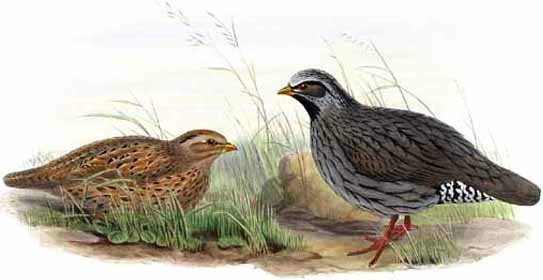
The Himalayan Quail exhibits distinctive field marks that set it apart from other quail species. Adults display a striking black plumage with white markings on the face and throat, creating a stark contrast that can be a useful identification feature. Males typically boast a more pronounced white supercilium, or eyebrow line, enhancing their distinctive appearance. The female Himalayan Quail, while similar in coloration, tends to have slightly duller plumage, making it less conspicuous in its natural habitat.
Juvenile Himalayan Quails are not well-documented due to the scarcity of modern sightings, but it is assumed they would resemble adults in patterning with likely more muted coloration, as seen in other quail species. The Himalayan Quail's silhouette in flight is characterized by compact wings and a short tail, typical of the Phasianidae family, allowing for rapid, burst-like flight to escape predators.
In terms of similar species, the Himalayan Quail could be confused with the Jungle Bush Quail or the Mountain Quail due to overlapping ranges and habitats. However, the Himalayan Quail's unique black and white pattern and historical range in the western Himalayas aid in its identification. Perching behavior is consistent with other ground-dwelling quail, often low to the ground and well-camouflaged within dense vegetation.
Having trouble telling birds apart? Upload a photo to our bird identification tool for an instant species match.
Himalayan Quail Habitat and Range
Preferred Habitat
The Himalayan Quail historically occupied temperate montane forests and grasslands in the western Himalayan region. These habitats are predominantly found in the states of Uttarakhand and Himachal Pradesh in India, at elevations ranging from 1,650 to 2,400 meters. The preference for dense underbrush within these forests and grasslands provided essential cover and foraging opportunities.
There are no recorded seasonal habitat shifts for the Himalayan Quail, yet similar species might move altitudinally in response to climatic changes, seeking warmer, lower elevations during colder months. The bird's historical habitat is primarily rural and unspoiled by urbanization, although increasing human encroachment poses a threat to such environments.
The dense, shrubby undergrowth of its chosen habitat not only offers shelter from predators but also supports a rich biodiversity that sustains the quail's diet. The preservation of these specific habitat types is crucial for any potential rediscovery of the Himalayan Quail, emphasizing the need for conservation efforts in these regions.
Geographic Range
The historical range of the Himalayan Quail was limited to the western Himalayas of India, specifically within the states of Uttarakhand and Himachal Pradesh. This range is characterized by temperate montane forests and grasslands at elevations between 1,650 and 2,400 meters. The specific locations include the vicinity of Mussoorie and Nainital, where the last reliable sightings were recorded in the late 19th century.
There is no documented evidence of wintering ranges or migration corridors for the Himalayan Quail, largely due to the lack of contemporary data. Given the quail's preference for specific high-altitude habitats, it is presumed that any migratory behavior would be altitudinal rather than long-distance.
Population density hotspots, if they existed, have not been recorded due to the bird's elusive nature and the historical scarcity of sightings. The potential rediscovery of the Himalayan Quail depends on thorough exploration and study of its historically documented range, with a focus on identifying any surviving populations in these regions.
Want to know which birds visit your area? Browse our backyard birds by location guides for region-specific species lists.
What Does the Himalayan Quail Eat?
The diet of the Himalayan Quail, while not extensively documented, likely consisted of a mix of seeds, small invertebrates, and plant material, similar to other species within the Phasianidae family. This varied diet would have allowed the quail to exploit the rich biodiversity of its montane forest and grassland habitats.
Seasonal changes in diet are assumed, with a probable shift towards more invertebrates during warmer months when insects and small arthropods are abundant. In colder seasons, the quail would rely more heavily on seeds and hardy plant matter available in its environment.
Foraging techniques likely included ground-feeding behaviors such as scratching and pecking through leaf litter and soil to uncover food. The bird's feeding schedule would have been dictated by daylight, with foraging occurring primarily during the early morning and late afternoon to avoid predators and extreme weather conditions. The Himalayan Quail's diet and foraging habits underscore its role in seed dispersal and pest control within its ecosystem.
Himalayan Quail Behavior and Social Structure
The social structure of the Himalayan Quail is not well-documented due to its elusive nature, but it is presumed to be similar to other quail species, which often exhibit small, cohesive family groups or pairs. Territorial behavior might include vocalizations and displays to ward off rivals, although specific behaviors remain undocumented.
Courtship displays, if similar to related species, likely involved a combination of vocalizations, physical displays, and possibly gift-giving of food items to potential mates. The Himalayan Quail's response to predators would have included cryptic coloration and quick, low flights into dense vegetation to evade capture.
Daily activity patterns would revolve around foraging and resting, with peak activities during the cooler parts of the day such as early morning and late afternoon. Flocking behavior, if present, involved loose aggregations, especially during non-breeding seasons, providing safety in numbers. Although detailed studies are lacking, these behavioral traits highlight the potential adaptability and survival strategies of the Himalayan Quail in its native environment.
Himalayan Quail Nesting and Reproduction
The nesting habits of the Himalayan Quail are largely unknown due to the lack of contemporary observations. However, it is likely that, similar to other quail species, the Himalayan Quail built its nest on the ground. The nests would have been shallow depressions lined with grass, leaves, and other plant materials, providing camouflage and insulation.
Preferred nesting locations probably included dense undergrowth or grassy areas within its montane forest habitat, where cover from predators is optimal. The clutch size for the Himalayan Quail is assumed to be in line with other quail, potentially ranging from 5 to 12 eggs per clutch.
Incubation periods for quail generally range around 18 to 24 days, with both parents possibly sharing incubation duties, although specific roles remain undocumented. The fledging timeline would depend on environmental conditions and predation pressures, with young quail leaving the nest shortly after hatching to follow their parents. The number of broods per year is unknown but could be influenced by food availability and climatic conditions.
Himalayan Quail Sounds and Vocalizations
The vocalizations of the Himalayan Quail are not well-documented, but it can be speculated that, like other quail species, its primary song comprised a series of rhythmic and repetitive whistles or chirps. These calls might have varied in pitch and quality, serving both as a territorial marker and a means of communication between mates.
Call notes could include soft clucks or whistles, used for close-range communication within family groups. Alarm calls, if similar to related species, would be sharp and quick, intended to alert others to potential threats.
Dawn chorus behavior might involve increased vocal activity during the early morning hours, coinciding with peak foraging times. While detailed descriptions are lacking, these speculative characteristics provide a glimpse into the potential acoustic presence of the Himalayan Quail in its natural habitat.
Interesting Facts About the Himalayan Quail
- 1The Himalayan Quail, last reliably seen in 1876, remains one of the most mysterious birds of the Himalayas.
- 2With its striking black and white plumage, the Himalayan Quail's coloration is unique among quail, aiding in camouflage in the shadowed understory.
- 3Historically found at elevations between 1,650 and 2,400 meters, the Himalayan Quail thrived in dense montane forests.
- 4The IUCN classifies the Himalayan Quail as Critically Endangered, possibly extinct, due to lack of confirmed sightings.
- 5Despite its elusive nature, the Himalayan Quail's historical range is well-documented, focused on Uttarakhand and Himachal Pradesh.
- 6Some ornithologists hold hope for the rediscovery of the Himalayan Quail, driven by unconfirmed sightings and local reports.
- 7Efforts to locate the Himalayan Quail continue, emphasizing the importance of preserving its potential habitats in the western Himalayas.
Himalayan Quail Conservation Status
The Himalayan Quail is listed as Critically Endangered (Possibly Extinct) by the IUCN, reflecting the dire status of its population. No confirmed sightings have been recorded since the late 19th century, suggesting a severe population decline, possibly to extinction. Primary threats include habitat loss due to deforestation, agricultural expansion, and human encroachment on its natural habitat. Conservation efforts have focused on habitat protection and surveys to locate any surviving populations. Historical population changes highlight the bird's vulnerability to environmental pressures and human activities, underscoring the need for continued exploration and protection of its habitat. The uncertainty surrounding the Himalayan Quail's existence serves as a reminder of the importance of preserving biodiversity and preventing further loss of species. Should this bird still exist, rediscovery efforts are crucial for implementing targeted conservation strategies.


