
Houbara Bustard
Chlamydotis undulata
Order: Otidiformes / Family: Otididae
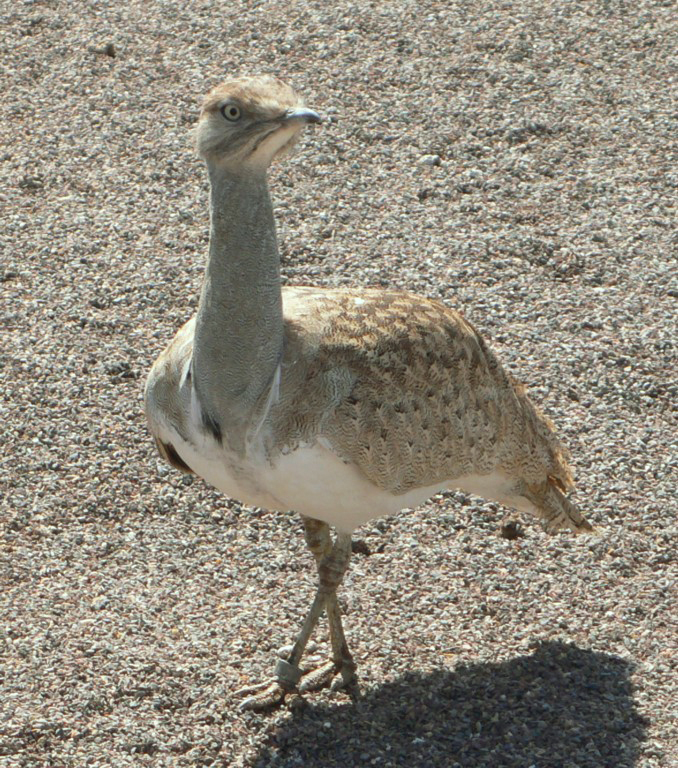
Wikimedia Commons
About the Houbara Bustard
The Houbara Bustard, scientifically recognized as Chlamydotis undulata, is a medium-sized bird belonging to the Otididae family. This bustard has adapted remarkably well to life in arid and semi-arid environments, making its home across parts of North Africa, the Middle East, and Central Asia. Its presence in these regions holds significant ecological importance due to its role in desert ecosystems. The Houbara Bustard serves as both predator and prey, contributing to the ecological balance. Due to its elusive nature and preference for remote habitats, observing this species in the wild is a rewarding experience for birdwatchers and researchers alike. The Houbara Bustard typically inhabits open plains, sandy desert landscapes, and scrubby regions, often venturing out during the cooler parts of the day to forage. Seasonal behaviors include partial migratory patterns, with some populations undertaking extensive migrations across continents in search of favorable conditions. These movements are crucial for their survival, as they navigate through changing environments and climates. Despite its adaptability, the Houbara Bustard faces numerous threats, including habitat destruction and illegal hunting, which have led to significant population pressures. Various conservation efforts are underway to protect this bird, including captive breeding programs and habitat restoration projects. Understanding the Houbara's ecological role and the challenges it faces is essential for ensuring its continued presence in the wild.
The Houbara Bustard belongs to the family Otididae, within the order Otidiformes. These birds typically live average 12-15 years with a maximum recorded of 22 years..
How to Identify a Houbara Bustard
The Houbara Bustard is distinguished by its cryptic plumage, which provides excellent camouflage against the desert backdrop. Adults possess a sandy brown coloration with intricate black and white patterns on their wings and back, allowing them to blend seamlessly with their surroundings. Males are slightly larger than females and are known for their unique courtship display, which involves raising their white throat feathers and performing a distinctive strut. Juveniles resemble adults but tend to have duller and less distinct markings. When compared to other bustards, the Houbara's smaller size and distinctive plumage patterns are notable field marks. The flight silhouette of this species is characterized by broad, rounded wings and a steady, deliberate wingbeat, often observed during low-level flights over open terrain. When perched, the Houbara Bustard maintains an upright posture, with its long neck and legs contributing to its overall elegant appearance.
Having trouble telling birds apart? Upload a photo to our bird identification tool for an instant species match.
Houbara Bustard Habitat and Range
Preferred Habitat
The Houbara Bustard thrives in arid and semi-arid environments, favoring open plains, sandy deserts, and scrubby regions. It is commonly found at elevations ranging from sea level to around 1,500 meters, depending on the region. In the Sahara, for example, it occupies vast stretches of sandy deserts and rocky plateaus. The bustard's habitat preferences can shift seasonally, with some populations migrating to avoid extreme temperatures or to access better feeding grounds. While primarily associated with remote, rural locations, some Houbara Bustards may venture into agricultural areas or near human settlements in search of food or during migration. Despite their adaptability, the ongoing expansion of urban areas poses a significant threat to their natural habitats.
Geographic Range
The Houbara Bustard's range extends across northern Africa, the Middle East, and Central Asia. In North Africa, it is found in countries such as Morocco, Algeria, and Egypt, occupying desert and semi-desert regions. The Middle Eastern populations inhabit areas from Saudi Arabia to Iran, while in Central Asia, they range from Kazakhstan to Mongolia. Breeding territories are typically established in vast, open landscapes that provide ample space for courtship displays. During winter months, some populations migrate southward to more temperate areas, including parts of the Arabian Peninsula and northern India. Migration corridors often intersect with regions where conservation efforts are focused due to the bird's declining numbers. Population density hotspots, such as specific reserves in Morocco and breeding sites in Kazakhstan, are crucial for the species' survival.
Want to know which birds visit your area? Browse our backyard birds by location guides for region-specific species lists.
What Does the Houbara Bustard Eat?
The Houbara Bustard's diet primarily consists of insects, small vertebrates, and plant matter, making it an opportunistic feeder. During the warmer months, it actively forages for beetles, grasshoppers, and other arthropods, which provide essential protein. In cooler seasons or when insect availability is low, it supplements its diet with seeds, berries, and tender shoots. Foraging techniques include slow, deliberate walking with frequent pauses to scan the ground for potential prey. The bird uses its long neck and beak to pluck food items from the ground or low vegetation. Prey size varies, with most items being small enough to swallow whole. The feeding schedule is typically diurnal, with peak activity occurring during the early morning and late afternoon to avoid the harsh midday heat.
Houbara Bustard Behavior and Social Structure
Houbara Bustards exhibit a solitary or small group social structure, with individuals often spaced widely apart except during breeding season. Males are known for their elaborate courtship displays, which involve puffing out their chest, raising their white throat feathers, and performing a strut to attract females. Territorial behavior is pronounced during the breeding season, with males defending their display grounds from rivals. Outside of breeding, these bustards are generally non-aggressive and avoid confrontation. In the presence of predators, such as foxes or birds of prey, the Houbara Bustard relies on its camouflage to remain undetected or takes to flight with low, steady wingbeats. Daily activity patterns are influenced by temperature, with foraging and other activities occurring during the cooler parts of the day.
Houbara Bustard Nesting and Reproduction
The Houbara Bustard nests on the ground, typically choosing a shallow scrape in the sand or soil, often in a secluded location among sparse vegetation. The female is responsible for selecting the nest site and lining it with small twigs and leaves to provide some insulation and camouflage. Clutch size usually ranges from 2 to 4 eggs, with the female incubating them for about 23 to 28 days. During this period, she relies heavily on her cryptic plumage to remain concealed from predators. Once hatched, chicks are precocial and leave the nest shortly after, following the female as they learn to forage. The fledging timeline extends to about 30 to 35 days, with the young remaining under the mother's care for several weeks thereafter. Typically, there is one brood per year, although in ideal conditions, a second may be attempted.
Houbara Bustard Sounds and Vocalizations
The primary song of the Houbara Bustard is a low, resonant series of booming notes that carry over long distances, especially during the breeding season. These vocalizations serve to establish territory and attract mates. In addition, the bird produces a variety of call notes, including soft clucks and whistles used for communication between individuals. Alarm calls, typically sharp and abrupt, alert others to potential danger. The Houbara's vocal activity increases during dawn and dusk, aligning with peak periods of activity. Compared to other bustards, its song is distinctive yet blends harmoniously with the desert soundscape.
Interesting Facts About the Houbara Bustard
- 1The Houbara Bustard's courtship display involves elaborate dances and vocalizations, captivating observers.
- 2Female Houbara Bustards are solely responsible for incubating eggs and raising chicks, showcasing remarkable resilience.
- 3Houbara Bustards can travel over 5,000 kilometers during migration, showcasing endurance and adaptability.
- 4The species' cryptic plumage serves as effective camouflage, making it challenging to spot in its natural habitat.
- 5Houbara Bustards play a crucial role in controlling insect populations, contributing to ecological balance in desert regions.
- 6Illegal hunting for falconry has historically impacted populations, prompting international conservation efforts.
- 7Captive breeding programs have successfully reintroduced Houbara Bustards into their native habitats, aiding in population recovery.
Houbara Bustard Conservation Status
The Houbara Bustard is currently classified as Vulnerable by the IUCN, with populations experiencing a declining trend. The primary threats include habitat loss due to agricultural expansion and urban development, as well as illegal hunting, particularly for falconry. Conservation efforts focus on habitat preservation, anti-poaching measures, and captive breeding programs to bolster wild populations. Historical population changes have been marked by significant declines, especially in areas where human encroachment is most pronounced. International collaboration among conservation organizations aims to safeguard this species for future generations.
Other Otididae Species


Birds Similar to the Houbara Bustard
These species are often confused with the Houbara Bustard due to similar appearance or overlapping range.