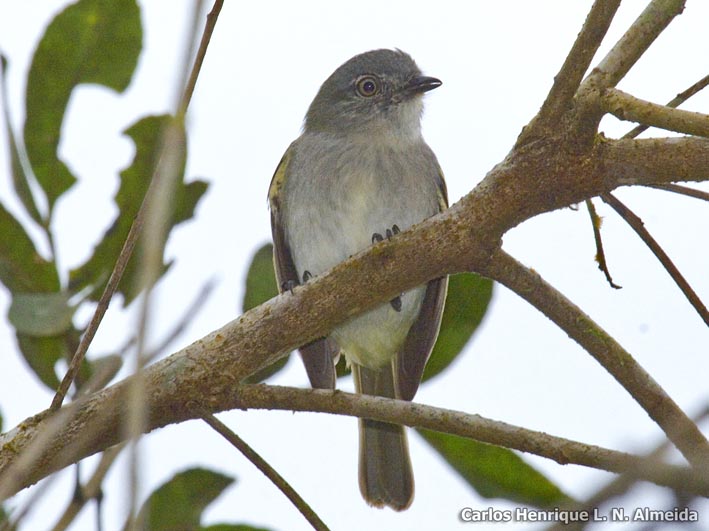
Jamaican Elaenia
Myiopagis cotta
Order: Passeriformes / Family: Tyrannidae

Wikimedia Commons
About the Jamaican Elaenia
The Jamaican Elaenia, known scientifically as Myiopagis cotta, is a small yet remarkable member of the Tyrannidae family. This bird is endemic to Jamaica, making it a vital component of the island's unique avifauna. The Jamaican Elaenia typically inhabits montane forests, although it can also be found in lower elevation woodlands and scrub areas. Its presence is most notable in the Blue Mountains and the John Crow Mountains, where it plays a key ecological role. By consuming a variety of insects and fruit, the elaenia helps control insect populations and aids in seed dispersal, contributing significantly to the health of its habitat.
Jamaican Elaenias are known for their acrobatic foraging techniques, often seen darting through foliage in pursuit of insects. This behavior is particularly crucial during the breeding season when their nutritional needs peak. The bird is also an important prey species for local raptors, playing a vital role in the food web. Throughout the year, the Jamaican Elaenia remains active, displaying subtle seasonal behaviors. During the rainy season, it may shift slightly in elevation, following the availability of food resources. Though not migratory, these movements ensure their survival in the changing Jamaican climate.
The Jamaican Elaenia's ecological role extends beyond simple predation and seed dispersal. It also contributes to the biodiversity of the region, serving as an indicator of ecosystem health. As a bird that is relatively tolerant of habitat disturbance, its presence suggests a level of resilience in the local environment. This adaptability, however, does not make it immune to threats. Habitat destruction and climate change pose significant risks to its population. Conservation efforts are vital to ensure the survival of the Jamaican Elaenia, and understanding its ecological significance can help prioritize these efforts.
The Jamaican Elaenia belongs to the family Tyrannidae, within the order Passeriformes. These birds typically live average 5 years with a maximum recorded of 8 years..
How to Identify a Jamaican Elaenia
The Jamaican Elaenia is a small bird, measuring approximately 12.5 cm in length. Its plumage is characterized by an olive-green upper body, which seamlessly blends into lighter underparts. The bird's wings and tail bear a darker hue with faint wing bars, adding contrast to its appearance. A notable field mark is its subtle eye-ring, which can appear white or light gray, providing a distinctive feature for identification.
In terms of sexual dimorphism, males and females of the Jamaican Elaenia exhibit similar plumage, making them difficult to distinguish in the field. Juvenile birds resemble adults but may display slightly duller plumage and less pronounced wing bars. These subtle differences are important for accurate identification, particularly during the breeding season when juveniles are present.
When observing the Jamaican Elaenia, birders should note its characteristic perching posture. The bird often sits upright on branches, exhibiting a keen, alert demeanor. In flight, its silhouette is compact, with rapid, agile wingbeats that aid in maneuvering through dense foliage. This flight pattern distinguishes it from similar species, such as the Greater Antillean Elaenia, which tends to have a more leisurely flight style.
Having trouble telling birds apart? Upload a photo to our bird identification tool for an instant species match.
Jamaican Elaenia Habitat and Range
Preferred Habitat
The Jamaican Elaenia predominantly inhabits montane forests, thriving in areas with dense tree cover and abundant underbrush. It is most commonly found in the Blue Mountains and John Crow Mountains, where elevations range from 500 to 2,200 meters. Within these regions, it occupies a range of habitats, including primary and secondary forests, as well as disturbed areas that offer sufficient vegetation.
Despite its affinity for montane environments, the Jamaican Elaenia also adapts to lower elevation woodlands and scrub areas. During certain seasons, it may venture into more open habitats, particularly in response to food availability. This adaptability allows the elaenia to maintain a stable presence across various habitats, although it remains rare in urban settings.
The bird's preference for forested environments means it plays a vital role in these ecosystems. Its activity supports the health of the forest by contributing to seed dispersal and insect population control. Seasonal habitat shifts, although not extensive, demonstrate the bird's capacity to respond to ecological changes, ensuring its survival amidst environmental fluctuations.
Geographic Range
As an endemic species, the Jamaican Elaenia's range is restricted solely to the island of Jamaica. Within this limited geographic area, the bird occupies a variety of habitats, with its primary range centered in the island's montane regions. The Blue Mountains and John Crow Mountains serve as strongholds for the species, providing the dense, forested environments it needs.
Although the Jamaican Elaenia is not migratory, it may exhibit localized movements in response to seasonal changes in food availability. These movements are typically confined to within the island, as the bird adjusts its range slightly to exploit different habitats. Despite its limited range, the Jamaican Elaenia maintains a relatively stable population, benefiting from its adaptability to various forest environments.
Population density varies across Jamaica, with the highest concentrations found in the aforementioned mountain ranges. In contrast, the bird is less common in heavily urbanized areas and coastal regions, where suitable habitats are scarce. Conservation efforts within its range focus on protecting these vital forest habitats, ensuring the continued survival of this unique avian species.
Want to know which birds visit your area? Browse our backyard birds by location guides for region-specific species lists.
What Does the Jamaican Elaenia Eat?
The diet of the Jamaican Elaenia primarily consists of insects, which it adeptly captures using agile foraging techniques. This insectivorous diet includes a variety of prey such as beetles, ants, and caterpillars. The bird often forages in the mid to upper canopy, darting between branches to snatch its prey in flight. This dynamic hunting style is essential during the breeding season, when the demand for protein-rich food increases.
In addition to insects, the Jamaican Elaenia supplements its diet with fruits, particularly during periods of lower insect availability. Berries and small fruits from native trees and shrubs form an important component of its diet, aiding in nutrient balance and hydration. Seasonal variations in food availability influence the bird's diet composition, with a noticeable increase in fruit consumption during the dry season.
The bird's feeding schedule is generally diurnal, with peak activity observed during the early morning and late afternoon. This timing coincides with the abundance of active insects, allowing the elaenia to maximize its foraging efficiency. By maintaining a flexible diet, the Jamaican Elaenia can navigate the challenges posed by seasonal food fluctuations, ensuring its survival in its diverse habitat.
Jamaican Elaenia Behavior and Social Structure
The Jamaican Elaenia exhibits intriguing social and territorial behaviors, often observed alone or in pairs during the breeding season. This territoriality is most pronounced from March to August, when males vigorously defend their chosen breeding areas through vocal displays and aerial chases. Their courtship rituals are subtle yet effective, involving fluttering displays and soft vocalizations to attract mates.
Outside the breeding season, the Jamaican Elaenia may join mixed-species flocks, particularly in areas where food resources are abundant. These flocks provide benefits such as increased foraging efficiency and enhanced protection from predators. The bird's alert nature and agility are key defensive strategies, allowing it to quickly evade potential threats.
Jamaican Elaenias are primarily active during daylight hours, with activity levels peaking in the early morning and late afternoon. Their daily routines include periods of foraging interspersed with rest and preening. During the heat of the day, they often retreat to shaded areas to conserve energy. The bird's behavior reflects its adaptability, balancing the demands of foraging, territory defense, and predator avoidance.
Jamaican Elaenia Nesting and Reproduction
The Jamaican Elaenia constructs cup-shaped nests, carefully crafted from twigs, grass, and other plant materials. These nests are typically situated in the fork of a small tree or shrub, providing a stable and concealed environment for the developing eggs and chicks. Nesting sites are chosen with care, often located several meters above the ground to avoid ground-based predators.
Clutch sizes for the Jamaican Elaenia generally range from two to three eggs, with incubation duties primarily undertaken by the female. The incubation period lasts approximately 14 days, during which the male may assist by providing food to the female. Once hatched, the chicks remain in the nest for about two weeks, during which both parents share feeding responsibilities.
The fledging timeline is relatively brief, with young birds leaving the nest soon after developing flight capabilities. This rapid development is crucial for survival, as fledglings must quickly learn to forage and evade predators. The Jamaican Elaenia typically produces one brood per year, although favorable conditions may result in a second brood, enhancing the species' reproductive success.
Jamaican Elaenia Sounds and Vocalizations
The Jamaican Elaenia is known for its distinctive vocalizations, which play a crucial role in communication and territorial defense. Its primary song consists of a series of short, melodic phrases, delivered in a rhythmic pattern that is both clear and pleasant to the ear. These songs serve as a means of establishing territory and attracting mates during the breeding season.
In addition to its primary song, the Jamaican Elaenia produces a variety of call notes, including sharp, single-note calls used for communication between mates and to signal alarm when predators are nearby. These alarm calls are higher-pitched and more urgent, effectively alerting other birds to potential threats.
During the dawn chorus, the Jamaican Elaenia contributes its voice to the symphony of avian sounds, its song rising above the background noise of the forest. Its vocalizations, though not as complex as those of some songbirds, are nonetheless an integral part of its behavior, facilitating interactions within its social and territorial domains.
Interesting Facts About the Jamaican Elaenia
- 1The Jamaican Elaenia is endemic to Jamaica, meaning it is found nowhere else in the world, highlighting its unique ecological niche.
- 2Despite its small size, the Jamaican Elaenia plays a significant role in seed dispersal, particularly for native fruit-bearing plants.
- 3The bird's agile foraging behavior involves rapid, acrobatic movements, allowing it to capture insects mid-air with impressive precision.
- 4During the breeding season, male Jamaican Elaenias are known to sing persistently, using their vocalizations to establish territory and attract mates.
- 5The Jamaican Elaenia's adaptability to various forest types enables it to thrive in both primary and secondary forests, even amidst habitat disturbances.
- 6In mixed-species flocks, the Jamaican Elaenia benefits from increased foraging success and reduced predation risk, a testament to its social adaptability.
- 7The bird's nesting strategy, placing nests high in trees, provides protection from ground-based predators and ensures a safer environment for raising young.
Jamaican Elaenia Conservation Status
The Jamaican Elaenia is currently listed as Least Concern by the IUCN, reflecting a relatively stable population trend. However, this status belies potential threats that could impact its future survival. Habitat destruction, primarily due to deforestation and land conversion for agriculture, poses a significant risk to its limited range. Climate change also threatens the Jamaican Elaenia, as shifting weather patterns may alter the availability of its food resources and suitable habitats. Conservation efforts focus on preserving forested areas and promoting sustainable land-use practices that benefit both the bird and the broader ecosystem. Historically, the Jamaican Elaenia has maintained stable population numbers, thanks in part to its adaptability to different forest environments. Ongoing research and monitoring are essential to ensure that this trend continues, enabling conservationists to respond proactively to emerging threats and protect this unique species.
Other Tyrannidae Species


Birds Similar to the Jamaican Elaenia
These species are often confused with the Jamaican Elaenia due to similar appearance or overlapping range.