
Japanese Tit
Parus minor
Order: Passeriformes / Family: Paridae
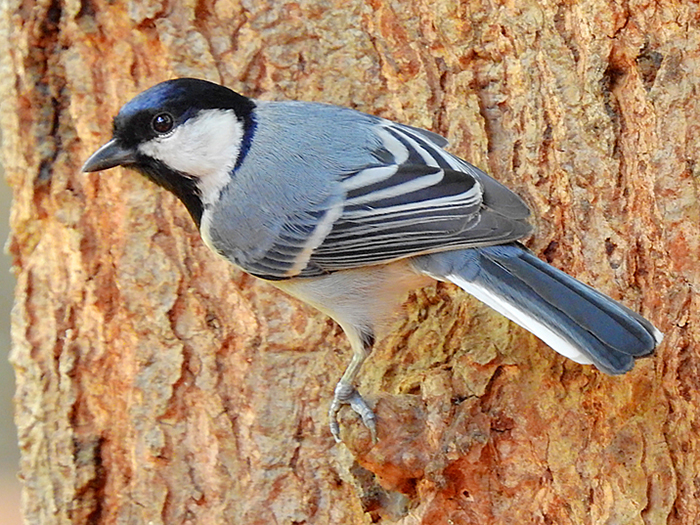
Wikimedia Commons
About the Japanese Tit
The Japanese Tit, Parus minor, is a small passerine bird commonly found throughout East Asia. Its presence is most prominent in Japan, Korea, northeastern China, and parts of Russia. This bird plays a crucial role in its ecosystem, primarily as an insectivore, helping control insect populations during the breeding season. The Japanese Tit thrives in diverse habitats, including deciduous and mixed forests, suburban gardens, and city parks, demonstrating remarkable adaptability to human-altered landscapes. Although it remains active year-round, its behavior changes with the seasons. In spring and summer, the Japanese Tit becomes more territorial, focusing on breeding activities. During autumn and winter, it often joins mixed-species flocks to forage more efficiently, increasing its chances of survival in harsher conditions. This species is a classic example of adaptability and resilience, serving as an important indicator of environmental health and biodiversity in its range.
The Japanese Tit belongs to the family Paridae, within the order Passeriformes. These birds typically live average 3-5 years, with some individuals reaching 10 years..
How to Identify a Japanese Tit
The Japanese Tit exhibits distinctive field marks that make it easily identifiable. Adult birds display a striking black cap that extends from the nape to the throat, contrasting with their bright white cheeks. Their upperparts are primarily olive-gray, while the underparts are a soft creamy white. The wings and tail are a darker gray with two white wing bars. Males and females are similar in appearance, although males may exhibit more vivid plumage during the breeding season. Juveniles resemble adults but have a duller coloration and lack the defined black cap. Compared to similar species such as the Great Tit, Parus major, the Japanese Tit is slightly smaller and possesses a less contrasting back pattern. In flight, the Japanese Tit displays a characteristic bounding motion and, when perched, maintains an upright posture, often flicking its wings and tail.
Having trouble telling birds apart? Upload a photo to our bird identification tool for an instant species match.
Japanese Tit Habitat and Range
Preferred Habitat
The Japanese Tit inhabits a wide range of environments. It thrives in temperate deciduous and mixed forests, often found at elevations up to 2000 meters. In urban areas, it frequents parks, gardens, and green spaces, demonstrating its adaptability to human presence. During winter, it may shift to lower elevations and seek shelter in dense shrubbery or evergreen trees. While primarily a forest dweller, this tit has successfully integrated into suburban and rural settings, often attracted to backyard feeders. Its presence across varied landscapes highlights its ecological flexibility and ability to exploit different resources throughout the year.
Geographic Range
The breeding range of the Japanese Tit extends across East Asia, including Japan, Korea, northeastern China, and parts of eastern Russia. It is a resident species throughout much of its range, though populations in the northernmost areas may exhibit partial migratory behavior, moving to lower elevations or more temperate regions during winter months. In Japan, the Japanese Tit is widespread, from Hokkaido in the north to Kyushu in the south, with higher population densities in forested and semi-open habitats. These birds are common in urban areas, where they capitalize on garden habitats and artificial feeding stations. The species' adaptability to various climates and environments ensures its presence across a broad geographic range.
Want to know which birds visit your area? Browse our backyard birds by location guides for region-specific species lists.
What Does the Japanese Tit Eat?
The Japanese Tit primarily feeds on insects and their larvae, which constitute the bulk of its diet during the breeding season. This insectivorous diet includes caterpillars, beetles, and spiders, which are vital for feeding their young. During the colder months, when insect availability declines, the Japanese Tit shifts to seeds, nuts, and berries, showcasing its dietary flexibility. It is known to visit bird feeders, consuming sunflower seeds and suet. Japanese Tits employ a variety of foraging techniques, such as gleaning from foliage, probing bark crevices, and occasionally hovering to capture prey. Their ability to exploit different food sources throughout the year contributes to their resilience and adaptability.
Want to attract Japanese Tits to your yard? See our recommended feeders and seed types for the best results.
Japanese Tit Behavior and Social Structure
Japanese Tits exhibit a range of social behaviors depending on the season. During the breeding season, they become territorial, with males defending nesting sites through song and display. Courtship involves males presenting food to females, a behavior critical for pair bond formation. Outside the breeding season, these birds are more social, often joining mixed-species flocks with other small passerines like nuthatches and woodpeckers. This flocking behavior enhances foraging efficiency and provides safety in numbers. Japanese Tits are diurnal, with peak activity occurring in the early morning and late afternoon. They respond to predators with alarm calls and mobbing behavior, often joined by other birds. Their daily routine reflects a balance between foraging and vigilance, ensuring survival in varied environments.
Japanese Tit Nesting and Reproduction
The Japanese Tit constructs its nest in tree cavities or nest boxes, utilizing materials such as moss, feathers, and animal hair. This species demonstrates a preference for deciduous trees, although it will adapt to available nesting sites in urban areas. The female typically lays 5-8 eggs, which she incubates for about 12-14 days. After hatching, both parents share in feeding the chicks, which fledge approximately 16-20 days post-hatching. Japanese Tits may raise 1-2 broods per year, depending on environmental conditions and food availability. Their adaptability to artificial nesting sites has aided in their successful colonization of urban environments.
Japanese Tit Sounds and Vocalizations
The song of the Japanese Tit is a clear, repetitive series of two-note phrases, often described as 'chee-chee' or 'pee-pee'. These phrases may vary slightly in pitch and rhythm, serving both territorial and mate attraction purposes. The call notes include sharp 'tsee-tsee' sounds, often given in response to threats or during social interactions. Alarm calls are more rapid and harsh, alerting nearby individuals to potential danger. During the dawn chorus, the Japanese Tit's song is a prominent and melodious component, contributing to the vibrant acoustic environment of its habitat.
Interesting Facts About the Japanese Tit
- 1The Japanese Tit can recognize the alarm calls of other bird species, enhancing its survival tactics.
- 2During the breeding season, males may sing over 40 different song variations to attract mates.
- 3Japanese Tits have been observed using tools, such as using sticks to extract insects from crevices.
- 4These birds can remember the location of hundreds of food caches, showing remarkable spatial memory.
- 5The lifespan of a Japanese Tit in the wild is typically around 2-3 years, though some individuals live longer.
- 6In winter, Japanese Tits are known to form flocks of up to 20 birds to increase foraging efficiency.
- 7Young Japanese Tits often leave their natal territory in the autumn to establish their own breeding grounds.
Japanese Tit Conservation Status
The Japanese Tit is currently classified as Least Concern by the IUCN, with a stable population trend. It faces few significant threats, thanks to its adaptability to human-altered landscapes and broad geographic range. However, habitat loss due to deforestation and urban expansion can impact local populations. Conservation efforts focus on maintaining suitable habitats and promoting the use of nest boxes in urban areas to support breeding success. Historical population data suggest that the Japanese Tit has maintained a steady presence across its range, reflecting its resilience to environmental changes.
Attracting Japanese Tits to Your Feeder
The Japanese Tit is a regular visitor to backyard bird feeders across its range. At the Eye On The Fly feeding station, we observe Japanese Tits regularly and capture footage with our feeder cameras.
Other Paridae Species


Birds Similar to the Japanese Tit
These species are often confused with the Japanese Tit due to similar appearance or overlapping range.
