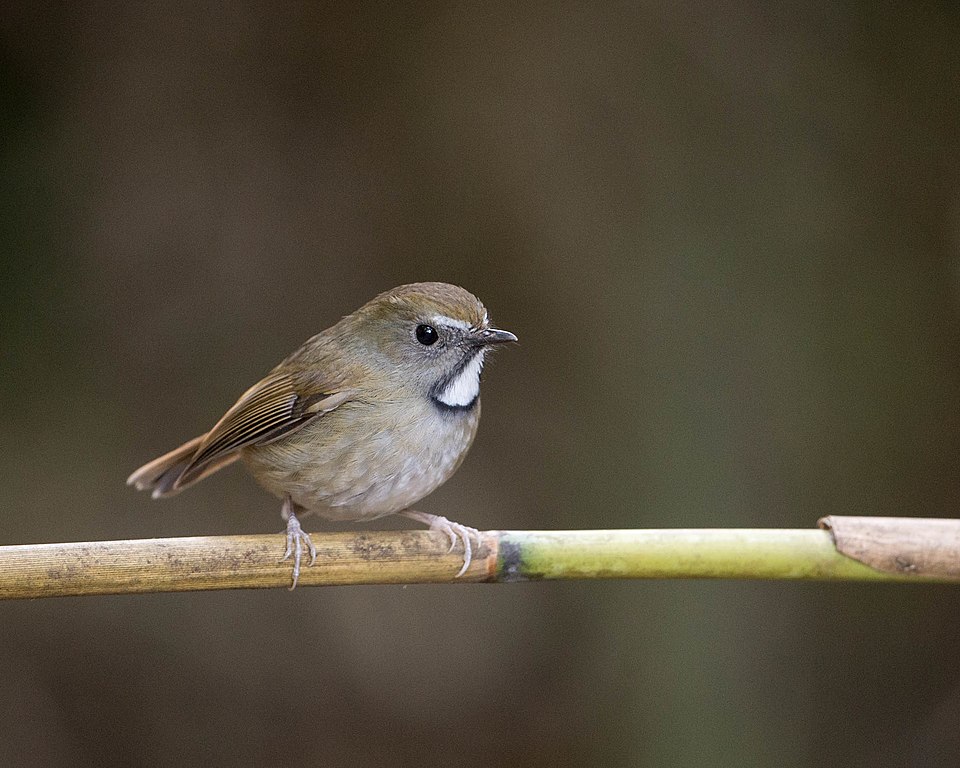
Jerdon's Bushchat
Saxicola jerdoni
Order: Passeriformes / Family: Muscicapidae

Wikimedia Commons
About the Jerdon's Bushchat
Jerdon's Bushchat (Saxicola jerdoni), a member of the Muscicapidae family, is a captivating bird native to the Indian subcontinent. This species plays a vital role in its ecosystem, primarily due to its insectivorous diet, which helps control insect populations. Found predominantly in the grasslands and shrubby areas of India, particularly in regions like Assam, Bihar, and Uttar Pradesh, the Jerdon's Bushchat is an indicator of healthy grassland ecosystems. Its presence in such areas underscores the importance of these habitats for biodiversity. The bird's behavior changes with the seasons, often becoming more conspicuous during the breeding season when males sing energetically to establish territories and attract mates. Jerdon's Bushchat is a species of interest not only for its ecological role but also for its contribution to the avian biodiversity of the regions it inhabits. During the non-breeding season, it may shift slightly in habitat preference, favoring areas with more cover. This seasonal adaptability highlights the bird's capacity to cope with habitat variations, ensuring its survival and continuity in its native range. Conservationists emphasize the significance of preserving grasslands and open scrub habitats to support the continued existence of Jerdon's Bushchat, as these environments are increasingly threatened by human activities such as agriculture and urbanization.
The Jerdon's Bushchat belongs to the family Muscicapidae, within the order Passeriformes. These birds typically live typically 4-6 years, with some individuals living up to 8 years..
How to Identify a Jerdon's Bushchat
Jerdon's Bushchat is a striking small bird with characteristic plumage that aids birdwatchers in its identification. The male is particularly notable for his contrasting coloration, sporting a black head and back, which sharply contrasts with the white eyebrow stripe that runs above the eye. The underparts are white, providing a clear distinction from the darker upper body. In contrast, the female is less vividly colored, with more subdued brownish tones that help her blend into the grassland habitat, aiding in camouflage. Juveniles resemble females but are even duller, often with some streaking on the breast. In flight, Jerdon's Bushchat displays a characteristic silhouette with its short tail and rounded wings. Its perching posture is upright, often on low shrubs or grass stems, allowing the bird to scan for prey effectively. While similar in appearance to other species of bushchats, Jerdon's Bushchat can be distinguished by its unique combination of the white eyebrow and the male's striking black and white plumage.
Having trouble telling birds apart? Upload a photo to our bird identification tool for an instant species match.
Jerdon's Bushchat Habitat and Range
Preferred Habitat
Jerdon's Bushchat thrives in open grasslands and areas with scattered shrubs, typically favoring elevations below 1,000 meters. These habitats provide ample foraging opportunities and nesting sites. Seasonal shifts in habitat preferences may occur, with some individuals moving to slightly denser cover during the non-breeding season. Although primarily associated with rural landscapes, Jerdon's Bushchat can occasionally be found on the outskirts of urban areas where suitable grassland patches exist. The preservation of these natural habitats is crucial for the species' survival, as they offer the necessary resources for feeding and breeding.
Geographic Range
The range of Jerdon's Bushchat is largely confined to the Indian subcontinent, with a strong presence in northern India, particularly in states like Assam, Bihar, and Uttar Pradesh. It is primarily a resident breeder, with some local movements observed in response to seasonal changes in habitat conditions. Since the bird does not undertake long-distance migrations, its distribution is closely tied to the availability of suitable grassland and scrub habitats within its range. Population density hotspots are often found in regions where grasslands are extensive and well-preserved, contributing to the bird's localized abundance.
Want to know which birds visit your area? Browse our backyard birds by location guides for region-specific species lists.
What Does the Jerdon's Bushchat Eat?
Jerdon's Bushchat primarily feeds on insects, which it hunts using a technique known as perch-and-pounce. The bird perches on a vantage point, scanning the ground for movement before swooping down to capture its prey. The diet includes a variety of insects such as grasshoppers, beetles, and caterpillars. Seasonal variations may occur, with a greater reliance on available insect prey during the warmer months when insect activity peaks. The bird's feeding schedule is typically diurnal, with increased activity in the early morning and late afternoon when temperatures are moderate.
Jerdon's Bushchat Behavior and Social Structure
Jerdon's Bushchat exhibits fascinating social and territorial behaviors. Males are known for their territoriality, especially during the breeding season, when they sing frequently to establish and defend their territory from rivals. The song, delivered from a prominent perch, serves both as a declaration of territory and an invitation to potential mates. Courtship displays involve a combination of song and visual posturing. While generally solitary or found in pairs, Jerdon's Bushchat may join small mixed-species flocks during the non-breeding season. The bird's response to predators involves staying low and utilizing its cryptic plumage to remain undetected. Daily activity patterns include foraging during cooler parts of the day, with periods of rest during the hottest hours.
Jerdon's Bushchat Nesting and Reproduction
Jerdon's Bushchat prefers to nest in low shrubs or thick grass, often constructing a cup-shaped nest hidden from view. The nest is typically made of grass stems, leaves, and other plant materials, providing camouflage and protection. The clutch size generally consists of three to four eggs, which both parents incubate for about 12-14 days. After hatching, the chicks remain in the nest for approximately two weeks before fledging. During this time, both parents actively feed and protect the young. Jerdon's Bushchat may have two or more broods per breeding season, depending on environmental conditions and food availability.
Jerdon's Bushchat Sounds and Vocalizations
The primary song of Jerdon's Bushchat is a melodious series of notes, often described as sweet and varied in rhythm and pitch. This song serves as both a territorial signal and a mating call. In addition to the primary song, the bird also emits call notes, typically short and sharp, used for communication between mates or to signal alarm. The alarm calls are more abrupt and harsher, alerting nearby birds to potential threats. During the early morning hours, especially in the breeding season, Jerdon's Bushchat contributes to the dawn chorus with its distinctive melody.
Interesting Facts About the Jerdon's Bushchat
- 1Jerdon's Bushchat was named after the British ornithologist Thomas C. Jerdon, who first described it in 1862.
- 2Despite being primarily insectivorous, Jerdon's Bushchat occasionally consumes small seeds, particularly during scarcity of insects.
- 3The bird's distinctive white eyebrow is a key feature that sets it apart from similar bushchat species.
- 4Jerdon's Bushchat often uses the same perching spots repeatedly, making it easier for birdwatchers to locate.
- 5During courtship, males may perform a display flight involving short, fluttering ascents and descents.
- 6The species' preference for open grassland makes it an indicator species for the health of these ecosystems.
- 7Jerdon's Bushchat has a relatively small home range, typically not exceeding a few square kilometers.
Jerdon's Bushchat Conservation Status
Currently, Jerdon's Bushchat holds a conservation status of Least Concern according to the IUCN. However, its population trend is closely monitored due to habitat loss and degradation, primarily from agricultural expansion and urban development. Conservation efforts focus on preserving grassland habitats, which are vital for the bird's survival. Historically, population numbers have fluctuated with changes in land use and habitat availability. Continued efforts to maintain and restore grassland ecosystems are essential to ensuring the species' long-term viability.