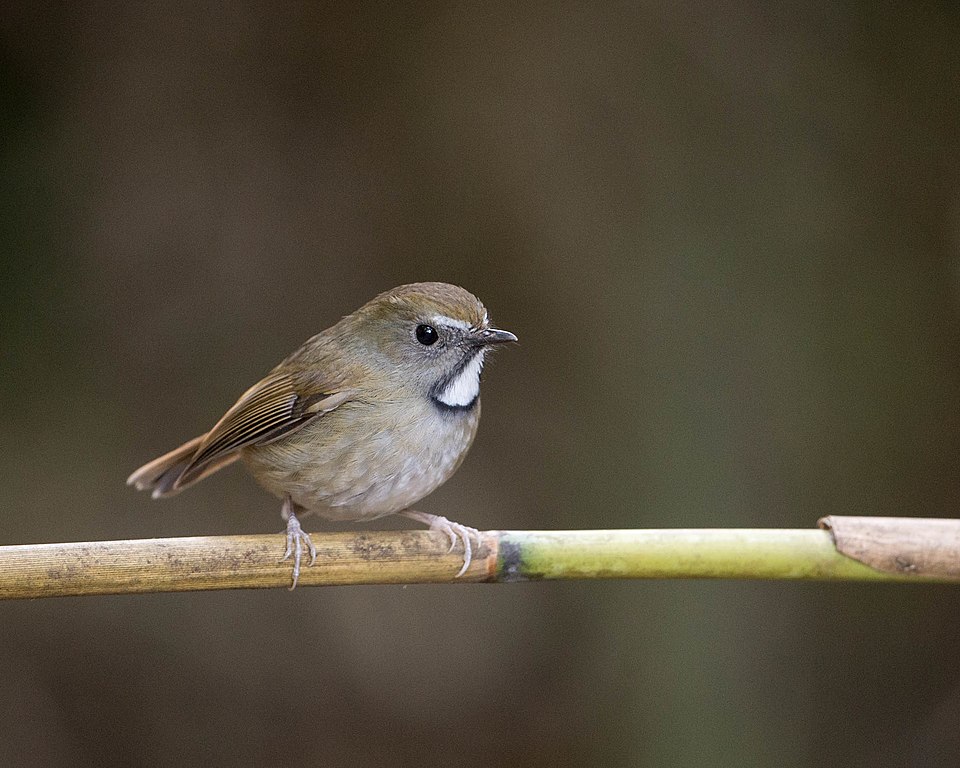
Kashmir Flycatcher
Ficedula subrubra
Order: Passeriformes / Family: Muscicapidae

Wikimedia Commons
About the Kashmir Flycatcher
The Kashmir Flycatcher, Ficedula subrubra, is a small passerine bird within the Muscicapidae family, known for its striking plumage and restricted breeding range. This bird is endemic to the northwestern Himalayas, specifically the forests of Jammu and Kashmir in India and parts of northern Pakistan. The Kashmir Flycatcher holds ecological significance as an indicator species for the health of its forest habitats. It thrives in high-altitude oak and coniferous forests, where it plays a role in insect population control, feeding primarily on small arthropods. The bird's presence signals a rich and well-balanced ecosystem, as it relies on thriving insect populations and healthy forest flora for sustenance. Seasonally, the Kashmir Flycatcher migrates to the southern parts of the Indian subcontinent to escape the harsh Himalayan winters. During these months, it can be spotted in the Western Ghats and neighboring areas, adapting its foraging habits to the tropical deciduous forests. The flycatcher's seasonal movements highlight its adaptability and the changing ecological dynamics of its habitats. Its reliance on specific forest types for breeding and wintering underscores the importance of forest conservation efforts in the regions it inhabits. The Kashmir Flycatcher exemplifies the interconnectedness of avian species and their habitats, serving as a vibrant reminder of the rich biodiversity within the Himalayan region.
The Kashmir Flycatcher belongs to the family Muscicapidae, within the order Passeriformes. These birds typically live average 5-7 years, with some living up to 9 years..
How to Identify a Kashmir Flycatcher
The Kashmir Flycatcher is easily distinguished by its vivid orange throat and upper breast, contrasting with its olive-brown upperparts. The adult male displays a striking combination of features, including a white belly and a distinct white wing bar that sets it apart from other similar species. Females and juveniles possess more subdued coloration, with buff tones replacing the bright orange found in males, yet they maintain the species' characteristic wing bar. When observing the Kashmir Flycatcher, note the squared-off tail and the relatively short wings, which contribute to its unique flight silhouette. It perches upright, often flicking its tail downward, a behavior that aids in its identification. Confusion may arise with the Red-breasted Flycatcher, but the latter lacks the Kashmir Flycatcher's distinctive orange throat and possesses a different vocalization pattern. Close examination and knowledge of specific field marks allow for accurate identification of this species.
Having trouble telling birds apart? Upload a photo to our bird identification tool for an instant species match.
Kashmir Flycatcher Habitat and Range
Preferred Habitat
The Kashmir Flycatcher inhabits montane forests, particularly favoring oak and coniferous woodlands within the altitudinal range of 1,800 to 3,500 meters. These forests provide ample cover and feeding opportunities, essential for its breeding success. During winter, the flycatcher descends to lower elevations and can be found in scrublands and tropical deciduous forests, such as those in the Western Ghats. Its presence in urban areas is rare, as it prefers dense natural habitats. Seasonal shifts in habitat are crucial for its survival, as the bird moves to avoid the adverse conditions of Himalayan winters, seeking areas rich in insect prey and suitable foraging grounds.
Geographic Range
The breeding range of the Kashmir Flycatcher is confined to the northwestern Himalayas, particularly within the regions of Jammu and Kashmir in India and parts of northern Pakistan. During the winter months, the species migrates southward, primarily to the Western Ghats and other parts of southern India, including Karnataka and Kerala. Migration routes are generally direct, as the bird seeks favorable climates and food sources. Population density is greatest in its breeding range, where suitable habitat is abundant, but the species remains relatively scattered during winter. Notably, the bird's range does not extend into the northeastern Himalayas, highlighting its specific habitat preferences.
Want to know which birds visit your area? Browse our backyard birds by location guides for region-specific species lists.
What Does the Kashmir Flycatcher Eat?
The diet of the Kashmir Flycatcher primarily consists of insects and other small arthropods, which it skillfully captures through aerial sallies and foliage gleaning. During the breeding season, its feeding focuses on caterpillars, beetles, and flies, all of which are plentiful in its forest habitat. As it migrates to wintering grounds, the flycatcher adapts to the available prey, incorporating a variety of insects found in tropical forests. The bird employs a sit-and-wait foraging technique, often perching quietly before making swift, precise flights to capture its prey. Its diet's seasonal variation reflects the changing ecological conditions across its range.
Kashmir Flycatcher Behavior and Social Structure
The Kashmir Flycatcher exhibits territorial behavior, particularly during the breeding season, when males establish and defend territories through song and displays. Courtship involves elaborate aerial displays and vocalizations that showcase the male's plumage and singing ability. The species is generally solitary or found in pairs during breeding, but it may form small, loose flocks during migration and in winter. Its daily activity pattern peaks in the early morning and late afternoon when feeding conditions are optimal. In response to predators, the flycatcher employs evasive flight tactics and emits sharp alarm calls to warn conspecifics. Its behavior is closely tied to its habitat, with dense foliage providing necessary cover and feeding opportunities.
Kashmir Flycatcher Nesting and Reproduction
The nesting habits of the Kashmir Flycatcher involve constructing cup-shaped nests using twigs, moss, and leaves, typically situated on tree branches or in tree hollows. These nests are placed at moderate heights, providing protection from ground predators. The female lays a clutch of three to five eggs, which she incubates for approximately 12 to 14 days. Both parents share in feeding the hatchlings, which fledge after 14 to 16 days in the nest. The species generally produces one brood per year, although favorable conditions may allow for a second. Parental roles are well-defined, with males often guarding the territory while females focus on nurturing the young.
Kashmir Flycatcher Sounds and Vocalizations
The primary song of the Kashmir Flycatcher is a melodious series of whistles and trills, often described as a tuneful and liquid warble. Its call notes are sharp and metallic, serving to communicate with mates and signal alarm. During the dawn chorus, the male's song is especially prominent, contributing to the vibrant soundscape of its forest habitat. These vocalizations are crucial for territory establishment and mate attraction, with the song's rhythm and pitch varying slightly among individuals.
Interesting Facts About the Kashmir Flycatcher
- 1The Kashmir Flycatcher migrates over 1,500 kilometers each year, showcasing its impressive adaptability.
- 2This species was first described scientifically in 1871 by the British ornithologist Allan Octavian Hume.
- 3Though primarily insectivorous, the Kashmir Flycatcher occasionally consumes small berries during the non-breeding season.
- 4The bird's bright plumage makes it a favorite among birdwatchers, yet its elusive nature presents a challenge.
- 5Its song is considered one of the most melodious among the Himalayan flycatchers, attracting bird enthusiasts to its habitat.
- 6The Kashmir Flycatcher is closely related to the Red-breasted Flycatcher, although they inhabit different geographical ranges.
- 7Historical records indicate that its population has fluctuated with changes in forest cover, underscoring habitat importance.
Kashmir Flycatcher Conservation Status
The Kashmir Flycatcher is currently listed as Vulnerable by the IUCN, with its population facing a declining trend due to habitat loss and degradation. Deforestation in its breeding and wintering grounds poses the greatest threat, exacerbated by human encroachment and agricultural expansion. Conservation efforts focus on habitat protection and restoration, particularly in the high-altitude forests of Jammu and Kashmir. Historical population studies indicate fluctuations linked to habitat availability, highlighting the need for sustained conservation measures to ensure the species' survival.