
Kauai Amakihi
Chlorodrepanis stejnegeri
Order: Passeriformes / Family: Fringillidae
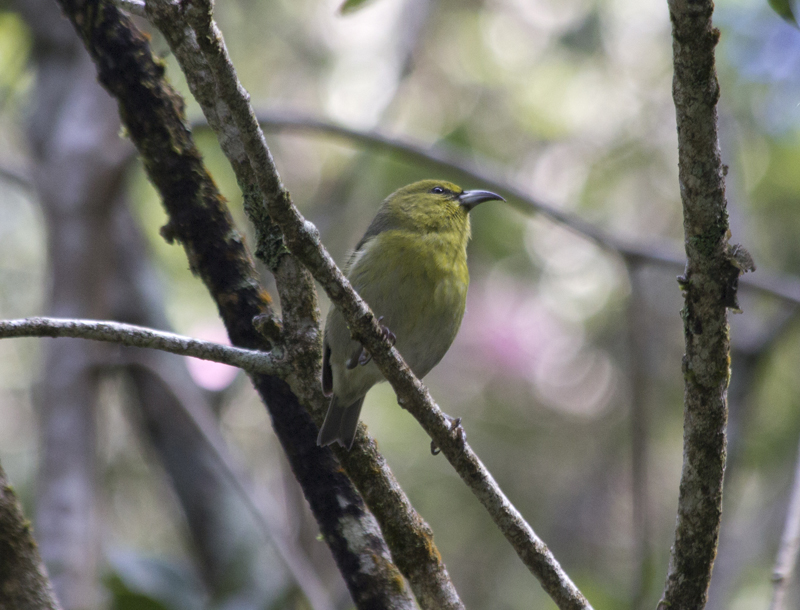
Wikimedia Commons
About the Kauai Amakihi
The Kauai Amakihi, scientifically known as Chlorodrepanis stejnegeri, is a small passerine bird endemic to the Hawaiian island of Kauai. This bird is part of the Fringillidae family, known for its adaptability and resilience in the face of environmental changes. The Kauai Amakihi plays a crucial role in its ecosystem as both a pollinator and insect controller. With its brilliant olive-green plumage, this bird enhances the lush Hawaiian landscapes.
Found predominantly in the native forests of Kauai, the Kauai Amakihi thrives in various elevations, ranging from coastal lowlands to montane regions. It occupies wet forests dominated by native tree species such as ohia lehua and koa. These forest habitats provide essential resources like nectar and insects, which form the basis of the Kauai Amakihi's diet.
The Kauai Amakihi's ecological role is significant, primarily due to its feeding habits. As a nectarivore, it pollinates native flowers while foraging, facilitating the reproductive processes of many endemic plant species. Additionally, its insectivorous diet aids in controlling insect populations, thereby maintaining the ecological balance. The bird's adaptability to different environments highlights its resilience, yet ongoing habitat destruction and introduced diseases pose potential threats. Understanding the Kauai Amakihi's habits and habitats offers insight into the health of Kauai's ecosystems, making conservation efforts crucial.
Seasonally, the Kauai Amakihi exhibits some changes in behavior and habitat use. During the breeding season, which typically spans from February to June, it becomes more territorial. Outside of this period, it may wander more widely in search of food, although it remains largely sedentary throughout its range. Despite its stable presence on the island, the Kauai Amakihi's reliance on native forests underscores the importance of preserving these habitats amidst increasing environmental pressures.
The Kauai Amakihi belongs to the family Fringillidae, within the order Passeriformes. These birds typically live 6-10 years, with some individuals living up to 12 years..
How to Identify a Kauai Amakihi
The Kauai Amakihi is a small, robust songbird with a length of approximately 11 centimeters. Its plumage is primarily olive-green, which provides excellent camouflage in its lush forest habitat. Adults exhibit a brighter, more vibrant green compared to juveniles, which tend to have a duller appearance. Males and females are similar in coloration, though males may appear slightly brighter.
The bird's bill is short and slightly curved, adapted for its dual role as a nectar feeder and insect hunter. Its legs are strong, aiding in its agile foraging behavior among branches and foliage. The Kauai Amakihi's eyes are dark, providing a striking contrast against its plumage.
When observing the Kauai Amakihi in flight, its short, rounded wings and slightly forked tail become apparent. The flight is typically swift and direct, allowing the bird to maneuver easily through dense forest canopies. While perched, the Kauai Amakihi displays an upright posture, often seen hopping along branches in search of food. Its olive-green hue can sometimes cause confusion with other Hawaiian honeycreepers, but the Kauai Amakihi's unique combination of size, coloration, and behavior aids in reliable identification.
Having trouble telling birds apart? Upload a photo to our bird identification tool for an instant species match.
Kauai Amakihi Habitat and Range
Preferred Habitat
The Kauai Amakihi inhabits a range of forested environments on Kauai, from coastal lowlands to montane regions. It thrives in wet forests dominated by native ohia lehua and koa trees, which provide both nectar and insect prey. These forests are typically found at elevations ranging from sea level up to 1,600 meters, highlighting the bird's adaptability.
Though primarily found in native forest habitats, the Kauai Amakihi can occasionally be seen in more disturbed areas, such as secondary forests and even near urban fringes. However, it generally avoids heavily urbanized areas, preferring the cover and resources provided by natural vegetation.
Seasonal shifts in habitat usage are minimal, as the Kauai Amakihi remains largely sedentary. Its presence across various elevations and habitats underscores its ecological versatility, yet the bird remains dependent on the availability of native flora and fauna, making habitat preservation critical for its continued survival.
Geographic Range
The Kauai Amakihi is endemic to the Hawaiian island of Kauai, where it inhabits a variety of forested environments. Its range encompasses the entire island, with a preference for native wet forests that provide abundant food resources.
Unlike some other Hawaiian honeycreepers, the Kauai Amakihi does not migrate, instead maintaining a stable presence throughout its range year-round. While it can occasionally be found in lower elevation areas, its primary strongholds are the mid to higher elevation forests, where it finds suitable breeding and feeding grounds.
Population density tends to be higher in undisturbed native forests, particularly those with a dense canopy of ohia lehua and koa trees. These areas not only offer optimal foraging opportunities but also shelter from potential predators and environmental disturbances. The Kauai Amakihi's relatively stable range highlights the importance of habitat conservation efforts to protect these crucial ecosystems.
Want to know which birds visit your area? Browse our backyard birds by location guides for region-specific species lists.
What Does the Kauai Amakihi Eat?
The Kauai Amakihi's diet primarily consists of nectar and insects, reflecting its role as both a pollinator and an insectivore. It frequently feeds on the nectar of native Hawaiian flowers, such as those from the ohia lehua tree, using its slightly curved bill to access the floral resources.
In addition to nectar, the Kauai Amakihi consumes a variety of insects and spiders, which provide essential proteins and nutrients. This insectivorous behavior aids in controlling local insect populations, contributing to the ecological balance within its habitat.
Seasonal variations in food availability may lead to shifts in feeding habits, though the Kauai Amakihi's adaptability allows it to exploit a wide range of food sources. Foraging techniques include gleaning insects from foliage and catching prey on the wing. The bird's feeding schedule is diurnal, with peak activity occurring during the early morning and late afternoon when insect and nectar availability is highest.
Kauai Amakihi Behavior and Social Structure
The Kauai Amakihi exhibits a range of behaviors that reflect its adaptability and ecological role. It is primarily a solitary bird, although it may be observed in small flocks, particularly outside the breeding season. The bird is highly territorial during the breeding season, with males vigorously defending their chosen areas through song and displays.
Courtship displays involve males performing aerial maneuvers and singing to attract females. Once paired, both sexes participate in nest building and parental care. The Kauai Amakihi's daily activity patterns are largely diurnal, with peak foraging occurring in the cooler parts of the day.
In response to predators, the Kauai Amakihi relies on its agility and camouflage. Alarm calls alert nearby individuals to potential threats, prompting a swift retreat into dense foliage. The bird's interactions with other species are generally competitive, particularly when nectar resources are involved. Despite these challenges, the Kauai Amakihi's behavior reflects its ability to thrive in a dynamic and sometimes harsh environment.
Kauai Amakihi Nesting and Reproduction
The Kauai Amakihi constructs cup-shaped nests using a variety of natural materials, including grass, moss, and spider silk. These nests are typically located in dense foliage, often in ohia lehua or koa trees, providing concealment from predators and harsh weather.
Clutch size generally ranges from one to three eggs, with the female primarily responsible for incubation. The incubation period lasts around 14 days, during which the male provides food to the female at the nest. After the eggs hatch, both parents share the responsibility of feeding the chicks, delivering a diet rich in insects and nectar.
Fledging occurs approximately 16-18 days after hatching, with young birds remaining dependent on their parents for several weeks post-fledging. The Kauai Amakihi typically raises one brood per year, although favorable conditions may occasionally allow for a second. The bird's nesting habits underscore the importance of preserving native forest habitats, ensuring the availability of suitable nesting sites.
Kauai Amakihi Sounds and Vocalizations
The Kauai Amakihi's song is a series of high-pitched, melodious notes, often described as a rapid warble. Its rhythm is lively, with a musical quality that carries well through the dense forest canopy. This song serves as both a territorial declaration and a courtship display.
In addition to its primary song, the Kauai Amakihi produces a variety of call notes, including sharp, metallic chips used in communication between mates and as alarm signals. These calls are particularly important during the breeding season, when territory defense and predator awareness are heightened.
During the dawn chorus, the Kauai Amakihi's voice can be heard among the symphony of other forest birds, contributing to the vibrant soundscape of its habitat. The bird's vocalizations are a crucial aspect of its behavior, playing roles in mate attraction, territory defense, and social interaction.
Interesting Facts About the Kauai Amakihi
- 1The Kauai Amakihi can tolerate low levels of avian malaria, a disease that decimated other Hawaiian honeycreeper populations.
- 2Unlike many Hawaiian birds, the Kauai Amakihi has adapted to feed on a variety of food sources, aiding its survival amid environmental changes.
- 3The bird's strong, curved bill is perfectly adapted for both nectar feeding and insect hunting, showcasing its ecological versatility.
- 4Kauai Amakihi are known to use spider silk as a binding material in their nests, providing strength and flexibility.
- 5Studies have shown that the Kauai Amakihi's population has remained stable despite threats, due in part to its adaptability.
- 6They are one of the few native Hawaiian birds that can still be found across a broad range of elevations, demonstrating their ecological resilience.
- 7The Kauai Amakihi contributes to the pollination of native Hawaiian plants, playing a key role in the island's ecosystem.
Kauai Amakihi Conservation Status
The Kauai Amakihi currently holds a conservation status of Least Concern according to the IUCN Red List, indicating a relatively stable population. However, this status belies the challenges facing the species, including habitat loss, introduced predators, and avian diseases such as avian malaria. Conservation efforts focus on habitat preservation, particularly the protection of native forests that support the Kauai Amakihi's ecological needs. Efforts to control invasive species and promote forest restoration are crucial in mitigating threats. Historical population fluctuations underscore the bird's resilience, yet ongoing vigilance is necessary to ensure its continued survival. In the broader context of Hawaiian avian conservation, the Kauai Amakihi serves as an indicator species, highlighting the health of native ecosystems. Its stability amidst environmental challenges offers hope for the preservation of Kauai's unique biodiversity, provided that conservation efforts remain robust and adaptive.


