
Kerguelen Shag
Leucocarbo verrucosus
Order: Suliformes / Family: Phalacrocoracidae
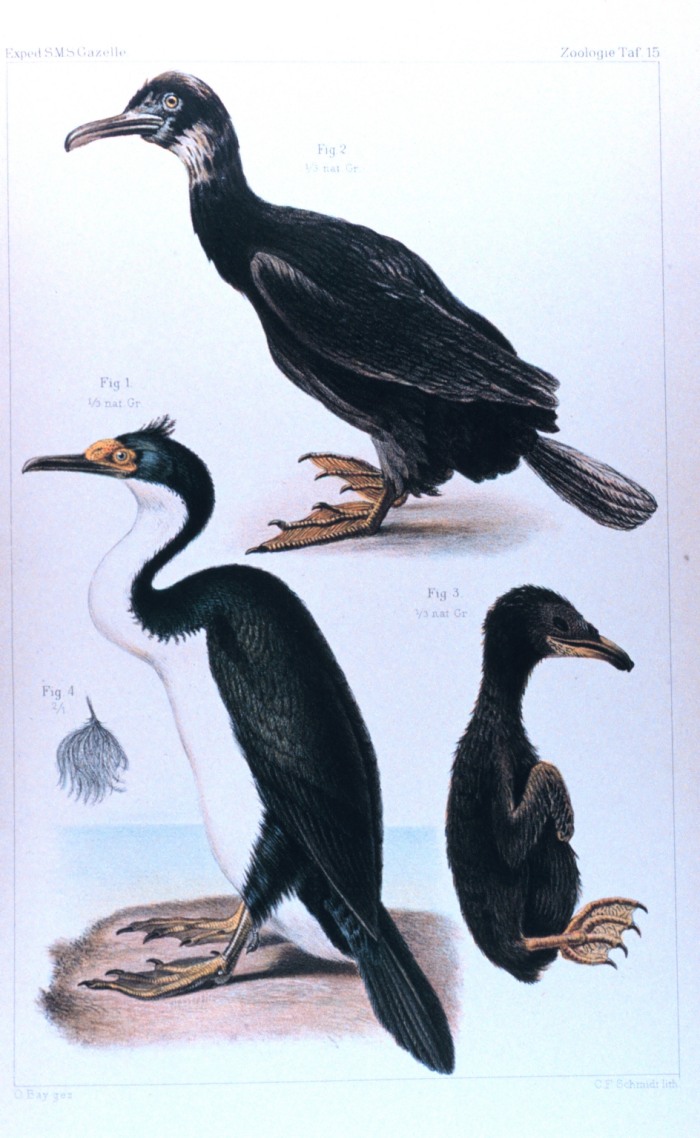
Wikimedia Commons
About the Kerguelen Shag
The Kerguelen Shag, scientifically known as Leucocarbo verrucosus, is a unique and captivating seabird inhabiting the remote subantarctic regions. Specifically found in the Kerguelen Islands, these shags are an essential component of the local ecosystem. They play a crucial role in marine food webs, primarily through their diet of fish and marine invertebrates. The Kerguelen Shag is part of the Phalacrocoracidae family, which includes cormorants and other shags. Unlike many of its relatives, this species is non-migratory, spending its entire life cycle in the harsh yet pristine environment of the Kerguelen Archipelago.
Kerguelen Shags exhibit distinct seasonal behaviors, driven by the challenging climate of their habitat. During the breeding season, which spans the austral summer months from November to March, these birds become highly territorial. They establish nesting sites on rocky outcrops and cliffs, where they are relatively safe from terrestrial predators. In contrast, the non-breeding season sees these shags foraging over vast expanses of ocean, exploiting different areas to find sufficient food resources.
The significance of Kerguelen Shags extends beyond their ecological role. They are a subject of interest for ornithologists studying adaptation and survival in subantarctic conditions. The shags' ability to thrive in such an inhospitable environment offers insights into evolutionary biology and the impacts of climate change on specialized species. As such, the Kerguelen Shag serves as an important indicator species, helping scientists monitor the health of the broader marine ecosystem in the Southern Ocean.
These shags are part of a broader group of blue-eyed shags, known for their striking eye coloration. This feature, along with their robust, streamlined bodies and powerful wings, makes them well-suited for life at sea. They are adept divers, capable of reaching impressive depths in pursuit of prey. Overall, the Kerguelen Shag is a remarkable example of avian adaptation, showcasing the beauty and resilience of wildlife in extreme environments.
The Kerguelen Shag belongs to the family Phalacrocoracidae, within the order Suliformes. These birds typically live average 15-20 years with a maximum recorded of 25 years..
How to Identify a Kerguelen Shag
The Kerguelen Shag is a medium-sized seabird with distinctive field marks that facilitate identification. Adults display a striking black and white plumage, with glossy black on the upperparts and a contrasting white underside. One of the most notable features is the bright blue ring surrounding their eyes, which is particularly vivid during the breeding season. Their bills are long and hooked, adapted for catching fish.
Juvenile Kerguelen Shags differ from adults in having a duller plumage, with more brownish tones replacing the stark black and white contrast seen in mature birds. As they age, the distinct adult coloration emerges. Both male and female shags look similar, although males are generally slightly larger and more robust overall.
In flight, the Kerguelen Shag's silhouette is characterized by a long neck and streamlined body, with wings held slightly forward, creating a swift and powerful flight profile. Perched shags exhibit an upright posture, often seen drying their wings, a behavior common among cormorants and shags due to their partially permeable feathers.
Having trouble telling birds apart? Upload a photo to our bird identification tool for an instant species match.
Kerguelen Shag Habitat and Range
Preferred Habitat
Kerguelen Shags inhabit the subantarctic region, specifically the Kerguelen Islands. These remote islands provide the ideal environment for their life cycle. The shags favor rocky coastlines and cliffs for nesting, where they can avoid ground-based predators and have easy access to the sea for foraging. They are typically found at sea level but may venture to elevated areas when searching for nesting sites.
During the breeding season, they concentrate in areas with ample rocky ledges and overhangs to support their nests. In the non-breeding months, they are more widely distributed, foraging across the surrounding ocean. Unlike some seabirds, the Kerguelen Shag does not adapt well to urban or highly modified environments, staying clear of human settlements and activities.
Geographic Range
The Kerguelen Shag is endemic to the Kerguelen Islands in the southern Indian Ocean. This remote archipelago is the sole breeding ground for the species. Unlike many seabirds, the Kerguelen Shag does not undertake long migrations. Their range is largely restricted to these islands and the surrounding oceanic waters.
During the breeding season, their range contracts to the nesting sites along the island's rocky coastlines. In contrast, during the non-breeding season, they disperse more broadly across the ocean, although they remain within the vicinity of the Kerguelen Islands. The population density is highest in areas with optimal nesting and foraging conditions, making certain coastal sections of the islands particularly important for conservation efforts.
Want to know which birds visit your area? Browse our backyard birds by location guides for region-specific species lists.
What Does the Kerguelen Shag Eat?
The Kerguelen Shag primarily feeds on fish, which constitute the bulk of its diet. They are adept divers, capable of reaching depths of up to 60 meters in search of prey. Their hunting strategy involves using their strong wings to propel themselves underwater, allowing them to chase and capture fast-moving fish.
In addition to fish, these shags consume various marine invertebrates, including crustaceans and cephalopods. Their diet can vary seasonally, depending on prey availability. During the breeding season, when energy demands are higher due to nesting activities, they may increase their intake of energy-rich prey.
The shags typically forage during daylight hours, often forming small groups that take advantage of cooperative hunting techniques. This behavior allows them to cover larger areas and increase their chances of encountering abundant prey schools.
Kerguelen Shag Behavior and Social Structure
Kerguelen Shags exhibit a range of intriguing behaviors that reflect their adaptation to the subantarctic environment. They are generally social birds, often seen in small flocks, particularly when foraging at sea. This social structure aids in locating and exploiting food resources more efficiently.
Territorial behavior becomes pronounced during the breeding season. Both males and females engage in displays to defend their nesting sites from intruders. Courtship displays include synchronized swimming and mutual preening, which strengthen pair bonds. These displays often occur in the vicinity of nesting sites and serve to establish and maintain breeding territories.
Kerguelen Shags are diurnal, with most of their activities, including foraging and social interactions, occurring during daylight hours. Their response to predators involves a combination of vigilance and group defense strategies. When threatened, they rely on their agility in the water to escape, often diving to evade aerial or marine predators.
Kerguelen Shag Nesting and Reproduction
The nesting habits of the Kerguelen Shag are intricately linked to the rugged coastal environment of their islands. They construct nests from seaweed, grasses, and other available vegetation. These nests are built on rocky ledges and cliffs, providing protection from terrestrial predators and harsh weather conditions.
The breeding season occurs from November to March, during which females lay a clutch of two to four eggs. Both parents participate in incubation, which lasts approximately 30 days. Once hatched, the chicks remain in the nest for about 60 days before fledging.
Parental care is intensive, with both adults involved in feeding and protecting the young. The abundance of marine resources near the nesting sites supports the high energy demands of raising chicks. Typically, Kerguelen Shags produce one brood per year, although favorable conditions may allow for occasional second broods.
Kerguelen Shag Sounds and Vocalizations
The vocalizations of the Kerguelen Shag are a key aspect of their communication, particularly during the breeding season. Their primary call is a series of low, gruff croaks, which can be heard resonating across their colonies. These calls play a crucial role in courtship, territorial defense, and maintaining social bonds.
Alarm calls are harsher and more urgent, serving as warnings to other shags about the presence of predators or intruders. During the dawn chorus, their calls contribute to the vibrant soundscape of the nesting colonies, blending with the calls of other seabirds.
Overall, the calls of the Kerguelen Shag are functional rather than melodious, with a focus on conveying information and coordinating social interactions.
Interesting Facts About the Kerguelen Shag
- 1Kerguelen Shags can dive to impressive depths of up to 60 meters, showcasing their exceptional underwater agility.
- 2Despite being non-migratory, Kerguelen Shags are capable of traveling significant distances at sea in search of food.
- 3The bright blue eye-ring of the Kerguelen Shag is most vivid during the breeding season, serving as a visual cue in courtship.
- 4These shags are part of the blue-eyed shag complex, a group known for their distinctive eye coloration among seabirds.
- 5Kerguelen Shags have a specialized preen gland that helps maintain the waterproofing of their feathers, crucial for diving.
- 6The remote Kerguelen Islands are the exclusive breeding grounds for the Kerguelen Shag, highlighting their ecological specialization.
- 7Their nests, made of seaweed and grasses, are expertly constructed on cliffs, exploiting natural features for stability.
Kerguelen Shag Conservation Status
The Kerguelen Shag is currently classified as Near Threatened on the IUCN Red List. While the population is not immediately at risk of extinction, it faces several threats that could impact its future stability. Climate change is a significant concern, as it affects oceanic conditions and prey availability. Human activities, such as fishing and pollution, pose additional risks, particularly if they lead to habitat degradation or prey depletion. Conservation efforts focus on monitoring population trends and protecting critical habitats from human disturbance. Historically, the population has experienced fluctuations, often linked to changes in environmental conditions. Continued research and conservation actions are necessary to ensure the long-term survival of the Kerguelen Shag in its unique subantarctic habitat.


