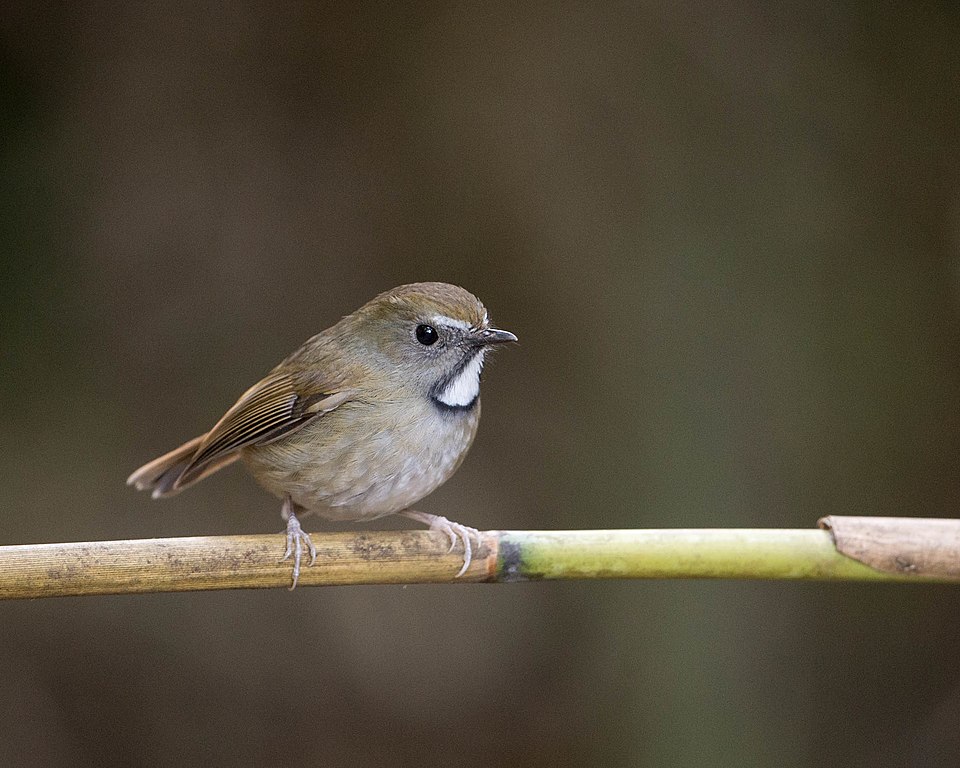
Large Blue Flycatcher
Cyornis magnirostris
Order: Passeriformes / Family: Muscicapidae

Wikimedia Commons
About the Large Blue Flycatcher
The Large Blue Flycatcher, scientifically known as Cyornis magnirostris, is a captivating member of the Muscicapidae family, renowned for its vibrant coloration and vocal prowess. This bird is predominantly found in the subtropical and tropical moist lowland forests of Southeast Asia, including countries like Thailand, Malaysia, and Indonesia. Its presence is most notable in regions with dense canopy cover, where it plays a crucial ecological role as both predator and seed disperser.
During the breeding season, which typically spans from March to June, the Large Blue Flycatcher can be observed engaging in elaborate courtship displays. These displays not only serve to attract mates but also to establish and defend territories from rival males. The bird's melodious song, characterized by a series of high-pitched notes, is a common sound in its preferred forested habitats during this time.
Ecologically, the Large Blue Flycatcher contributes significantly to the health of its ecosystem. By preying on insects, it helps maintain a balance in the insect population, preventing outbreaks that could harm plant life. Additionally, this flycatcher's feeding habits aid in seed dispersal, promoting forest regeneration and biodiversity. Its role as both a predator and a participant in seed dispersal underscores its importance in maintaining the ecological equilibrium of the regions it inhabits.
The Large Blue Flycatcher belongs to the family Muscicapidae, within the order Passeriformes. These birds typically live average 5-7 years with a maximum recorded of 10 years..
How to Identify a Large Blue Flycatcher
The Large Blue Flycatcher is distinguished by its vivid blue plumage, which is more pronounced in males. Adult males display a bright azure blue on the upperparts, while the underparts are a contrasting white. Females, though similar in size, exhibit a more subdued coloration, with a duller blue and a slight brown wash on the underparts.
Juveniles differ from adults, displaying mottled brown plumage that gradually transitions to the adult coloration as they mature. This species can be confused with the Blue-and-white Flycatcher, but the Large Blue Flycatcher lacks the distinct white throat patch found in the latter.
In flight, the Large Blue Flycatcher presents a compact silhouette, with a relatively short tail and rounded wings. When perched, it often adopts an upright posture, frequently flicking its wings and tail, a behavior that aids in insect detection and capture.
Having trouble telling birds apart? Upload a photo to our bird identification tool for an instant species match.
Large Blue Flycatcher Habitat and Range
Preferred Habitat
The Large Blue Flycatcher thrives in subtropical and tropical moist lowland forests, favoring areas with dense canopy cover and abundant undergrowth. These environments provide ample foraging opportunities and nesting sites. The species is typically found at elevations ranging from sea level up to 1,500 meters, although it primarily inhabits lowland regions.
Seasonal shifts in habitat are minimal, as the flycatcher tends to remain in forested areas year-round. While predominantly a forest dweller, it occasionally ventures into adjacent plantations and secondary growth areas, where it can adapt to slightly altered habitats.
In urban settings, sightings of the Large Blue Flycatcher are rare, as it prefers the tranquility and resources offered by more natural environments. Its presence is an indicator of healthy, mature forest ecosystems.
Geographic Range
The Large Blue Flycatcher has a distribution primarily across Southeast Asia. Its breeding range includes parts of Thailand, Malaysia, Indonesia, and occasionally extends into southern Myanmar and Vietnam. Within these countries, it is most common in lowland forested areas.
During the non-breeding season, the flycatcher remains largely within its breeding range, exhibiting limited migratory behavior. However, some populations may undertake short-distance movements in response to changes in food availability or habitat conditions.
Population density is highest in regions with extensive undisturbed forest cover, such as the rainforests of Borneo and Sumatra. These areas support robust flycatcher populations due to the abundance of food resources and suitable nesting sites.
Want to know which birds visit your area? Browse our backyard birds by location guides for region-specific species lists.
What Does the Large Blue Flycatcher Eat?
The diet of the Large Blue Flycatcher consists primarily of insects, including beetles, flies, and caterpillars. This dietary preference makes it an important insectivore within its ecosystem, contributing to the regulation of insect populations.
During the breeding season, the flycatcher may expand its diet to include small fruits and berries, providing additional nutrition necessary for rearing young. This opportunistic feeding behavior also aids in seed dispersal, promoting plant diversity within its habitat.
The flycatcher employs a sit-and-wait hunting strategy, often perching quietly before sallying out to capture prey mid-air. This method allows it to efficiently exploit the insect abundance within its forested environment. Feeding activity peaks during the early morning and late afternoon hours, aligning with periods of high insect activity.
Large Blue Flycatcher Behavior and Social Structure
The Large Blue Flycatcher exhibits a solitary or, at times, a loosely territorial social structure. Males establish territories during the breeding season and defend them vigorously through song and visual displays. Territorial disputes often involve singing duels and occasional physical confrontations.
Courtship displays are elaborate, with males performing aerial displays and presenting food items to prospective mates. These behaviors strengthen pair bonds and facilitate successful mating.
While typically solitary, the Large Blue Flycatcher may join mixed-species foraging flocks outside the breeding season. This behavior increases foraging efficiency and provides safety from predators. The bird exhibits a diurnal activity pattern, with peak activity times coinciding with periods of optimal light and prey availability.
Large Blue Flycatcher Nesting and Reproduction
The nesting habits of the Large Blue Flycatcher involve constructing cup-shaped nests, primarily using materials such as moss, small twigs, and leaves. These nests are strategically placed in the forks of tree branches, providing concealment from predators and a stable base for raising young.
Clutch sizes generally range from two to four eggs, with an incubation period lasting approximately 14 to 16 days. Both parents participate in incubation and subsequent feeding of the chicks, ensuring high survival rates for the offspring.
Fledging occurs about 14 days post-hatching, with the young remaining dependent on parental care for a few more weeks. The species typically raises one or two broods per season, depending on environmental conditions and food availability.
Large Blue Flycatcher Sounds and Vocalizations
The primary song of the Large Blue Flycatcher is a melodious series of high-pitched, flute-like notes. Each phrase typically lasts a few seconds and is repeated at regular intervals, serving as both a territorial proclamation and a mate attraction mechanism.
Call notes are sharp and distinctive, often used in communication between mates or as alarm calls when predators approach. These alarm calls are short, rapid, and can alert other bird species to potential danger.
The flycatcher's contribution to the dawn chorus is significant in its habitat, often being one of the first birds heard as the forest awakens. Its song is comparable to that of the Common Iora, yet possesses a more complex and melodious quality.
Interesting Facts About the Large Blue Flycatcher
- 1The Large Blue Flycatcher can catch insects in mid-air, displaying remarkable agility and precision.
- 2This species often participates in mixed-species foraging flocks, which can include up to 15 different bird species.
- 3The Large Blue Flycatcher's song can be heard up to 200 meters away in dense forest, thanks to its high-pitched notes.
- 4During courtship, males offer food to females as part of their bonding ritual, showing their ability to provide.
- 5Despite its vivid coloration, the Large Blue Flycatcher can remain surprisingly inconspicuous among dense foliage.
- 6The species can adapt to secondary growth forests, indicating some resilience to habitat alteration.
- 7Large Blue Flycatchers are known to be monogamous, maintaining the same breeding partner across several seasons.
Large Blue Flycatcher Conservation Status
As of the latest assessments, the Large Blue Flycatcher holds a status of Least Concern on the IUCN Red List. Its population trend appears stable, with no immediate major threats causing rapid declines. However, habitat loss due to deforestation and land conversion poses a potential long-term threat. Conservation efforts focus on protecting and restoring forest habitats, as well as implementing sustainable land-use practices in regions where the species occurs. Historical population changes have been minimal, though continued monitoring is necessary to ensure future stability. Conservationists advocate for the establishment of protected areas and the promotion of biodiversity-friendly policies to safeguard the flycatcher's habitat from anthropogenic pressures.