
Lesser Florican
Sypheotides indicus
Order: Otidiformes / Family: Otididae
Wikimedia Commons
About the Lesser Florican
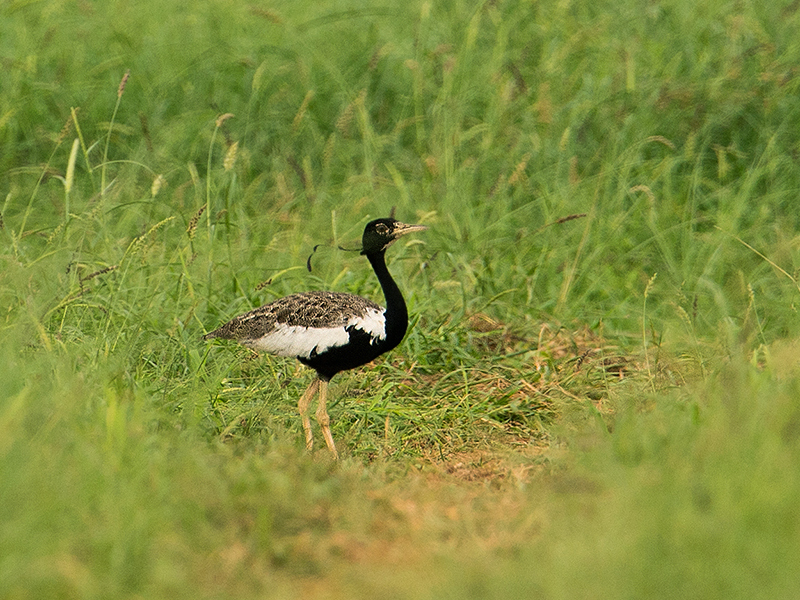
The Lesser Florican (Sypheotides indicus) is a captivating species of bustard endemic to the Indian subcontinent, primarily found in the grasslands of western and central India. Renowned for its remarkable courtship display, the male Lesser Florican leaps into the air during the breeding season, flapping its wings and emitting a distinctive croak to attract females. This species is one of the smallest members of the bustard family, yet it holds significant ecological importance due to its role as an indicator of healthy grassland ecosystems. The Lesser Florican thrives in semi-arid regions, particularly in the states of Rajasthan, Gujarat, and Madhya Pradesh. During the monsoon season, it takes advantage of the lush grasses that grow, which provide both cover and abundant food resources. The species' preference for grassland habitats makes it particularly vulnerable to habitat loss due to agricultural expansion and urbanization. As a result, the Lesser Florican is classified as Endangered by the IUCN. Its population has declined drastically over the past few decades, highlighting the urgent need for conservation efforts. The Lesser Florican plays a vital role in maintaining the ecological balance of its grassland habitat. By controlling insect populations and distributing seeds, it contributes to the biodiversity and health of its ecosystem. Observing this bird in its natural habitat offers insights into the complex interactions within grassland ecosystems and underscores the importance of preserving these environments for future generations.
The Lesser Florican belongs to the family Otididae, within the order Otidiformes. These birds typically live approximately 10 years in the wild, with limited data on longevity..
How to Identify a Lesser Florican
The Lesser Florican is a small bustard, with males measuring around 48 cm in length and females slightly smaller. Males feature a striking black plumage with white markings during the breeding season, while females are mottled brown, providing excellent camouflage. Outside of the breeding season, males resemble females, making them less conspicuous. Juveniles resemble females but are lighter in color. The male's breeding plumage is a key identifier, marked by a distinctive black neck and head, contrasting with white bands on its wings. In flight, the Lesser Florican's silhouette is characterized by broad, rounded wings and a relatively short tail. It often perches low on grass stalks, blending seamlessly with its surroundings. The bird's size and plumage help distinguish it from other bustard species, such as the Great Indian Bustard, which is significantly larger and more robust. Observing these field marks is crucial for accurate identification in the field.
Having trouble telling birds apart? Upload a photo to our bird identification tool for an instant species match.
Lesser Florican Habitat and Range
Preferred Habitat
The Lesser Florican primarily inhabits open grasslands, preferring areas with tall grasses that provide cover and feeding grounds. This species is commonly found at elevations of up to 1200 meters in regions like Rajasthan's semi-arid grasslands and parts of Gujarat and Madhya Pradesh. During the breeding season, it favors areas with dense, tall grasses that allow it to perform courtship displays. Outside of the breeding season, it may utilize cultivated fields and dryer scrublands, though it remains closely tied to natural grasslands. The species is rarely seen in urban environments, as it relies heavily on grassland ecosystems for survival. Seasonal shifts in habitat correspond with changes in grassland availability and food resources.
Geographic Range
The Lesser Florican is primarily found in India, with its breeding range concentrated in the grasslands of Rajasthan, Gujarat, and Madhya Pradesh. It is a partially migratory species, with some populations moving southward to southern India during the non-breeding season. Migration corridors include the open plains and grasslands that provide stopover sites for rest and foraging. While not strictly migratory, the Lesser Florican may undertake local movements in response to changes in habitat quality and availability. Population density is highest in protected areas where grassland preservation efforts are in place, though overall numbers continue to decline due to habitat fragmentation.
Want to know which birds visit your area? Browse our backyard birds by location guides for region-specific species lists.
What Does the Lesser Florican Eat?
The Lesser Florican has an omnivorous diet, primarily feeding on insects, seeds, and small vertebrates. During the monsoon season, when insect populations peak, it consumes a variety of grasshoppers, beetles, and other arthropods. Seeds form an essential part of its diet, particularly during the dry season when insect availability decreases. The florican uses a ground-foraging technique, picking insects and seeds from the ground and among grasses. Prey size varies, but it typically targets small to medium-sized insects and seeds. Feeding occurs primarily during the early morning and late afternoon, coinciding with peak insect activity and cooler temperatures.
Lesser Florican Behavior and Social Structure
The Lesser Florican exhibits fascinating behaviors, particularly during the breeding season when males engage in elaborate courtship displays. These displays involve high leaps into the air, rapid wing flapping, and vocalizations to attract females. Males are territorial during this time, fiercely defending their display sites from rivals. Outside of the breeding season, the Lesser Florican is generally solitary, though it may form small groups in areas with abundant food. Its response to predators is cautious; it relies on its cryptic plumage and stealth to avoid detection. Daily activity patterns include foraging during cooler parts of the day and resting in shaded areas during peak heat.
Lesser Florican Nesting and Reproduction
The Lesser Florican nests directly on the ground, often in a shallow scrape lined with grass and leaves. It prefers nesting sites in tall, dense grasses that offer concealment from predators. The typical clutch size ranges from two to four eggs, which are incubated solely by the female for about 21-23 days. After hatching, chicks are precocial and leave the nest shortly thereafter, though they remain dependent on the female for guidance and protection. The fledging period lasts approximately six weeks, during which the female provides food and teaches survival skills. Generally, the species raises one brood per year, though timing may vary with monsoon onset.
Lesser Florican Sounds and Vocalizations
The Lesser Florican's primary song during the breeding season is a series of low-pitched croaks, often described as a 'raak' sound, repeated in rapid succession. These vocalizations are typically accompanied by the male's aerial displays. Call notes include soft clucks and whistles, used for communication between individuals. Alarm calls are sharp and abrupt, alerting others to potential threats. The dawn chorus is marked by increased vocal activity, with males announcing their presence and establishing territories. Compared to other bustards, the Lesser Florican's vocalizations are softer and less varied.
Interesting Facts About the Lesser Florican
- 1The Lesser Florican holds the record for the highest leaping display among bustards, with leaps reaching up to 2 meters.
- 2During courtship, a male Lesser Florican may leap up to 500 times a day to attract a mate.
- 3The Lesser Florican is the only bustard species known to perform aerial displays as part of its courtship ritual.
- 4Once widespread across the Indian subcontinent, the Lesser Florican's population has declined by over 80% in the last century.
- 5Despite its small size, the Lesser Florican plays a crucial role in controlling grasshopper populations in its habitat.
- 6The Lesser Florican's breeding season closely aligns with the monsoon, ensuring ample food supply for its chicks.
- 7Historically, the Lesser Florican was considered a game bird, but hunting pressures have since diminished due to conservation laws.
Lesser Florican Conservation Status
Currently listed as Endangered by the IUCN, the Lesser Florican's population is decreasing due to habitat loss and fragmentation. Agricultural expansion, especially the conversion of grasslands to croplands, poses a significant threat. Conservation efforts focus on habitat restoration and protection, with initiatives to establish grassland reserves and promote sustainable land-use practices. Historically, the species was more widespread, but modern pressures have sharply reduced its range and population. Public awareness and engagement in conservation activities are crucial to reversing this trend and ensuring the Lesser Florican's survival.


