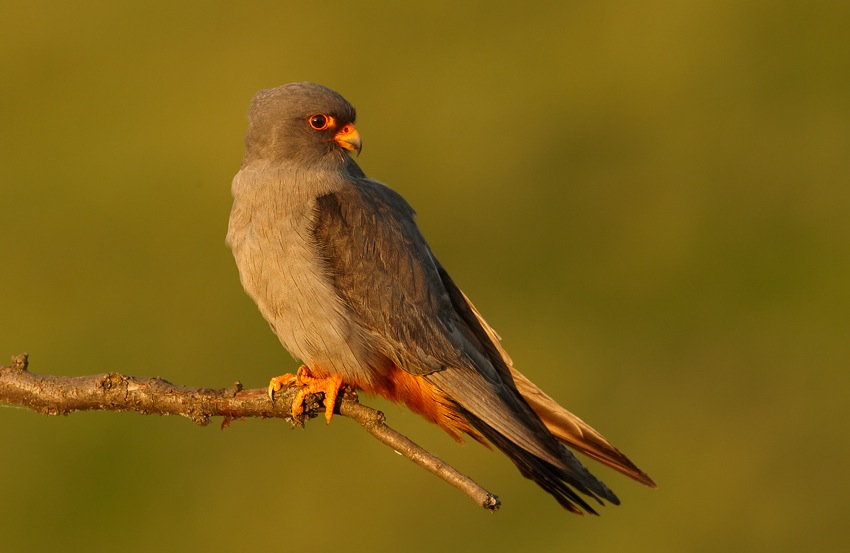
Lesser Kestrel
Falco naumanni
Order: Falconiformes / Family: Falconidae

Wikimedia Commons
About the Lesser Kestrel
The Lesser Kestrel, Falco naumanni, is a small falcon that has captivated ornithologists and bird watchers alike. Its populations are mainly distributed across southern Europe, North Africa, and parts of Asia, making it a fascinating species with a wide geographical presence. This bird plays a vital ecological role in controlling insect populations, primarily grasshoppers and other orthopterans. The Lesser Kestrel is a migratory species, with European populations wintering in sub-Saharan Africa, while Asian populations tend to move to the Indian subcontinent during the cold season. As a member of the family Falconidae, the Lesser Kestrel shares many characteristics with its relatives, yet it stands out due to its distinct migratory patterns and habitats.
Significant to its role in the ecosystem, the Lesser Kestrel acts as a natural pest control agent. By preying primarily on insects, it helps maintain the balance in agricultural landscapes, especially in areas where traditional farming methods persist. These birds often inhabit open fields and grasslands, where they can easily spot and catch their prey. During breeding seasons, Lesser Kestrels are found in semi-arid regions, often nesting in colonies. They prefer to nest in old buildings or cliffs, taking advantage of crevices and ledges.
The Lesser Kestrel's ecological significance extends beyond pest control. Its presence indicates a healthy environment with abundant insect life and suitable nesting sites. The bird's migratory behavior also contributes to the genetic diversity of populations, as individuals from different regions interbreed when they converge at wintering grounds. This genetic flow is essential for the resilience and adaptability of the species. Seasonal changes significantly influence the Lesser Kestrel's behavior, diet, and habitat preferences. In spring and summer, during the breeding season, they are more gregarious, forming colonies that can number in the hundreds. These colonies are often located in areas with a good supply of food, shelter, and nesting sites. As the seasons change and temperatures drop, they embark on their migratory journey, a spectacle that is both a marvel and a mystery of nature.
The Lesser Kestrel belongs to the family Falconidae, within the order Falconiformes. These birds typically live typically lives up to 10 years, with some individuals reaching 15 years..
How to Identify a Lesser Kestrel
The Lesser Kestrel is a small raptor, measuring about 27-33 cm in length with a wingspan of 63-72 cm. Adult males display a distinctive blue-gray head and tail, contrasting with their warm, orange-brown back and wings. The underparts are a pale, rusty color with minimal spotting, and the lack of a mustache stripe differentiates them from other kestrel species. Females and juveniles, however, have a more uniform brown coloration with distinct dark streaks on their upperparts and underparts. This plumage provides effective camouflage among the grasses and open fields they frequent.
While perched, the Lesser Kestrel adopts a characteristic posture, often seen on telephone wires or poles, with a slightly hunched appearance and tail wagging. In flight, it exhibits a distinctive silhouette with pointed wings and a long tail, showing a fluttery flight pattern that is unique among falcons. Compared to similar species, such as the Common Kestrel, the Lesser Kestrel lacks the black mustache mark and has a more delicate build.
Observing the Lesser Kestrel in flight reveals its agile and buoyant nature. It often hovers above fields, a behavior known as 'kiting,' as it searches for prey below. This ability to hover is one of its most recognizable traits and is essential for hunting in open landscapes. The Lesser Kestrel's flight is characterized by quick, shallow wing beats interspersed with glides, allowing it to cover vast areas in search of food.
Having trouble telling birds apart? Upload a photo to our bird identification tool for an instant species match.
Lesser Kestrel Habitat and Range
Preferred Habitat
The Lesser Kestrel inhabits a variety of open landscapes, thriving in grasslands, agricultural fields, and semi-arid environments. It prefers lowland areas but can be found at altitudes up to 1,500 meters, especially in mountainous regions during the breeding season. These birds are particularly common in southern Europe, where traditional farming practices provide an abundance of open fields and pastures.
In urban areas, Lesser Kestrels have adapted to nest in man-made structures, exploiting old buildings and even ruins for their nesting sites. This adaptation to urban environments showcases their versatility and ability to coexist with human activities. During migration, they traverse a range of habitats, including deserts and steppes, before settling in their wintering grounds in Africa and Asia. Seasonal shifts in habitat use are evident, with the birds moving from breeding grounds rich in nesting sites and food to wintering areas that provide a milder climate and abundant prey.
The Lesser Kestrel's habitat preferences underline its reliance on open spaces, where it can easily hunt and nest. Its ability to adapt to both rural and urban landscapes demonstrates its resilience in a changing world.
Geographic Range
The Lesser Kestrel's breeding range spans southern Europe, from Portugal and Spain through Italy and Greece, extending into eastern Europe and parts of central Asia, such as Kazakhstan and Uzbekistan. In North Africa, breeding populations are found in Morocco, Algeria, and Tunisia. This species undertakes long migratory journeys, with European populations wintering in sub-Saharan Africa, from Senegal and Mauritania to Ethiopia and Kenya.
Asian populations migrate to the Indian subcontinent, where they spend the winter months in regions such as Rajasthan and Gujarat. The migration corridors used by Lesser Kestrels are vast, with birds crossing deserts and seas, such as the Mediterranean, to reach their destinations. These routes highlight the remarkable endurance and navigational skills of the species.
Within their range, population densities vary, with hotspots in regions that offer ideal breeding conditions, such as the steppes of Spain and the plains of Kazakhstan. These areas support large colonies, providing insights into the social structure and breeding behavior of the Lesser Kestrel.
Want to know which birds visit your area? Browse our backyard birds by location guides for region-specific species lists.
What Does the Lesser Kestrel Eat?
The Lesser Kestrel primarily feeds on insects, with a strong preference for grasshoppers, locusts, and crickets. These prey items form the bulk of their diet, especially during the breeding season when food demand is high. Lesser Kestrels employ a variety of foraging techniques, including hovering or 'kiting' over fields to spot prey before diving to catch it.
In addition to insects, Lesser Kestrels occasionally consume small mammals, birds, and reptiles, particularly when insect availability is low. Seasonal diet changes are evident, with a greater reliance on vertebrate prey during migration when insect populations may be less predictable.
The size of prey items typically ranges from 2 to 5 cm, though they can take larger prey if necessary. Lesser Kestrels primarily hunt during the day, with peak activity in the early morning and late afternoon when prey is most active. Their efficient hunting methods and dietary flexibility enable them to exploit a wide range of environments as they migrate and breed.
Lesser Kestrel Behavior and Social Structure
Lesser Kestrels exhibit a gregarious social structure, forming large colonies during the breeding season. These colonies can consist of hundreds of pairs, highlighting their preference for communal living. Within these colonies, territorial behavior is minimal, with individuals often seen perching together. Courtship displays are subtle, involving aerial chases and food offerings by males to females, strengthening pair bonds.
Outside the breeding season, Lesser Kestrels form loose flocks, especially during migration, when they travel in groups for safety and efficiency. Their response to predators is primarily evasive, taking advantage of their agile flight to escape threats. However, they will also mob smaller raptors that venture too close to their nesting sites.
Daily activity patterns follow a diurnal schedule, with peak activity occurring at dawn and dusk. During these times, they engage in hunting and social interactions, while mid-day heat often leads to reduced activity and resting. This daily rhythm allows them to balance energy expenditure with the need for foraging and socializing.
Lesser Kestrel Nesting and Reproduction
Lesser Kestrels typically nest in colonies, utilizing a variety of sites that include old buildings, cliffs, and rocky outcrops. They do not build elaborate nests, instead opting for simple scrapes or utilizing existing cavities. The choice of nesting site is influenced by the availability of crevices and ledges, offering protection from predators and harsh weather.
A typical clutch consists of 3-6 eggs, with incubation lasting around 28-30 days. Both parents share incubation duties, although the female usually takes the lead. Once hatched, chicks are fed by both parents, with a diet rich in insects to ensure rapid growth. Fledging occurs approximately 30 days after hatching, with young birds remaining dependent on their parents for several weeks as they learn to hunt.
Lesser Kestrels generally raise one brood per year, though in favorable conditions, a second brood may occur. This reproductive strategy reflects their adaptation to variable environmental conditions and food availability.
Lesser Kestrel Sounds and Vocalizations
The Lesser Kestrel's vocalizations are distinctive, with a primary call that is a high-pitched, repetitive 'klee-klee-klee.' This call is often heard during flight or when birds are perched within their colonies. The rhythm is rapid, with a clear and piercing quality that carries over long distances.
In addition to these primary calls, Lesser Kestrels produce softer chattering sounds, especially during social interactions or when feeding young. Alarm calls are sharp and urgent, serving to warn colony members of approaching threats.
During the dawn chorus, the Lesser Kestrel's calls can be heard alongside other species, contributing to the vibrant soundscape of its habitat. These vocalizations play an essential role in maintaining social bonds and coordinating activities within colonies.
Interesting Facts About the Lesser Kestrel
- 1Lesser Kestrels hover in place while hunting, a behavior known as 'kiting,' allowing them to spot prey from above.
- 2Unlike many raptors, Lesser Kestrels do not have a prominent mustache stripe, setting them apart from similar species.
- 3Lesser Kestrels have been known to travel over 5,000 kilometers during migration, showcasing their endurance.
- 4Their colony sizes can reach up to 1,000 pairs, one of the highest among small falcons, indicating strong social behavior.
- 5The Lesser Kestrel's diet shifts seasonally, with insects as the primary food source during the breeding season.
- 6During migration, Lesser Kestrels can form large flocks, providing safety in numbers and facilitating social interactions.
- 7The species' preference for nesting in man-made structures has helped it adapt to changing environments.
Lesser Kestrel Conservation Status
The IUCN currently lists the Lesser Kestrel as 'Least Concern,' although populations have experienced fluctuations. Habitat loss due to agricultural intensification and urban development poses a significant threat. Conservation efforts focus on preserving traditional farming landscapes and providing artificial nesting sites to support colony establishment. Historically, pesticide use has also impacted Lesser Kestrel populations by reducing prey availability and causing direct poisoning. Population trends vary regionally, with some areas witnessing declines while others report stable or even increasing numbers. Continued monitoring and habitat management are crucial to ensuring the Lesser Kestrel's long-term survival.
Other Falconidae Species


Birds Similar to the Lesser Kestrel
These species are often confused with the Lesser Kestrel due to similar appearance or overlapping range.