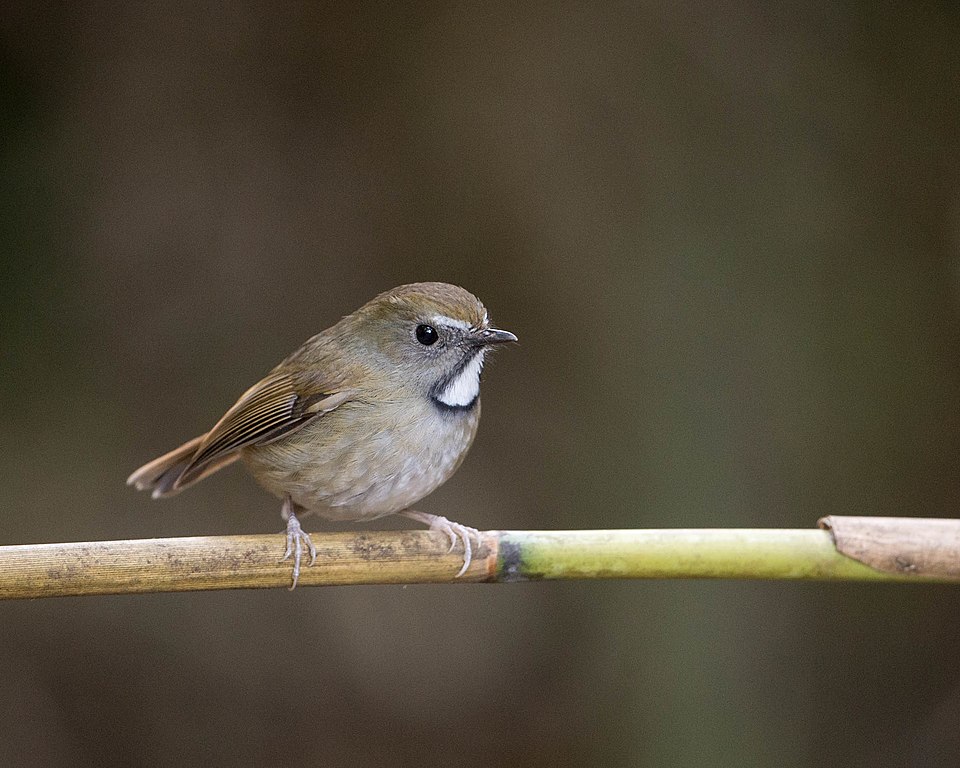
Little Slaty Flycatcher
Ficedula basilanica
Order: Passeriformes / Family: Muscicapidae

Wikimedia Commons
About the Little Slaty Flycatcher
The Little Slaty Flycatcher (Ficedula basilanica) is an intriguing member of the Muscicapidae family. This small passerine bird, endemic to the Philippines, is primarily found on the islands of Basilan, Mindanao, and Bohol, thriving in the humid, lowland tropical forests. These forests provide the dense cover and rich insect life that the Little Slaty Flycatcher needs for survival. Its presence is a crucial part of the forest ecosystem, participating in the control of insect populations. The bird's ecological role extends beyond mere insect control, as it serves as prey for larger avian predators, thus contributing to the balance of the food web. During the breeding season, which typically aligns with the rainy months from May to October, the Little Slaty Flycatcher becomes more vocal and active, engaging in courtship and defending territories. This seasonal behavior is an essential aspect of its life cycle, ensuring successful reproduction in a challenging environment. The Little Slaty Flycatcher's significance extends to its status as an indicator species. Its presence or absence can reveal much about the health of its forest habitat. Populations of the Little Slaty Flycatcher are sensitive to habitat destruction, primarily due to logging and agricultural expansion. Conservation efforts aimed at preserving its habitat are crucial, as these efforts help maintain the intricate balance of the ecosystems in which it thrives. As with many island species, the Little Slaty Flycatcher faces threats from habitat fragmentation and degradation, but conservationists continue to work towards sustainable solutions that benefit both the bird and the local human populations. Efforts include the establishment of protected areas and reforestation projects that aim to restore degraded habitats. The Little Slaty Flycatcher's adaptability to its environment, along with its specialized diet and foraging behaviors, highlights its role as a key species in the forest ecosystems of the Philippines.
The Little Slaty Flycatcher belongs to the family Muscicapidae, within the order Passeriformes. These birds typically live typically 5 years, with a maximum recorded up to 8 years..
How to Identify a Little Slaty Flycatcher
The Little Slaty Flycatcher, a small bird measuring around 13 cm in length, is characterized by its predominantly gray plumage, which often appears slaty or bluish-gray under certain lighting conditions. Adults have a uniform gray coloration on the head, back, and wings, with a slightly lighter throat and breast. The subtle contrast between its back and underparts can be a key identifying feature. Juveniles, in contrast, exhibit a more mottled appearance with brownish tones and a less defined gray coloration. This difference in plumage is vital for birders trying to distinguish age classes in the field. Both sexes of the Little Slaty Flycatcher are similar in appearance, though males may exhibit a slightly more vibrant gray, especially during the breeding season. The bird's compact silhouette, with a short tail and rounded wings, is noticeable in flight and when perched. Its posture is typically upright when perched on branches or vines in the forest understory. Birders may confuse this species with similar flycatchers, such as the Blue-and-white Flycatcher (Cyanoptila cyanomelana), but the Little Slaty Flycatcher lacks the distinct blue and white contrast. Observing the bird's habitat and listening for its unique vocalizations can further aid in proper identification.
Having trouble telling birds apart? Upload a photo to our bird identification tool for an instant species match.
Little Slaty Flycatcher Habitat and Range
Preferred Habitat
The Little Slaty Flycatcher inhabits the dense, humid lowland tropical forests of the Philippines, particularly thriving in areas with a rich understory and abundant insect life. These forests provide the shelter and food resources essential for its survival. The bird is typically found at elevations ranging from sea level up to 1,200 meters, although it is more commonly observed in lowland areas. During the non-breeding season, it may venture into secondary forests and forest edges, but it generally avoids open areas and urban environments. The Little Slaty Flycatcher's preference for undisturbed forest habitats makes it a reliable indicator of forest health. Seasonal shifts in habitat use are minimal, as the bird remains largely sedentary throughout the year, relying on the consistent availability of insect prey in its preferred habitats. Conservation of its habitat is crucial, as deforestation poses a significant threat to its population.
Geographic Range
The Little Slaty Flycatcher is endemic to the Philippines, with its range restricted to several islands, including Basilan, Mindanao, and Bohol. This limited range makes the bird particularly vulnerable to habitat changes. Within these islands, it inhabits lowland tropical forests, where it can find suitable conditions for feeding and breeding. The species does not undertake long-distance migrations, instead maintaining a relatively sedentary lifestyle. However, some local movements may occur in response to food availability or environmental changes. The population density is highest in areas of continuous, undisturbed forest, where the bird can effectively exploit its ecological niche. Conservation efforts focus on preserving these key areas to ensure the continued survival of the species.
Want to know which birds visit your area? Browse our backyard birds by location guides for region-specific species lists.
What Does the Little Slaty Flycatcher Eat?
The diet of the Little Slaty Flycatcher primarily consists of insects and other small arthropods, which it captures through adept aerial foraging. The bird employs a sit-and-wait strategy, perching quietly on a branch before sallying out to snatch prey mid-air. This method allows it to conserve energy while effectively targeting flying insects. During the wet season, when insect populations peak, the Little Slaty Flycatcher takes advantage of the abundance, feeding more frequently and vigorously. Its diet may also include spiders and occasionally small fruits or seeds, supplementing its nutritional intake. The bird predominantly forages during the early morning and late afternoon, avoiding the intense midday heat. This feeding schedule aligns with the active periods of many insect species, maximizing the bird's foraging efficiency.
Little Slaty Flycatcher Behavior and Social Structure
The Little Slaty Flycatcher exhibits a range of behaviors that reflect its adaptability to the dense forest environments it inhabits. Socially, it is a solitary bird outside the breeding season, typically seen alone or in pairs. During the breeding season, males become territorial, engaging in vocal displays and occasional skirmishes to defend their territory from rivals. The bird's courtship displays involve a series of calls and subtle wing and tail movements, designed to attract females. The Little Slaty Flycatcher is diurnal, exhibiting peak activity during the early morning and late afternoon when foraging and territorial activities occur. In response to predators, the bird relies on its cryptic coloration to remain undetected, often freezing or retreating into thicker foliage. Its flight is characterized by short, direct bursts, which aid in navigating through the dense forest understory. Despite its solitary nature, the Little Slaty Flycatcher may join mixed-species foraging flocks, taking advantage of the increased foraging success and predator vigilance these groups provide.
Little Slaty Flycatcher Nesting and Reproduction
The Little Slaty Flycatcher constructs a cup-shaped nest, often placed in the fork of a tree or shrub, concealed by dense foliage. The nest is composed of twigs, moss, and leaves, bound together with spider silk, providing a sturdy yet camouflaged structure. The female typically lays a clutch of 2-3 eggs, which she incubates for approximately 14 days. Both parents participate in feeding the chicks, which fledge around two weeks after hatching. The fledging process is critical, as the young birds must quickly learn to fly and forage independently. The Little Slaty Flycatcher generally raises one brood per year, although favorable conditions may allow for a second. Parental investment is high, with both the male and female involved in defending the nest and delivering food to the chicks. This cooperative behavior ensures high survival rates for the offspring in the challenging forest environment.
Little Slaty Flycatcher Sounds and Vocalizations
The Little Slaty Flycatcher's primary song consists of a series of soft, melodious whistles, often repeated in a rhythmic pattern. Each note is clear and slightly ascends in pitch, creating a gentle, soothing sound that resonates through the forest. The bird also produces a variety of call notes, including sharp 'tsee' and 'chip' sounds used for communication between mates and signaling alarm. During the dawn chorus, its song contributes to the rich tapestry of sounds that characterize the Philippine forest mornings. The bird's vocalizations are less frequent outside the breeding season, but attentive birders can still detect its calls amidst the forest cacophony.
Interesting Facts About the Little Slaty Flycatcher
- 1The Little Slaty Flycatcher is named for its slaty-gray plumage, a color that provides excellent camouflage.
- 2Despite its limited range, the Little Slaty Flycatcher has adapted to various forest types, showcasing its ecological versatility.
- 3The bird's song is often described as one of the more melodious among Philippine flycatchers.
- 4The Little Slaty Flycatcher's reliance on dense forests makes it an important indicator of forest health.
- 5Its diet primarily consists of insects, but it occasionally consumes small fruits, showcasing dietary flexibility.
- 6Both parents share responsibility in raising the young, highlighting the species' cooperative breeding behavior.
- 7The species' scientific name, Ficedula basilanica, reflects its strong association with the island of Basilan.
Little Slaty Flycatcher Conservation Status
The Little Slaty Flycatcher is currently listed as Near Threatened on the IUCN Red List, with its population trend showing signs of decline. The primary threat to this species is habitat loss due to deforestation, driven by logging and agricultural expansion. Conservation efforts focus on protecting the remaining lowland forest habitats through the establishment of protected areas and sustainable land management practices. Historical data suggests that the species was once more widely distributed, but habitat destruction has led to population fragmentation. Ongoing research aims to monitor population trends and assess the effectiveness of conservation strategies to ensure the species' long-term survival.