
MacGillivray's Warbler
Geothlypis tolmiei
Order: Passeriformes / Family: Parulidae
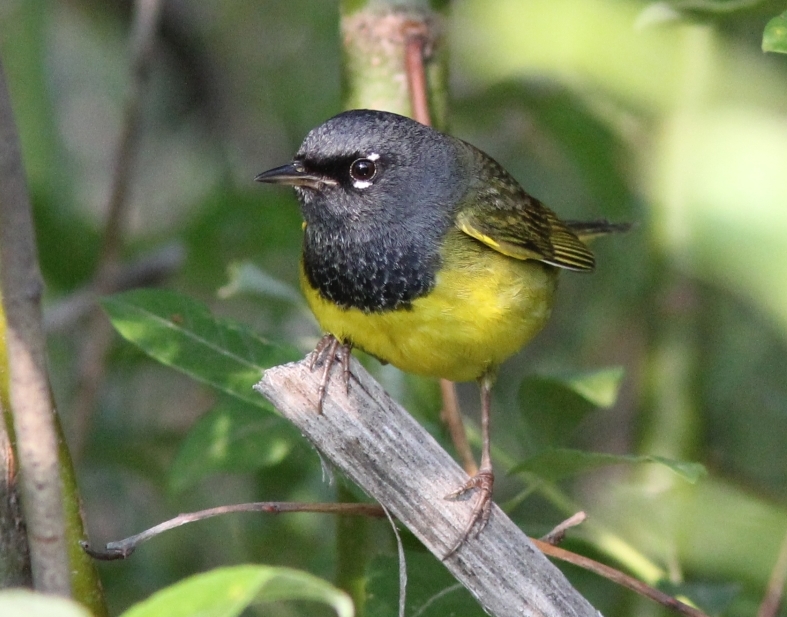
Wikimedia Commons
About the MacGillivray's Warbler
The MacGillivray's Warbler, Geothlypis tolmiei, is a small songbird that thrives in shrubby habitats throughout western North America. Named after the Scottish ornithologist William MacGillivray, this bird plays a vital ecological role as both a prey species for larger predators and a consumer of various insects. The species occupies a variety of habitats ranging from coastal thickets to mountainous regions, thriving in areas with dense shrubbery and undergrowth.
During the breeding season, the MacGillivray's Warbler can be found primarily in the Pacific Northwest, extending through to the western slopes of the Rockies. It prefers moist, deciduous forests with a thick understory, particularly favoring willows, alders, and similar vegetation. This preference for dense cover not only provides ample foraging opportunities but also offers protection from predators.
In winter, the MacGillivray's Warbler migrates to Mexico and Central America, where it inhabits similar shrubby areas. This seasonal migration is crucial for its survival, as it follows the availability of food resources across regions. The bird's adaptability to different environments highlights its importance in maintaining the health of ecosystems by controlling insect populations. Additionally, the MacGillivray's Warbler contributes to seed dispersal, aiding in plant regeneration and biodiversity. Its presence across a diverse range of climates and habitats underscores its resilience and ecological significance.
The MacGillivray's Warbler belongs to the family Parulidae, within the order Passeriformes. These birds typically live average lifespan of 5-7 years, with a maximum recorded of 11 years..
How to Identify a MacGillivray's Warbler
The MacGillivray's Warbler is a small songbird, measuring around 13-14 cm in length, with a wingspan of approximately 18 cm. Adult males are easily identified by their distinctive gray hoods, which extend over their heads and throats. The rest of their plumage is primarily olive-green on the upperparts and bright yellow on the underparts. In contrast, adult females and juveniles have a more subdued appearance, with a paler hood and less vivid yellow underparts.
The white eye crescents of the MacGillivray's Warbler are a key field mark, setting it apart from similar species such as the Mourning Warbler, which lacks this feature. The male's gray hood also distinguishes it from the Common Yellowthroat, which has a black mask. In flight, the MacGillivray's Warbler exhibits a rapid, fluttery pattern, and while perching, it often flicks its tail and wings, a behavior useful for identification.
In terms of posture, the MacGillivray's Warbler tends to be quite active and is often seen foraging low to the ground in dense shrubs. This characteristic behavior, combined with its distinctive markings, makes it easier for birders to spot amidst the thick foliage.
Having trouble telling birds apart? Upload a photo to our bird identification tool for an instant species match.
MacGillivray's Warbler Habitat and Range
Preferred Habitat
MacGillivray's Warblers inhabit a variety of dense, shrubby environments. During the breeding season, they prefer moist, deciduous forests with a thick understory, such as those found in the Pacific Northwest and the western slopes of the Rocky Mountains. They are particularly fond of riparian zones, where willows and alders provide excellent cover.
In winter, their habitat shifts to the shrubby forests of Mexico and Central America. Here, they maintain their preference for dense vegetation, residing in areas that offer similar cover to their breeding grounds. These warblers can be found at elevations ranging from sea level to mountainous regions, depending on the season.
The MacGillivray's Warbler also shows some adaptability to human-altered environments, occasionally venturing into suburban gardens or parks with sufficient shrub cover. However, they generally avoid open, urban settings, preferring the protection and resources offered by more natural habitats.
Geographic Range
The breeding range of the MacGillivray's Warbler spans much of western North America. It extends from the Pacific Northwest, including Washington and Oregon, eastward to the western slopes of the Rocky Mountains in Idaho, Montana, and Colorado. During this period, they are particularly common in the dense, shrubby areas of British Columbia and Alberta in Canada.
In the winter, the MacGillivray's Warbler migrates south to Mexico and Central America. They are frequently observed in the highlands of Guatemala, Honduras, and Nicaragua. This seasonal movement follows established migration corridors along the western U.S. and Central American mountain ranges.
Population density hotspots during the breeding season include the coastal thickets of Washington and Oregon, where the availability of suitable habitat is high. The MacGillivray's Warbler is considered a common species within its range, although its population density can be patchy depending on habitat availability.
Want to know which birds visit your area? Browse our backyard birds by location guides for region-specific species lists.
What Does the MacGillivray's Warbler Eat?
The diet of the MacGillivray's Warbler primarily consists of insects and other small invertebrates. During the breeding season, they consume a variety of caterpillars, beetles, and spiders, which provide the necessary protein for egg production and chick development. They are skilled foragers, often seen gleaning insects from leaves and stems in dense shrubs.
As the seasons change, their diet may include more fruit, particularly during migration and in winter. In their wintering grounds, they have been observed consuming berries from shrubs such as elderberry and pokeweed. This dietary flexibility allows them to exploit different food resources depending on seasonal availability.
Foraging typically occurs during the day, with peak activity in the early morning and late afternoon. The MacGillivray's Warbler exhibits a methodical approach to foraging, often flitting energetically through thick vegetation and occasionally hovering to pluck insects from foliage.
MacGillivray's Warbler Behavior and Social Structure
MacGillivray's Warblers are solitary or found in pairs during the breeding season, exhibiting strong territorial behavior as males vigorously defend their nesting areas through song and physical displays. Their courtship involves a series of subtle displays, with males performing fluttering flights and presenting food to females.
During migration, they may join mixed-species flocks, which offer protection against predators. Flocking behavior is less common in their breeding and wintering grounds, where they prefer to remain inconspicuous amidst dense vegetation.
Daily activities of the MacGillivray's Warbler are largely diurnal, with most foraging occurring during the early morning and late afternoon. They respond to predators with a series of alarm calls and evasive maneuvers, often retreating to the densest part of the underbrush. Their ability to remain undetected is a key survival strategy, particularly during nesting and fledging periods.
MacGillivray's Warbler Nesting and Reproduction
The MacGillivray's Warbler constructs a cup-shaped nest, typically placed low to the ground within dense shrubs or thickets. The nest is made from grasses, leaves, and bark, lined with finer materials such as animal hair or plant fibers. This concealed location provides protection from predators and harsh weather.
Clutch size ranges from 3 to 5 eggs, with the female primarily responsible for incubation, which lasts about 11 to 13 days. Both parents participate in feeding the nestlings, which fledge approximately 8 to 11 days after hatching. The young remain dependent on their parents for a short period post-fledging, learning essential survival skills.
MacGillivray's Warblers typically raise one brood per year, although a second brood is possible in optimal conditions. Their nesting strategy focuses on maximizing reproductive success while minimizing predation risks.
MacGillivray's Warbler Sounds and Vocalizations
The primary song of the MacGillivray's Warbler consists of a series of short, rapid trills and slurs, often described as a lively "witchety-witchety-witchety." This song is clear and emphatic, with a distinct rhythm that makes it recognizable even amidst dense foliage.
In addition to their song, MacGillivray's Warblers produce a variety of call notes, including a sharp "chip" used for communication between mates and a softer call when foraging. Alarm calls are more urgent and rapid, alerting others to the presence of predators.
During the dawn chorus, their song is a prominent feature in their habitat, serving both to defend territories and attract mates. The vocalizations of the MacGillivray's Warbler are essential for maintaining social structures and ensuring reproductive success.
Interesting Facts About the MacGillivray's Warbler
- 1The MacGillivray's Warbler was named by John James Audubon after his friend William MacGillivray, a Scottish ornithologist.
- 2Despite its bright coloration, the MacGillivray's Warbler is often difficult to spot due to its preference for dense underbrush.
- 3The warbler's migratory journey spans thousands of miles each year, from breeding grounds in North America to wintering sites in Central America.
- 4MacGillivray's Warblers have been observed to hybridize with Mourning Warblers in regions where their ranges overlap.
- 5Their ability to consume a wide variety of insects helps control pest populations in their habitats.
- 6During migration, these warblers often travel at night, taking advantage of cooler temperatures and reduced predation risk.
- 7The species was once considered a subspecies of the Mourning Warbler but was later recognized as distinct due to differences in plumage and song.
MacGillivray's Warbler Conservation Status
The MacGillivray's Warbler is currently listed as a species of Least Concern by the IUCN, with populations stable across its range. However, habitat loss due to development and agriculture poses ongoing threats, particularly in its breeding and wintering grounds. Conservation efforts focus on preserving essential habitats such as riparian zones and dense shrublands. Organizations work with landowners and policymakers to promote sustainable land-use practices that benefit both the warbler and other native species. Historically, the MacGillivray's Warbler has maintained relatively stable populations, thanks in part to its adaptability and broad range. Continued monitoring and habitat protection remain crucial to ensuring its long-term survival.
Other Parulidae Species


Birds Similar to the MacGillivray's Warbler
These species are often confused with the MacGillivray's Warbler due to similar appearance or overlapping range.


