
Malabar Gray Hornbill
Ocyceros griseus
Order: Bucerotiformes / Family: Bucerotidae
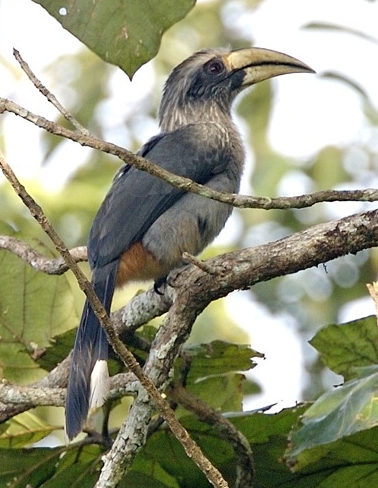
Wikimedia Commons
About the Malabar Gray Hornbill
The Malabar Gray Hornbill, scientifically known as Ocyceros griseus, is a captivating bird endemic to the Western Ghats of India. This hornbill species plays a crucial role in the ecosystem as a seed disperser, contributing significantly to the health of tropical forests. Their presence in regions such as the Nilgiri Hills, Anamalai Hills, and the southern parts of Karnataka and Kerala underscores their preference for dense, evergreen forest habitats. The bird’s ecological role extends beyond seed dispersal; it is an indicator of forest health and biodiversity. Seasonal behaviors of the Malabar Gray Hornbill include changes in feeding patterns and movement in response to fruiting cycles of native trees. During the breeding season, which typically coincides with the monsoon, these hornbills exhibit unique nesting behaviors that further involve them in the life cycles of the forests they inhabit. Their activities during this period reflect the complex interplay between avian life and the environment. As a non-migratory species, the Malabar Gray Hornbill remains within its range year-round, demonstrating adaptability to seasonal variations in resources. The bird’s significance also extends to cultural aspects in local communities, where its presence is often associated with the health and vitality of the forest landscape. As a species endemic to a biodiversity hotspot, the Malabar Gray Hornbill serves as a focal point for conservation efforts aimed at preserving the Western Ghats’ unique flora and fauna. By understanding the ecology and behaviors of Ocyceros griseus, conservationists can better implement strategies to protect these critical habitats. The hornbill’s role as a flagship species also helps raise awareness of the broader ecological threats facing the Western Ghats, such as deforestation and habitat fragmentation. In this regard, the Malabar Gray Hornbill is not only a subject of scientific interest but also a symbol for the conservation of India’s rich natural heritage.
The Malabar Gray Hornbill belongs to the family Bucerotidae, within the order Bucerotiformes. These birds typically live average 15 years, with a maximum recorded of 20 years..
How to Identify a Malabar Gray Hornbill
The Malabar Gray Hornbill exhibits a predominantly gray plumage with a paler, almost white belly. The bird’s most distinguishing feature is the long, curved bill topped with a prominent casque, which is smaller and less developed than those of larger hornbill species. Adults have a distinctive white supercilium above their eyes, creating a striking contrast with the darker feathers around their head. Juveniles resemble adults but lack the fully developed casque, making them somewhat less recognizable in the field. Males and females appear similar, though males typically have slightly larger bills and casques. The bird’s flight silhouette is characterized by broad wings and a long tail, which aid in maneuvering through dense forest canopies. In perching posture, the Malabar Gray Hornbill displays its robust body and strong legs, often seen clutching branches in a slightly hunched position. Unlike some other hornbill species, it does not exhibit vibrant colors, which helps it blend into the subtropical forest environment. This camouflaging ability can sometimes lead to confusion with similar gray birds; however, the bill and casque features remain definitive identifiers.
Having trouble telling birds apart? Upload a photo to our bird identification tool for an instant species match.
Malabar Gray Hornbill Habitat and Range
Preferred Habitat
The Malabar Gray Hornbill inhabits the evergreen and moist deciduous forests of the Western Ghats, thriving in altitudes ranging from sea level up to about 2000 meters. These forests provide the dense canopy cover and fruiting trees that are essential for their survival. The bird favors areas with a rich diversity of trees such as ficus and wild nutmeg, which produce the fruits it relies on for food. During certain seasons, particularly in response to fruiting patterns, the hornbill may shift its habitat slightly within the forest to find adequate resources. While primarily a forest inhabitant, the Malabar Gray Hornbill can occasionally be observed in rural areas adjacent to forest edges, especially when forests are fragmented. However, it is less commonly found in urban settings, as it requires intact forest environments to thrive. The bird’s presence in a particular area often signals a well-preserved forest ecosystem.
Geographic Range
The Malabar Gray Hornbill is found exclusively in the Western Ghats of southwestern India, a region known for its high levels of endemism and biodiversity. Its range extends from the southern tip of the Indian Peninsula in Kerala and Tamil Nadu, northwards through Karnataka, and into the state of Goa. The bird does not migrate, maintaining its presence in this range throughout the year. Within the Western Ghats, the hornbill is most commonly associated with larger, contiguous tracts of forest, where its population density is highest. Despite being a year-round resident, the bird may exhibit some local movement within its range to exploit seasonal food resources. The Western Ghats' status as a UNESCO World Heritage site underscores the global importance of preserving the habitats within the bird's range, which are under threat from deforestation and agricultural expansion.
Want to know which birds visit your area? Browse our backyard birds by location guides for region-specific species lists.
What Does the Malabar Gray Hornbill Eat?
The Malabar Gray Hornbill primarily feeds on a diet of fruits, with a particular preference for figs, which are abundant in its forest habitat. Its diet varies seasonally based on the availability of fruiting trees. During times of fruit scarcity, the hornbill supplements its diet with small insects, lizards, and occasionally small mammals, showcasing its opportunistic feeding behavior. It employs a variety of foraging techniques, including gleaning fruit directly from branches and catching insects in flight. The bird’s strong bill is well adapted for breaking open tough fruit skins, allowing it to access the nutritious pulp inside. Feeding typically occurs during the cooler parts of the day, such as early morning and late afternoon, reducing the risk of overheating in the tropical climate. The hornbill’s role as a frugivore makes it an essential seed disperser, facilitating the growth of new trees and maintaining the forest’s ecological balance.
Malabar Gray Hornbill Behavior and Social Structure
The Malabar Gray Hornbill is a social bird, often seen in small family groups or pairs. It exhibits strong territorial behavior, especially during the breeding season, when pairs actively defend their nesting sites from intruders. Courtship displays involve bill clattering and mutual preening, strengthening pair bonds. Outside the breeding season, these hornbills may join larger mixed-species flocks, which can enhance foraging efficiency and offer protection from predators. When threatened, the hornbill emits loud, harsh calls to alert others in the area, and it may join forces with other birds to mob potential predators. Daily activity patterns include active foraging in the early morning and late afternoon, with periods of rest during the hottest parts of the day. The bird’s interactions with its environment highlight its adaptability and social nature, traits that play a key role in its survival and ecological success.
Malabar Gray Hornbill Nesting and Reproduction
The Malabar Gray Hornbill nests in natural tree cavities, typically selecting large, mature trees with suitable hollows. The female seals herself inside the cavity using a mixture of mud, droppings, and food remains, leaving only a narrow opening through which the male supplies food. This behavior reduces the risk of predation during the nesting period, which lasts approximately 40 days for incubation and an additional 40 to 50 days until fledging. A typical clutch consists of two to three eggs, with both parents playing active roles in feeding and caring for the chicks. The male’s provisioning efforts are critical, as he must supply enough food for the entire family until the female and chicks emerge. The nesting cycle repeats annually, with a single brood typically produced each year. The hornbill’s nesting strategies are highly adapted to its forest environment, ensuring the survival of its young.
Malabar Gray Hornbill Sounds and Vocalizations
The Malabar Gray Hornbill produces a variety of sounds, the most notable being its loud, cackling calls that can carry over long distances through the forest. The primary song consists of a series of repetitive, harsh notes that increase in tempo, often described as a laughing call. These calls serve multiple purposes, including territory defense and communication between mates. Alarm calls are sharper and more staccato, used to warn of approaching predators. During the dawn chorus, the hornbill’s calls contribute to the cacophony of forest sounds, establishing its presence in the territory. The vocalizations of the Malabar Gray Hornbill are distinctive, aiding in identification even when the bird is not visible.
Interesting Facts About the Malabar Gray Hornbill
- 1The Malabar Gray Hornbill can consume up to 150 figs in a day, highlighting its role as a key seed disperser.
- 2This species is one of the few hornbills that does not have a prominent casque, making it unique among its relatives.
- 3The Malabar Gray Hornbill spends nearly 40% of its time foraging, underscoring the importance of fruit availability in its habitat.
- 4Although primarily a frugivore, the Malabar Gray Hornbill will eat small animals when fruit is scarce, demonstrating dietary flexibility.
- 5The female hornbill seals herself in the nest cavity for up to 90 days, relying entirely on the male for food during this period.
- 6Malabar Gray Hornbills are known to form small family groups, unlike many hornbill species that are more solitary.
- 7Its loud cackling call can be heard up to a kilometer away, making it one of the more vocal birds in its habitat.
Malabar Gray Hornbill Conservation Status
The Malabar Gray Hornbill is currently listed as Least Concern by the IUCN, but its population is thought to be decreasing due to habitat loss and fragmentation. Deforestation for agriculture and urban development poses significant threats to its forest habitats. Conservation efforts focus on protecting large tracts of forest within the Western Ghats, promoting sustainable land use practices, and raising awareness of the hornbill’s ecological importance. Historical population changes have correlated with increased human activity in the region, highlighting the need for ongoing conservation measures. While the species remains relatively common within its range, proactive efforts are essential to ensure its continued survival.


