
Many-striped Canastero
Asthenes flammulata
Order: Passeriformes / Family: Furnariidae
Wikimedia Commons
About the Many-striped Canastero
The Many-striped Canastero (Asthenes flammulata) is a fascinating member of the Furnariidae family, displaying a notable blend of ecological versatility and striking plumage. It inhabits high-altitude regions of the Andes, primarily in countries such as Ecuador, Colombia, and Peru. This bird thrives in open areas with dense shrubbery, commonly found in páramo and puna grasslands, where it plays an integral role in the ecosystem. Its presence is often an indicator of healthy montane habitats. The Many-striped Canastero is well-adapted to the harsh conditions of its high-altitude habitat, where temperatures can fluctuate dramatically. Its dense plumage provides warmth, while its foraging strategy helps maintain ecological balance by controlling insect populations. The bird's role extends beyond mere pest control, as it also contributes to seed dispersal through its interaction with the vegetation. During the breeding season, which typically occurs from October to December, the Many-striped Canastero becomes more vocal and territorial. This period sees increased activity as pairs establish breeding territories and construct nests, often hidden within dense vegetation or rocky crevices. The bird's adaptability to its environment is further demonstrated by its ability to adjust its feeding habits according to seasonal availability of food.
The Many-striped Canastero belongs to the family Furnariidae, within the order Passeriformes. These birds typically live typically 5-8 years in the wild, with some individuals reaching up to 10 years..
How to Identify a Many-striped Canastero
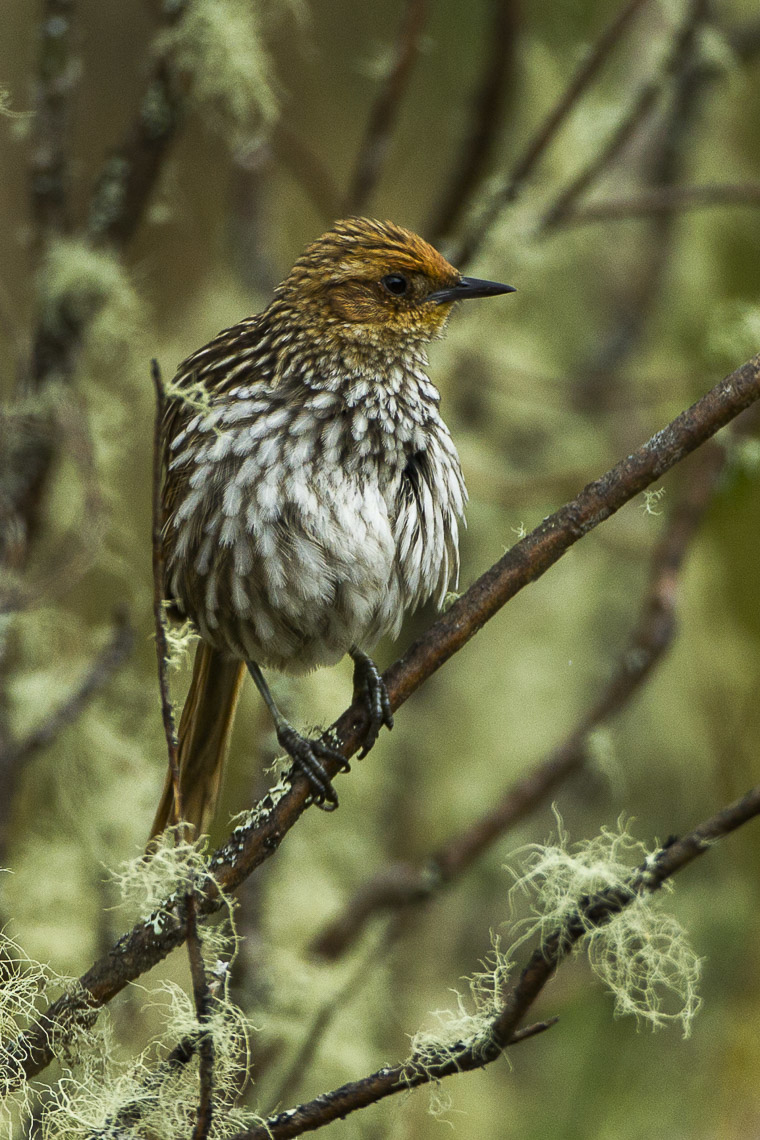
The Many-striped Canastero is a medium-sized bird, measuring about 15 to 17 centimeters in length. Adult plumage is characterized by its distinctive barred pattern, with a combination of brown and cream stripes running longitudinally across its back and wings. This pattern provides excellent camouflage among the grasses and shrubs of its native habitat. The bird's underparts are lighter, typically a pale buff color with subtle streaking. Juveniles resemble adults but have duller tones and less pronounced barring. Males and females appear similar, although males may exhibit slightly brighter plumage. The Canastero's flight is typically short and direct, with rapid wingbeats creating a blur of stripes. When perched, it often holds its tail slightly cocked, giving it a distinctive silhouette. Confusion with similar species such as the Streak-backed Canastero can occur, but the Many-striped Canastero's more pronounced barring and overall patterning provide key identification markers.
Having trouble telling birds apart? Upload a photo to our bird identification tool for an instant species match.
Many-striped Canastero Habitat and Range
Preferred Habitat
The Many-striped Canastero inhabits high-altitude grasslands and shrublands within the Andes. It thrives in páramo and puna ecosystems, which are characterized by open landscapes with tussock grasses and sparse bushes. The bird is typically found at elevations ranging from 3,500 to 4,500 meters, where it exploits the dense vegetation for shelter and foraging. Despite its preference for these remote areas, the Canastero can occasionally be found in disturbed habitats near agricultural lands, particularly where native vegetation persists. Seasonal habitat shifts are minimal, as the bird is largely non-migratory, although it may move locally in response to severe weather conditions.
Geographic Range
The Many-striped Canastero's range spans the high Andes, stretching from southern Colombia through Ecuador and into northern and central Peru. It occupies a relatively restricted range, primarily confined to the eastern slopes of the Andes. Despite this limited range, it remains a common resident within its preferred habitats. The bird does not undertake long-distance migrations, instead remaining within its alpine territories year-round. Population density tends to be higher in regions where suitable montane habitats are extensive and contiguous, such as in the central Andean highlands.
Want to know which birds visit your area? Browse our backyard birds by location guides for region-specific species lists.
What Does the Many-striped Canastero Eat?
The primary diet of the Many-striped Canastero consists of insects and other small invertebrates. It forages actively among grass tussocks and low shrubs, using its bill to probe the ground and leaf litter. The bird's diet shifts seasonally, with an increased consumption of seeds and plant material during periods of lower insect availability. It often feeds alone or in pairs, rarely forming larger foraging flocks. Prey size varies but typically includes small beetles, caterpillars, and spiders. The Canastero follows a flexible feeding schedule, foraging throughout the day with peaks during the cooler morning and late afternoon hours.
Many-striped Canastero Behavior and Social Structure
The Many-striped Canastero exhibits a solitary or paired social structure, with individuals or pairs aggressively defending territories during the breeding season. This territorial behavior is often accompanied by vocal displays, which serve to assert dominance and attract mates. Courtship involves a series of aerial displays and song exchanges between potential partners. Outside the breeding season, the Canastero may be more tolerant of conspecifics but still maintains a degree of territoriality. When threatened by predators, it relies on its camouflaged plumage to remain undetected, often retreating into dense vegetation. Its daily activity patterns are diurnal, with foraging and territorial activities concentrated during daylight hours.
Many-striped Canastero Nesting and Reproduction
The nesting habits of the Many-striped Canastero are adapted to its harsh environment. Nests are constructed within dense shrubbery or rocky crevices, providing protection from predators and the elements. The nest is a domed structure, built primarily from grass stems and lined with softer materials such as feathers and plant down. Clutch sizes typically range from two to three eggs, which the female incubates for approximately 16 to 18 days. Both parents participate in feeding the chicks, which fledge about two to three weeks after hatching. The Canastero generally raises one brood per year, although favorable conditions may result in a second.
Many-striped Canastero Sounds and Vocalizations
The primary song of the Many-striped Canastero is a series of rapid, high-pitched trills that can carry over long distances in its open habitat. This song serves both territorial and mate attraction purposes. Call notes are sharp and metallic, often used as contact calls between pairs. Alarm calls are more urgent and harsh, alerting others to potential threats. The Canastero participates in a dawn chorus, becoming particularly vocal just before sunrise when its calls resonate across the montane landscape.
Interesting Facts About the Many-striped Canastero
- 1The Many-striped Canastero's high-altitude habitat, the páramo, is one of the world's rarest ecosystems, providing unique challenges and opportunities for adaptation.
- 2Despite its remote habitat, the Many-striped Canastero is one of the more common species encountered by birders exploring the Andes.
- 3The Many-striped Canastero's nesting strategy includes using rocky crevices to protect against the cold and predators.
- 4Due to its distinctive song, the Many-striped Canastero can be heard long before it is seen in its dense, shrubby habitat.
- 5The Many-striped Canastero's plumage provides excellent camouflage, making it a master of disguise among the grasses and shrubs.
- 6Breeding pairs of Many-striped Canasteros often engage in vocal duets, reinforcing pair bonds and territorial claims.
- 7The Many-striped Canastero contributes to its ecosystem by controlling insect populations and aiding in seed dispersal.
Many-striped Canastero Conservation Status
The Many-striped Canastero is currently classified as Least Concern by the IUCN, with stable population trends across its range. However, its high-altitude habitats face threats from climate change, which could alter the delicate balance of páramo and puna ecosystems. Habitat degradation from agriculture and grazing also poses risks. Conservation efforts focus on preserving these unique habitats and monitoring population dynamics. Historical data suggest that the Canastero has maintained stable numbers, but ongoing habitat protection remains crucial.


