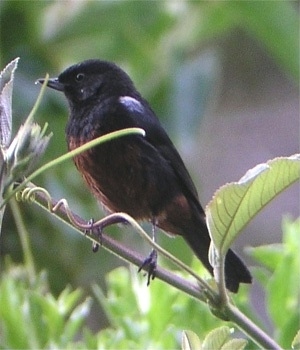
Masked Flowerpiercer
Diglossa cyanea
Order: Passeriformes / Family: Thraupidae

Wikimedia Commons
About the Masked Flowerpiercer
The Masked Flowerpiercer (Diglossa cyanea) is a captivating bird that inhabits the cloud forests and montane regions of the Andes. Known for its vibrant blue plumage and unique black facial mask, this species plays a vital role in the ecosystem as a pollinator. The bird is predominantly found in countries such as Colombia, Ecuador, Peru, and Venezuela, thriving in the humid, high-altitude forests that characterize these regions. The Masked Flowerpiercer is an important component of Andean biodiversity, often seen flitting among the trees in search of nectar and insects. As a member of the Thraupidae family, it contributes to the complex web of life in these rich habitats.
Masked Flowerpiercers exhibit fascinating behaviors depending on the season. During the breeding season, they become more territorial and vocal, establishing their presence through a series of sharp calls and trills. In non-breeding periods, they often join mixed-species foraging flocks, benefiting from the collective vigilance and increased foraging success. This adaptability in behavior highlights the bird's integration into its environment and its interactions with other species.
Ecologically, the Masked Flowerpiercer is crucial for its role in pollination and seed dispersal. As it probes flowers for nectar, it inadvertently transfers pollen, aiding in the reproductive cycles of numerous plant species. This mutualistic relationship underscores the bird's significance in maintaining the health and diversity of its habitat. The presence of the Masked Flowerpiercer is indicative of the rich biodiversity found within Andean montane ecosystems, making its conservation a priority for maintaining these unique habitats.
The Masked Flowerpiercer belongs to the family Thraupidae, within the order Passeriformes. These birds typically live 6-8 years with a maximum recorded of 10 years.
How to Identify a Masked Flowerpiercer
The Masked Flowerpiercer boasts a striking appearance with its bright blue plumage contrasted by a prominent black mask extending from around the eyes across the face. Adults display this vivid coloration, which serves not only as a visual delight for observers but also aids in identification. Juveniles, however, have a more subdued plumage with a darker, more muted blue and less defined mask, rendering them less conspicuous than their mature counterparts.
Males and females of the species are similar in appearance, though females might exhibit slightly duller coloration, lacking the intensity of the males' blue. This subtle dimorphism can occasionally lead to confusion in the field, especially when observing from a distance or in poor lighting conditions. The bird's compact size and robust body, complemented by its sharp, curved bill, are adapted for its unique feeding habits.
In flight, the Masked Flowerpiercer presents a fast and agile silhouette, characterized by quick wingbeats and a direct trajectory. When perched, it often adopts an alert posture, frequently flicking its tail and moving with a lively energy. This bird can sometimes be mistaken for other tanagers with similar coloration, but its distinct mask and feeding behavior help set it apart.
Having trouble telling birds apart? Upload a photo to our bird identification tool for an instant species match.
Masked Flowerpiercer Habitat and Range
Preferred Habitat
Masked Flowerpiercers inhabit the humid, montane cloud forests typical of the Andes, flourishing at elevations ranging from 1,500 to 3,500 meters. These birds thrive in the dense, moss-laden forests, where they find ample food sources and nesting opportunities. The cloud forests of Colombia, Ecuador, Peru, and Venezuela provide the ideal environment for the Masked Flowerpiercer's lifestyle.
In these high-altitude forests, the bird benefits from the rich diversity of floral species, which provide both nectar and insect prey. Seasonal changes in habitat use are minimal, as the Masked Flowerpiercer tends to remain within its preferred elevational range year-round. While urban environments do not typically attract these birds, they can occasionally be spotted in rural areas adjacent to suitable forest habitats. Their presence serves as an indicator of healthy forest ecosystems, underscoring the importance of conserving these specialized habitats.
Geographic Range
The Masked Flowerpiercer's range is primarily concentrated in the Andean regions of South America, with sightings recorded from northern Venezuela through Colombia, Ecuador, and into northern Peru. This distribution aligns with the bird's preference for montane cloud forests, which provide the necessary resources for survival and reproduction.
Though the species does not undertake long-distance migrations, it may exhibit altitudinal movements in response to seasonal variations in food availability. During the breeding season, Masked Flowerpiercers establish territories within the forest's dense canopy, while non-breeding times see them joining mixed-species flocks, sometimes descending to slightly lower elevations in search of food.
Population density varies across its range, with higher concentrations noted in regions with extensive, undisturbed forest cover. Conservation efforts in these areas are crucial for maintaining healthy populations of the Masked Flowerpiercer, as habitat destruction poses a significant threat to this vibrant bird.
Want to know which birds visit your area? Browse our backyard birds by location guides for region-specific species lists.
What Does the Masked Flowerpiercer Eat?
The diet of the Masked Flowerpiercer is diverse, primarily consisting of nectar and a variety of insects. This bird employs its specialized, curved bill to pierce flowers and access nectar, a feeding strategy that has earned it its common name. In addition to nectar, the bird forages for insects among the foliage, providing a critical protein source, especially during the breeding season when energy demands are high.
Seasonal changes influence the bird's diet, with a more significant reliance on insects during periods when nectar availability diminishes. The Masked Flowerpiercer is an active forager, often seen hopping along branches and clinging to flowers in search of food. Its feeding schedule is typically diurnal, with peak activity occurring during the early morning and late afternoon when floral nectar is abundant.
The bird's role as a pollinator is highlighted by its feeding habits, as it inadvertently aids in the pollination of numerous plant species while seeking nectar. This relationship underscores the ecological importance of the Masked Flowerpiercer within its habitat.
Want to attract Masked Flowerpiercers to your yard? See our recommended feeders and seed types for the best results.
Masked Flowerpiercer Behavior and Social Structure
Masked Flowerpiercers exhibit a range of intriguing behaviors, reflecting their adaptability and social nature. These birds are generally gregarious, often forming small groups or joining mixed-species flocks outside the breeding season. This flocking behavior provides several advantages, including enhanced foraging efficiency and increased protection from predators.
During the breeding season, however, the Masked Flowerpiercer becomes more territorial. Males engage in vocal displays and physical posturing to secure a breeding territory and attract mates. Their calls are sharp and distinct, serving as both a deterrent to rivals and an invitation to potential partners. Courtship displays involve rapid movements and vocalizations, showcasing the male's vitality and suitability as a mate.
Daily activity patterns of the Masked Flowerpiercer include periods of intense foraging interspersed with rest and preening. The bird remains vigilant against predators such as hawks and snakes, employing alarm calls and relying on dense foliage for cover. Its adaptive behaviors and social interactions highlight the bird's role within its ecosystem, where it contributes to the dynamic balance of its cloud forest home.
Masked Flowerpiercer Nesting and Reproduction
The nesting habits of the Masked Flowerpiercer are as fascinating as its other behaviors. The bird constructs a cup-shaped nest using a combination of moss, grass, and plant fibers, often lined with softer materials for insulation. Nests are typically located in dense foliage, providing concealment from predators and protection against the elements.
Clutch size for the Masked Flowerpiercer generally ranges from two to three eggs per breeding cycle. Both parents share the responsibilities of incubation, which lasts approximately 14 to 16 days. After hatching, the fledgling period extends for another 14 to 18 days, during which both male and female contribute to feeding and caring for the young.
The Masked Flowerpiercer may produce one to two broods per year, depending on environmental conditions and food availability. Parental roles are well-defined, with both birds demonstrating a strong commitment to rearing their offspring, ensuring the survival and continuation of the species in their montane habitat.
Masked Flowerpiercer Sounds and Vocalizations
The vocal repertoire of the Masked Flowerpiercer is characterized by its primary song, a series of sharp, melodic trills that resonate through its montane habitat. The rhythm and pitch of these songs vary, but they are generally high-pitched and brisk, serving both territorial and mate-attraction purposes.
In addition to its primary song, the Masked Flowerpiercer emits a variety of call notes, including sharp chips and whistles, which facilitate communication between individuals, especially within mixed-species flocks. Alarm calls are more rapid and urgent, alerting conspecifics to potential threats in the environment.
The dawn chorus of the Masked Flowerpiercer is particularly notable, as the bird joins its avian neighbors in a vibrant symphony of sound that greets the new day. These vocalizations, while distinct, can be compared to the clear, ringing tones of a small bell, marking the presence of this striking bird in its Andean home.
Interesting Facts About the Masked Flowerpiercer
- 1The Masked Flowerpiercer's curved bill is specially adapted to pierce flowers and access nectar, a unique trait among Andean birds.
- 2Despite its striking appearance, the Masked Flowerpiercer is often overlooked due to its preference for high-altitude cloud forests.
- 3The black 'mask' of the Masked Flowerpiercer serves as a distinctive field mark, helping to set it apart from other blue birds.
- 4Masked Flowerpiercers play a key role as pollinators in their ecosystem, inadvertently aiding plant reproduction while feeding.
- 5This species often joins mixed-species flocks, benefiting from the combined foraging efforts and increased vigilance of the group.
- 6The Masked Flowerpiercer is non-migratory, residing year-round in the Andean cloud forests, though it may move altitudinally.
- 7Researchers have noted that the bird's song can vary slightly between regions, reflecting subtle differences in local populations.
Masked Flowerpiercer Conservation Status
The conservation status of the Masked Flowerpiercer is currently listed as Least Concern by the IUCN, reflecting stable population trends across its range. Despite this, the species faces ongoing threats from habitat destruction and fragmentation, primarily due to agricultural expansion and deforestation in the Andes. Conservation efforts focus on preserving cloud forest habitats and promoting sustainable land-use practices that balance human needs with ecological health. Initiatives to expand protected areas and reforest degraded landscapes aim to ensure the Masked Flowerpiercer's continued presence in its natural habitat. Historically, the population of the Masked Flowerpiercer has remained relatively stable, thanks to its adaptability and the resilience of its montane ecosystem. Continued vigilance and proactive conservation measures are essential to safeguard the future of this vibrant species and the unique habitats it inhabits.
Attracting Masked Flowerpiercers to Your Feeder
The Masked Flowerpiercer is a regular visitor to backyard bird feeders across its range. At the Eye On The Fly feeding station, we observe Masked Flowerpiercers regularly and capture footage with our feeder cameras.
Other Thraupidae Species


Birds Similar to the Masked Flowerpiercer
These species are often confused with the Masked Flowerpiercer due to similar appearance or overlapping range.