
Mindanao Serin
Chrysocorythus mindanensis
Order: Passeriformes / Family: Fringillidae
Wikimedia Commons
About the Mindanao Serin
The Mindanao Serin (Chrysocorythus mindanensis) is a small passerine bird endemic to the Philippines, specifically found on the island of Mindanao. This serin is a member of the Fringillidae family, which includes finches, and plays a significant role in the ecosystem by contributing to seed dispersal. It thrives in the montane forests of Mindanao, favoring elevations between 1,000 and 2,400 meters. These forests, often shrouded in mist, provide a lush habitat of moss-covered trees and a dense understory, ideal for the Mindanao Serin's foraging and nesting activities.
The Mindanao Serin's vivid yellow plumage not only aids in camouflage among the sunlit forest canopies but also plays a role in its social interactions and mating displays. Observers often find this bird flitting through the upper levels of the forest as it searches for seeds and insects, frequently in mixed-species flocks. During the breeding season, which coincides with the onset of the rainy season from June to August, the Mindanao Serin becomes more territorial, often seen in pairs rather than in flocks. Its ecological role extends beyond seed dispersal, as it also helps control insect populations, thus maintaining a balance in its montane habitat.
The Mindanao Serin is not just an ecological player but also an indicator species for the health of its montane forest environment. Its presence signifies a well-preserved habitat, as it requires specific forest conditions to thrive. Conservation of these forests is crucial not only for the serin but also for the myriad of other species that share its home. Seasonal behaviors such as territoriality during breeding and flocking outside of it underscore the complexity of its life cycle and its adaptability to the dynamic montane ecosystem.
The Mindanao Serin belongs to the family Fringillidae, within the order Passeriformes. These birds typically live typically 3-5 years, with maximum longevity recorded at 8 years..
How to Identify a Mindanao Serin
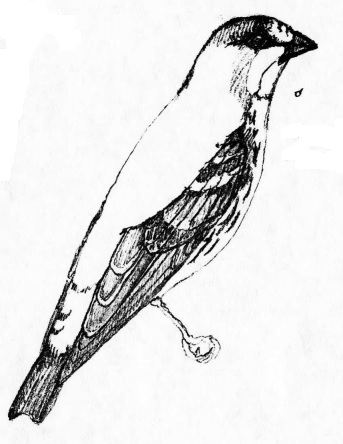
The adult Mindanao Serin exhibits a striking yellow plumage that covers most of its body, complemented by olive-brown wings and tail. A closer inspection reveals a subtle olive wash on its back, which blends seamlessly with the surrounding foliage of its montane forest habitat. Its small size, approximately 11-12 cm in length, and its conical, seed-eating bill are typical of finches. Males and females are similar in appearance, though females may exhibit slightly duller coloration. Juveniles resemble adults but have a more muted yellow hue with streaks on the underparts, providing some camouflage against predators.
In flight, the Mindanao Serin presents a compact silhouette with rapid, bounding wingbeats, characteristic of many finch species. When perched, it often adopts an upright posture, which, combined with its bright yellow coloration, makes it easier to spot against the forest backdrop. Despite its distinct coloration, birders might confuse it with the Yellow-breasted Fruit-Dove or other yellow-hued species within its range, though the serin's size and bill shape are distinguishing features.
Having trouble telling birds apart? Upload a photo to our bird identification tool for an instant species match.
Mindanao Serin Habitat and Range
Preferred Habitat
The Mindanao Serin thrives in the montane and mossy forests of Mindanao at elevations ranging from 1,000 to 2,400 meters. These forests, characterized by high humidity and dense vegetation, provide an ideal environment for the serin's feeding and breeding activities. The bird predominantly inhabits primary forests, where it can find ample food and nesting sites. However, it has also been observed in secondary forests, indicating some adaptability to habitat changes. Unlike many species that adapt to urban environments, the Mindanao Serin remains largely tied to its forest habitat, rarely venturing into agricultural lands or urban areas. Seasonal habitat shifts are minimal, as the bird remains in its montane forest home year-round, taking advantage of the consistent climate and resources available at these elevations.
Geographic Range
Chrysocorythus mindanensis is endemic to the Philippines, with its range restricted to the island of Mindanao. Within Mindanao, it occupies a relatively small geographic area but maintains a stable population across its montane forest habitats. The bird does not exhibit long-distance migration, instead remaining within its native range throughout the year. As a non-migratory species, the Mindanao Serin shows strong site fidelity, often returning to the same territories annually. Population densities are highest in areas with well-preserved primary forests, such as Mount Apo and Mount Kitanglad, where conservation efforts have helped maintain suitable habitats for this and other endemic species.
Want to know which birds visit your area? Browse our backyard birds by location guides for region-specific species lists.
What Does the Mindanao Serin Eat?
The Mindanao Serin primarily feeds on seeds, making it an important seed disperser in its montane forest ecosystem. Its diet consists of a variety of plant seeds, including those from grasses and small shrubs. During the breeding season, the serin's diet expands to include insects and other small invertebrates, providing essential protein for growing chicks. Foraging typically occurs in the early morning and late afternoon, with the bird often seen flitting through the upper canopy or foraging in the understory. It employs a gleaning technique, picking seeds and insects directly from foliage and tree branches. The serin's conical bill is well-adapted to cracking seeds, allowing it to access a wide range of food sources.
Mindanao Serin Behavior and Social Structure
The Mindanao Serin exhibits a range of behaviors that reflect its adaptation to montane forest life. It is generally social, often found in small flocks outside of the breeding season. During the breeding season, however, pairs become territorial, defending their chosen nesting areas from intruders. Courtship displays involve males showcasing their bright plumage and performing aerial displays to attract females.
Flocking behavior is particularly evident after the breeding season, when the serins join mixed-species flocks, enhancing foraging success and predator vigilance. Their response to predators involves a series of alarm calls, followed by evasive flight into dense foliage. Daily activity patterns show peaks of foraging activity during the cooler morning and late afternoon hours, with rest periods during the heat of midday.
Mindanao Serin Nesting and Reproduction
The Mindanao Serin constructs cup-shaped nests, typically placed high in the forest canopy to deter predators. Nests are composed of fine grasses, moss, and lichen, materials that blend with the forest surroundings. The female primarily builds the nest, though the male may assist by gathering materials. A typical clutch consists of 2-4 eggs, which the female incubates for approximately 12-14 days. During this period, the male provides food to the female. After hatching, both parents participate in feeding the chicks, which fledge about 14-16 days post-hatching. The serin usually raises one brood per year, timing its breeding season with the onset of the rainy season to ensure abundant food supply.
Mindanao Serin Sounds and Vocalizations
The Mindanao Serin's song is a melodious series of trills and warbles, often delivered from a high perch in the forest canopy. Its song consists of clear, sweet notes, sometimes reminiscent of a canary, reflecting its finch family lineage. The serin's call notes are short and sharp, used for communication within flocks. During the breeding season, males sing more frequently, establishing territory and attracting mates. Alarm calls are more rapid and high-pitched, signaling the presence of potential threats. The dawn chorus is a notable feature of the serin's vocalizations, with males contributing to the symphony of forest sounds at first light.
Interesting Facts About the Mindanao Serin
- 1The Mindanao Serin is one of the few bird species endemic to the island of Mindanao, highlighting its unique evolutionary history.
- 2Despite its vivid coloration, the Mindanao Serin can be surprisingly difficult to spot in its dense forest habitat.
- 3The bird's song, often compared to that of a canary, is a common sound in Mindanao's montane forests.
- 4The Mindanao Serin participates in mixed-species flocks, benefiting from increased foraging efficiency and predator awareness.
- 5This species plays a crucial role in seed dispersal within its ecosystem, aiding in the regeneration of its montane forest habitat.
- 6The Mindanao Serin’s breeding season aligns with the rainy season, ensuring ample food supply for its young.
- 7The species' reliance on montane forests makes it a key indicator of forest health in Mindanao.
Mindanao Serin Conservation Status
The Mindanao Serin is currently listed as Least Concern by the IUCN, with a stable population trend. However, ongoing threats such as habitat loss due to logging and agricultural expansion pose significant risks to its montane forest habitat. Conservation efforts in key areas, such as protected reserves and national parks, have been crucial in maintaining suitable environments for the serin. Historical population changes have been minimal, largely due to the bird's limited range and specialized habitat requirements, which have shielded it from some of the pressures faced by more widespread species.


