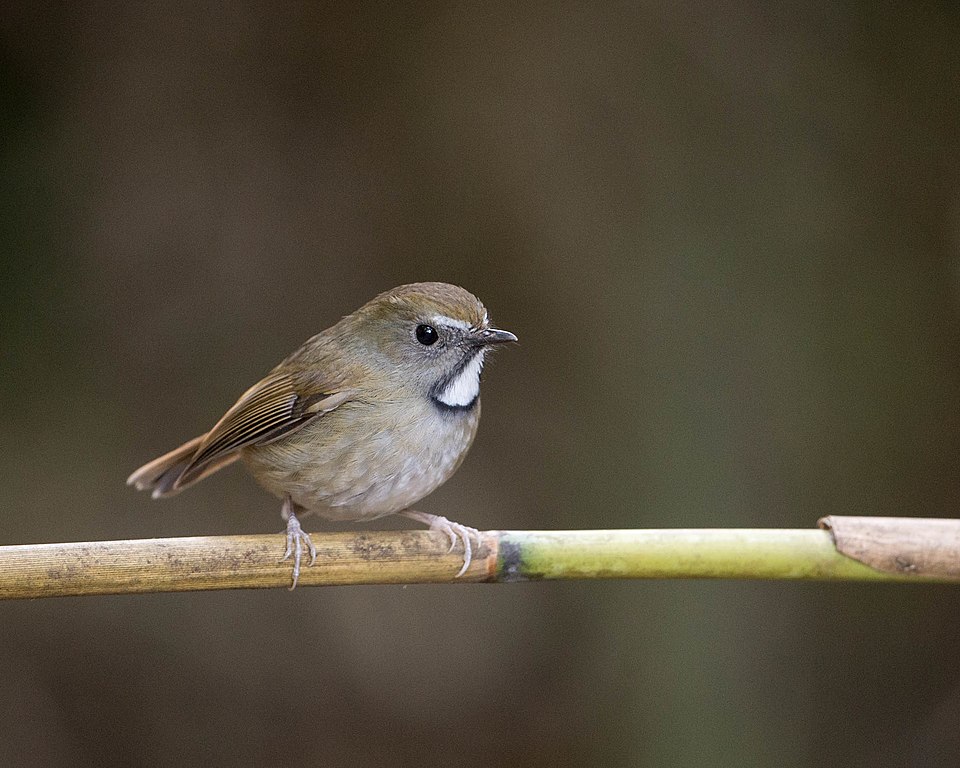
Miombo Scrub Robin
Erythropygia barbata
Order: Passeriformes / Family: Muscicapidae

Wikimedia Commons
About the Miombo Scrub Robin
The Miombo Scrub Robin, scientifically named Erythropygia barbata, is a captivating songbird native to the African continent. It belongs to the family Muscicapidae within the order Passeriformes. This bird is intimately linked with the miombo woodlands, a vast ecosystem stretching across several countries in southern and central Africa. These woodlands are named after the dominant tree species, Brachystegia, which creates a unique and biodiverse habitat.
The Miombo Scrub Robin plays a vital role in these ecosystems. As an insectivorous bird, it helps control insect populations, thereby maintaining ecological balance. Its presence indicates a healthy ecosystem, as these birds require a variety of insects and natural cover for foraging and nesting. The robin's ecological significance extends beyond pest control, as it also serves as prey for larger avian predators, contributing to the food web.
Seasonally, the Miombo Scrub Robin exhibits fascinating behaviors. During the breeding season, which typically occurs from September to December, these robins become more vocal and territorial. They sing persistently to mark their territories and attract mates. Outside of the breeding season, the Miombo Scrub Robin becomes less conspicuous, often foraging quietly in the underbrush. This seasonal behavior highlights their adaptability and the dynamic nature of their interactions within the miombo woodlands.
The Miombo Scrub Robin's distribution is particularly notable in countries like Tanzania, Zambia, and Mozambique, where miombo woodlands are extensive. These regions provide the structural complexity and resources that the robins need for nesting and feeding. The bird's adaptability to different elevations and its ability to utilize various microhabitats within the miombo woodlands underscore its resilience and ecological importance. Overall, the Miombo Scrub Robin is an integral part of its habitat, contributing to the environmental health and biodiversity of the regions where it resides.
The Miombo Scrub Robin belongs to the family Muscicapidae, within the order Passeriformes. These birds typically live average 3-5 years, though detailed studies are limited..
How to Identify a Miombo Scrub Robin
The Miombo Scrub Robin is a small but striking bird, easily identifiable by its well-defined plumage. Adults showcase a gray-brown upper body with a subtle reddish tinge, particularly noticeable on the rump and tail. This coloration provides excellent camouflage in the dry, brush-filled environments of the miombo woodlands. The underparts are paler, often presenting a whitish to buff color that fades into the flanks. A distinctive feature of this species is its tail, which is long and often flicked upwards in characteristic motions, revealing white outer tail feathers.
Juvenile Miombo Scrub Robins resemble adults but exhibit slightly duller plumage, with less pronounced reddish tones. This can sometimes lead to confusion with other similar small birds in the region, such as the Rufous-tailed Scrub Robin. However, the Miombo Scrub Robin's distinct tail pattern and behavior typically aid in correct identification.
Male and female Miombo Scrub Robins are similar in appearance, making sex differentiation in the field challenging without behavioral context, such as during the breeding season when males may sing more frequently. In flight, the robin's silhouette is characterized by its long, narrow tail and rapid wing beats. When perched, it often adopts a horizontal posture, intermittently flicking its tail, a behavior that is both an identification marker and a display trait.
Having trouble telling birds apart? Upload a photo to our bird identification tool for an instant species match.
Miombo Scrub Robin Habitat and Range
Preferred Habitat
The Miombo Scrub Robin is predominantly found in the miombo woodlands, which are characterized by their open canopy and rich undergrowth of shrubs and grasses. These woodlands are prevalent across regions such as southern Tanzania, central Zambia, and northern Mozambique. The bird thrives in these dry, deciduous forests where Brachystegia and Julbernardia trees dominate.
This robin is typically found at elevations ranging from 500 to 1500 meters, although it can occasionally be spotted at higher altitudes when suitable habitat exists. Its presence is closely linked to the availability of dense underbrush, which provides cover and foraging opportunities.
The Miombo Scrub Robin shows some degree of habitat flexibility, occasionally venturing into adjacent savannahs and thicket areas, especially during non-breeding seasons when it may expand its range slightly in search of food. However, it remains largely absent from urban environments, preferring the cover and resources offered by rural and semi-natural habitats.
Geographic Range
The range of the Miombo Scrub Robin is largely confined to the miombo woodland belt, which stretches across several African nations. Its core breeding range includes Tanzania, Zambia, and Mozambique, where the habitats are most conducive to its lifestyle and ecological needs.
Within these countries, the robin is a year-round resident, favoring areas that provide ample insect prey and suitable nesting sites. However, the Miombo Scrub Robin is not strictly sedentary. It exhibits some local movements, particularly in response to seasonal changes in food availability and habitat conditions. These movements are generally short-range and confined within its overall distribution area.
Population density tends to be higher in regions where the miombo woodlands are well-preserved and less disturbed by human activities. Conservation areas and national parks within these countries often serve as hotspots for the Miombo Scrub Robin, offering protected environments where the species can thrive.
Want to know which birds visit your area? Browse our backyard birds by location guides for region-specific species lists.
What Does the Miombo Scrub Robin Eat?
The diet of the Miombo Scrub Robin primarily consists of insects, which it forages for actively in the underbrush of its woodland habitat. The robin's diet includes beetles, ants, and caterpillars, with the occasional consumption of small arachnids. During the wet season, when insect abundance is at its peak, the robin's feeding activity intensifies, allowing it to capitalize on the increased availability of prey.
The Miombo Scrub Robin employs a methodical foraging technique, often seen hopping along the forest floor or perching on low shrubs while scanning for movement. This bird frequently flicks its tail, possibly as a method to startle insects into revealing their presence.
Seasonal variations in food availability can lead to slight shifts in diet, with the robin occasionally supplementing its insectivorous diet with small fruits and seeds, especially during the dry season when insects become scarce. The robin's adaptability in foraging and diet underscores its ability to thrive in the fluctuating environments of the miombo woodlands.
Miombo Scrub Robin Behavior and Social Structure
The social structure of the Miombo Scrub Robin is predominantly solitary or found in pairs, especially during the breeding season. This bird displays strong territorial behavior, with males often engaging in vocal displays to assert dominance and secure breeding territories. The robin's song is a key component of its courtship display, used to attract females and deter rival males.
Flocking is not typical for this species; however, during the non-breeding season, the Miombo Scrub Robin may occasionally associate loosely with mixed-species flocks. This behavior can be advantageous in increasing foraging efficiency and predator vigilance.
In response to predators, the Miombo Scrub Robin exhibits evasive maneuvers, utilizing dense cover for concealment. Its daily activity pattern is diurnal, with peak foraging occurring during the cooler hours of the morning and late afternoon. The robin's behavior reflects an adaptive strategy to maximize feeding while minimizing exposure to the harsh midday sun and potential threats.
Miombo Scrub Robin Nesting and Reproduction
The Miombo Scrub Robin constructs its nest close to the ground, often within a shrub or a low tree fork. The nest is cup-shaped and meticulously crafted from grass, leaves, and rootlets, bound together with spider silk to provide stability and camouflage.
The preferred location for nesting is a well-concealed spot that offers protection from predators and harsh weather conditions, typically within dense vegetation. The clutch size of the Miombo Scrub Robin ranges from two to four eggs. These eggs are usually pale with speckled markings that help them blend into the surrounding nest material.
Both parents share responsibilities during the incubation period, which lasts approximately 13 to 15 days. After hatching, the chicks remain in the nest for about 14 days before fledging. The Miombo Scrub Robin parents continue to care for the fledglings for several weeks post-fledging, teaching them essential survival skills. The species typically raises one to two broods per year, depending on environmental conditions and resource availability.
Miombo Scrub Robin Sounds and Vocalizations
The primary song of the Miombo Scrub Robin is a melodic series of whistles and trills, characterized by a clear and pleasing quality. This song is usually delivered from a concealed perch within the woodland, serving as both a territorial marker and a mating call.
Call notes include sharp 'chak' sounds, often repeated in quick succession when the robin is alarmed or agitated. These calls are distinct and serve as a communication tool among individuals, particularly when potential threats are detected.
During the breeding season, the Miombo Scrub Robin contributes to the dawn chorus, its song mingling with those of other woodland birds. The robin's vocalizations are essential for maintaining territory and establishing presence within its habitat.
Interesting Facts About the Miombo Scrub Robin
- 1The Miombo Scrub Robin flicks its tail frequently, a behavior thought to flush out insects for easier capture.
- 2Despite its name, the Miombo Scrub Robin is not restricted to scrub habitats, thriving in various types of woodlands.
- 3This robin's song can be heard over long distances, making it a prominent voice in the dawn chorus of its habitat.
- 4The Miombo Scrub Robin's nest is often lined with soft materials like feathers, ensuring comfort for the young.
- 5During the dry season, the Miombo Scrub Robin may consume small amounts of fruit, showcasing its dietary adaptability.
- 6The species exhibits local movements within its range, adjusting its location based on food availability and environmental conditions.
- 7Miombo woodlands, the robin's primary habitat, cover an estimated 2.7 million square kilometers in Africa.
Miombo Scrub Robin Conservation Status
The Miombo Scrub Robin is currently classified as Least Concern on the IUCN Red List. Its population appears stable, benefiting from the extensive range of miombo woodlands which provide ample habitat. However, the species faces potential threats from habitat degradation due to agricultural expansion, logging, and human settlement. Conservation efforts focus on preserving the integrity of miombo woodlands through sustainable land management practices and the establishment of protected areas. These efforts aim to mitigate the impact of human activities and ensure the long-term survival of the species. Historically, the Miombo Scrub Robin has maintained a stable population, but ongoing monitoring is essential to detect any future trends that could indicate population declines. Conservation initiatives emphasize the importance of maintaining healthy ecosystems that support diverse wildlife, including the Miombo Scrub Robin.