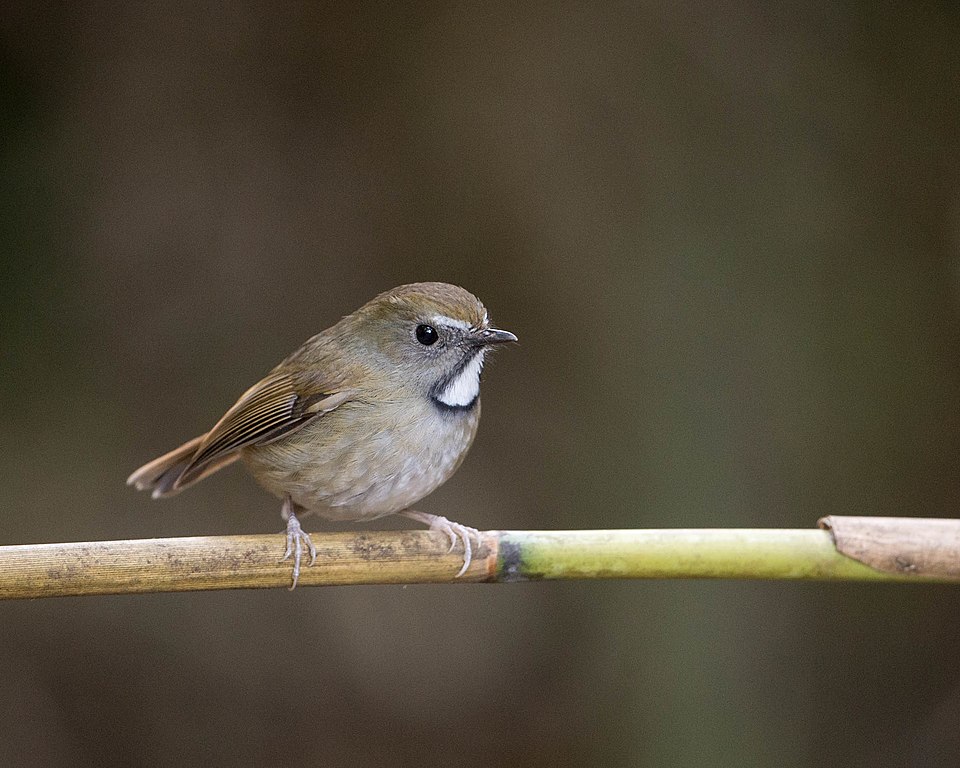
Mountain Robin-Chat
Oreocossypha isabellae
Order: Passeriformes / Family: Muscicapidae

Wikimedia Commons
About the Mountain Robin-Chat
The Mountain Robin-Chat, scientifically named Oreocossypha isabellae, is an enchanting songbird native to the montane forests of Central and East Africa. This bird belongs to the Muscicapidae family and thrives specifically in the highland regions of countries such as Kenya, Uganda, and Tanzania. In these regions, it occupies altitudes ranging from 1,500 to 3,000 meters, where it can often be found flitting through the undergrowth of dense, moist forests. A key player in its ecosystem, the Mountain Robin-Chat contributes to seed dispersal and insect population control, highlighting its ecological significance.
Throughout the year, this species demonstrates a variety of behaviors aligned with seasonal changes. During the breeding season, which typically spans from October to March, the Mountain Robin-Chat becomes more territorial, often engaging in melodious vocal displays to attract mates and defend its territory. Outside of the breeding season, these birds tend to be more subdued, focusing on foraging and maintaining a low profile to avoid predators. Their presence in the montane forests not only supports biodiversity but also contributes to the ecological stability of these regions.
The Mountain Robin-Chat's interaction with its environment underscores its importance beyond mere aesthetics. Its role in the ecosystem includes aiding in the control of insect populations and assisting in the dispersal of seeds from various forest plants. These activities promote the health of the forest understory and ensure the continued vitality of these high-altitude ecosystems. The Mountain Robin-Chat's behavior and ecological interactions make it a species of interest for conservationists and bird enthusiasts alike, as understanding its life cycle and habits can contribute to broader conservation efforts in its native habitats.
The Mountain Robin-Chat belongs to the family Muscicapidae, within the order Passeriformes. These birds typically live average 6-8 years, with some individuals living up to 12 years..
How to Identify a Mountain Robin-Chat
The Mountain Robin-Chat is a medium-sized songbird, easily recognized by its vivid orange underparts that contrast sharply with its gray-brown upperparts. Adult males and females are similar in appearance, though close observation reveals that males may have slightly brighter plumage. Juvenile birds, however, display a more subdued coloration, with a mottled pattern on their underparts that provides camouflage in their dense forest habitats.
This species' field marks include a conspicuous white supercilium (eyebrow line) that stands out against its darker head. The wings and tail are primarily brown, but the tail feathers exhibit a subtle orange wash that becomes more apparent during flight. The Mountain Robin-Chat's flight silhouette is typical of many forest-dwelling songbirds, with a compact body and a slightly rounded tail that aids in maneuverability through thick foliage.
In comparison to similar species, such as the White-bellied Robin-Chat, the Mountain Robin-Chat can be distinguished by its orange belly and more muted upperparts. Its perching posture is usually upright, with a slightly cocked tail, allowing it to maintain alertness while scanning its surroundings for insects and other prey.
Having trouble telling birds apart? Upload a photo to our bird identification tool for an instant species match.
Mountain Robin-Chat Habitat and Range
Preferred Habitat
The Mountain Robin-Chat inhabits montane forests, preferring areas with dense undergrowth and adequate cover. These forests often contain a mix of evergreen and deciduous trees, providing a rich and diverse habitat for this species. This bird typically resides at elevations ranging from 1,500 to 3,000 meters, where the climate is cooler and the environment less disturbed by human activity.
Seasonally, the Mountain Robin-Chat remains within its montane habitat, as its adaptations suit the stable conditions of these high-altitude regions. Unlike some other bird species, it does not exhibit significant shifts in habitat preference throughout the year. While it primarily occupies forested areas, it can occasionally be observed in nearby shrubby clearings, especially when foraging.
Urban presence is minimal for the Mountain Robin-Chat, as it tends to avoid heavily populated or developed areas. Instead, it thrives in the seclusion of its natural forest environment, where human interference is limited and the ecological balance is more intact.
Geographic Range
The Mountain Robin-Chat's range is confined to the mountainous regions of Central and East Africa, with populations found in countries such as Kenya, Uganda, and Tanzania. Within these regions, it occupies the high-altitude forests of the Eastern Arc Mountains and the Albertine Rift.
This species does not undertake long-distance migrations, largely remaining within its montane habitat year-round. However, there may be minor altitudinal movements within its range, particularly in response to changes in food availability or weather conditions. These movements are generally limited, as the Mountain Robin-Chat is well-adapted to the climatic conditions of its mountainous environment.
Population density tends to be higher in areas with suitable forest cover, and the bird is relatively common within its preferred habitat range. However, due to its specific habitat requirements, the Mountain Robin-Chat's distribution is limited to the montane regions where these conditions are met.
Want to know which birds visit your area? Browse our backyard birds by location guides for region-specific species lists.
What Does the Mountain Robin-Chat Eat?
The Mountain Robin-Chat's diet primarily consists of insects and other small invertebrates, which it actively hunts on the forest floor and among low bushes. It employs a methodical foraging technique, often flipping over leaves and probing the soil with its beak to uncover hidden prey such as beetles, ants, and caterpillars.
In addition to invertebrates, the Mountain Robin-Chat supplements its diet with fruit, particularly during the non-breeding season when insect availability may decrease. It consumes berries and small fruits from various forest plants, playing a role in the dispersal of seeds throughout its habitat.
This bird typically forages during daylight hours, with peak activity occurring in the early morning and late afternoon when temperatures are cooler and insect activity is higher. Its ability to adapt its diet according to seasonal changes in food availability highlights its resilience and resourcefulness in its montane environment.
Mountain Robin-Chat Behavior and Social Structure
The Mountain Robin-Chat exhibits a mostly solitary lifestyle, with individuals or pairs maintaining defined territories. During the breeding season, territorial behavior becomes more pronounced, with males singing to declare ownership and deter rivals. Their song is a vibrant and varied melody, often delivered from a concealed perch within their territory.
Courtship displays are subtle but involve a combination of vocalizations and visual signals, with males often presenting food to females as part of the bonding process. Pair bonds are typically monogamous for the duration of the breeding season.
Despite its primarily solitary nature, the Mountain Robin-Chat may join mixed-species foraging flocks outside of the breeding season. This behavior provides increased protection from predators through safety in numbers and enhances foraging efficiency. In the presence of predators, such as birds of prey or snakes, the Mountain Robin-Chat relies on its agility and dense forest cover to evade capture, often freezing or dropping to the ground to avoid detection.
Mountain Robin-Chat Nesting and Reproduction
The Mountain Robin-Chat constructs its nest in the dense undergrowth of montane forests, often choosing a sheltered location among thick shrubs or low branches. The nest is cup-shaped and meticulously crafted using a combination of grasses, leaves, and rootlets, with a soft lining of finer materials to provide insulation and comfort for the eggs and chicks.
A typical clutch consists of 2 to 3 eggs, which are incubated by the female for approximately 14 days. During this period, the male plays a supportive role by providing food and standing guard against potential threats.
Once hatched, the chicks remain in the nest for about 14 to 16 days before fledging. Both parents share the responsibilities of feeding and protecting the young during this critical development phase. The Mountain Robin-Chat generally raises one to two broods per year, depending on environmental conditions and food availability.
Mountain Robin-Chat Sounds and Vocalizations
The Mountain Robin-Chat's song is a lively series of whistles and trills, characterized by a rich, melodious quality that resonates through the forest. Its primary song features a rhythmic sequence that can vary in pitch, creating a dynamic auditory experience for listeners.
In addition to its song, the Mountain Robin-Chat emits a variety of call notes that include sharp, single-note alarms used to signal danger or communicate with mates. During the dawn chorus, its vocalizations become more frequent and complex, contributing to the vibrant acoustic tapestry of the montane forest.
The bird's calls and song play a crucial role in territory defense and mate attraction, and their varied nature reflects the Mountain Robin-Chat's adaptability and communicative complexity.
Interesting Facts About the Mountain Robin-Chat
- 1The Mountain Robin-Chat's song can be heard up to 100 meters away, making it a key part of the forest's soundscape.
- 2Despite its bright plumage, the Mountain Robin-Chat's secretive nature often makes it hard to spot in dense cover.
- 3This species plays a vital role in controlling insect populations, particularly during the wetter months.
- 4The Mountain Robin-Chat has a lifespan that can exceed 8 years in the wild, a testament to its adaptability.
- 5Its name reflects both its preferred habitat in mountainous regions and its melodious song reminiscent of the European Robin.
- 6During courtship, males perform a distinctive wing-flicking display to capture the attention of potential mates.
- 7The Mountain Robin-Chat is adept at using its strong legs to hop around the forest floor in search of food.
Mountain Robin-Chat Conservation Status
The IUCN currently lists the Mountain Robin-Chat as a species of Least Concern, indicating a stable population trend. However, ongoing habitat loss poses a significant threat to its long-term survival. Deforestation for agriculture and logging continues to fragment its montane forest environment, potentially leading to population declines in the future. Conservation efforts focus on preserving its natural habitat, particularly within protected areas and national parks in the Eastern Arc Mountains and the Albertine Rift. These efforts aim to mitigate the impacts of human encroachment and ensure the preservation of biodiversity within these critical ecosystems. Historically, the Mountain Robin-Chat has maintained relatively stable numbers, but proactive measures are essential to safeguard its habitat from future threats and to ensure that this melodious songbird continues to thrive in its native highland regions.