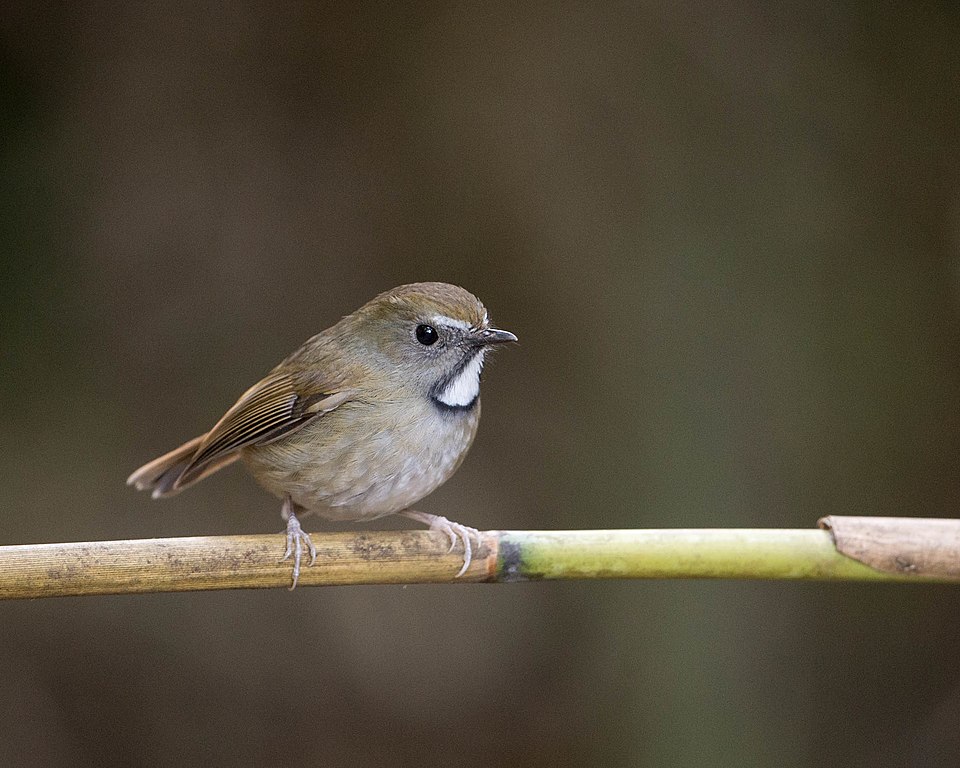
Muscicapa caerulea
Muscicapa caerulea
Order: Passeriformes / Family: Muscicapidae

Wikimedia Commons
About the Muscicapa caerulea
The Muscicapa caerulea, commonly known as the Blue Flycatcher, is a striking member of the Muscicapidae family, recognized for its vibrant blue plumage that makes it stand out in its native habitats. This small passerine bird has captured the attention of ornithologists and bird enthusiasts alike due to its distinctive coloring and agile flight patterns. The Blue Flycatcher thrives in a variety of environments, ranging from dense forests to open woodlands, often favoring regions with ample insect activity, which forms the backbone of its diet. During the breeding season, which typically occurs in the warmer months, the Muscicapa caerulea can be observed engaging in complex courtship displays, which include aerial acrobatics and vocalizations that serve to attract mates and establish territories. Ecologically, the Blue Flycatcher plays a significant role in controlling insect populations, making it a vital component of its ecosystem. By consuming large quantities of insects, particularly during the breeding season when energy demands are high, this flycatcher helps maintain the balance of insect populations, thus contributing to the health of its habitat. This bird's presence is a reliable indicator of a healthy environment, as it often thrives in regions that support a wide variety of insect life. Geographically, the Muscicapa caerulea is found across various parts of Asia, with significant populations observed in countries such as India, China, and Thailand. The species displays a preference for subtropical and tropical forest regions, often residing at elevations ranging from sea level up to 2000 meters. In these areas, the Blue Flycatcher is known to adapt to seasonal changes, often moving to lower altitudes during colder months in search of food and more favorable climatic conditions. Observers can often spot this bird flitting through the lower and middle canopy layers, where it performs its insect-hunting acrobatics. The seasonal behavior of the Muscicapa caerulea influences its distribution, as it may migrate short distances in response to changes in food availability or climatic conditions, though it is primarily a resident species within its range. This adaptability ensures that the Blue Flycatcher remains widely distributed across its range, maintaining stable populations despite environmental changes.
The Muscicapa caerulea belongs to the family Muscicapidae, within the order Passeriformes. These birds typically live 4 years average, up to 6 years recorded.
How to Identify a Muscicapa caerulea
The Muscicapa caerulea is a small, vividly colored bird, easily recognized by its cobalt blue plumage, which covers most of its body. Adult males and females exhibit similar coloring, although males often display a more intense blue, especially during the breeding season when their plumage is at its brightest. Juvenile Blue Flycatchers, on the other hand, differ significantly in appearance, sporting a more subdued brownish hue with hints of blue developing as they mature. The contrast between the young and adults is stark, aiding in field identification. In terms of size, the Blue Flycatcher measures approximately 13 to 15 centimeters in length, with a wingspan reaching up to 22 centimeters. Its slender body and agile flight pattern are characteristic of the Muscicapidae family. The flight silhouette of the Muscicapa caerulea is distinctive, with rapid wing beats and short glides, a behavior typical of flycatchers as they pursue insects in mid-air. When perched, this bird exhibits an upright posture, often flicking its tail in a rhythmic motion as it surveys for prey. This behavior, combined with its vivid coloration, makes it an unmistakable sight for keen birdwatchers. One species that might cause confusion is the Verditer Flycatcher, which shares a similar habitat and has comparable blue tones. However, the Verditer Flycatcher tends to be larger and exhibits a more uniform blue across its body, lacking the contrasting underparts of the Muscicapa caerulea.
Having trouble telling birds apart? Upload a photo to our bird identification tool for an instant species match.
Muscicapa caerulea Habitat and Range
Preferred Habitat
The Blue Flycatcher inhabits a range of environments, primarily favoring subtropical and tropical forest regions. It thrives in both primary and secondary forests, demonstrating a high degree of adaptability to different forest types. In addition to dense forests, Muscicapa caerulea often frequents open woodlands and forest edges, where it can easily hunt for insects. This species is also found in mountainous regions, typically residing at elevations between 500 and 2000 meters. However, during colder months or in response to food scarcity, it may descend to lower altitudes, seeking more hospitable conditions. While the Blue Flycatcher primarily prefers forested areas, it can occasionally be spotted in rural gardens and parks that offer sufficient tree cover and insect prey. Unlike some other flycatcher species, it does not commonly venture into urban environments, favoring more natural settings that provide ample foraging opportunities. Seasonal habitat shifts are primarily influenced by food availability and climatic conditions, with the bird showing flexibility in its choice of habitat to ensure access to resources.
Geographic Range
Muscicapa caerulea is predominantly found across various parts of Asia, with its range extending from the Indian subcontinent through Southeast Asia. Key countries where the Blue Flycatcher is commonly observed include India, Nepal, Bhutan, Myanmar, Thailand, and China. Within these regions, the bird occupies a variety of forested habitats, each presenting unique ecological opportunities. During the breeding season, populations are concentrated in areas with dense forest cover, where they can establish territories and find ample nesting sites. As the seasons change, the Blue Flycatcher may undertake short-distance migrations to lower elevations or different regions within its range in response to climatic shifts and food availability. While it is not considered a long-distance migratory species, these local movements ensure that the Muscicapa caerulea can successfully exploit available resources throughout the year. Population density hotspots often occur in regions where forests remain relatively undisturbed, allowing the Blue Flycatcher to thrive without significant human interference.
Want to know which birds visit your area? Browse our backyard birds by location guides for region-specific species lists.
What Does the Muscicapa caerulea Eat?
The diet of the Muscicapa caerulea primarily consists of insects, which it captures with remarkable agility. This bird employs a sit-and-wait strategy, perching quietly before launching into acrobatic flights to snatch prey mid-air. Its primary food sources include flies, beetles, caterpillars, and other small arthropods. During the breeding season, when nutritional demands are heightened, the Blue Flycatcher becomes even more active in its foraging, often seen hunting for insects to feed its young. Seasonal diet changes are minimal, as the bird's insectivorous habits remain consistent throughout the year. However, during colder months when some insect populations decline, the Muscicapa caerulea may expand its diet to include small fruits and berries, supplementing its nutritional intake. Prey size typically ranges from small to medium insects, which the bird adeptly catches thanks to its keen eyesight and swift flight. Foraging occurs primarily during daylight hours, with peak activity observed in the early morning and late afternoon.
Muscicapa caerulea Behavior and Social Structure
The Blue Flycatcher exhibits a range of behaviors that are fascinating to observe. Socially, Muscicapa caerulea tends to be solitary or found in pairs, particularly during the breeding season when pairs are focused on nesting and raising young. Territorial behavior is pronounced in males, who actively defend their chosen nesting sites through vocal displays and physical presence. Courtship displays are an integral part of the Blue Flycatcher's behavior, with males performing aerial acrobatics and singing to attract mates. These displays are not only vital for pairing but also serve to establish and maintain territories. Flocking behavior is less common, as this bird prefers solitary foraging. In response to predators, the Blue Flycatcher employs a range of tactics, including alarm calls and evasive flights, to protect itself and its young. Daily activity patterns revolve around foraging, with peak activity occurring at dawn and dusk. During these times, the bird is most visible, actively hunting for insects while engaging in periodic song bouts.
Muscicapa caerulea Nesting and Reproduction
Nesting for the Muscicapa caerulea involves careful selection of site and materials. The Blue Flycatcher typically builds cup-shaped nests, which are intricately woven using grass, twigs, and spider webs. Preferred nesting locations include tree branches or forks, often several meters above the ground to protect from predators. The clutch size usually ranges from two to four eggs, with both parents playing active roles in incubation and feeding of the chicks. The incubation period lasts about 12 to 14 days, after which the chicks hatch and remain in the nest for an additional 12 to 18 days before fledging. During this time, both parents are involved in feeding and safeguarding the nestlings. The Blue Flycatcher generally raises one brood per year, although in some favorable conditions, a second brood might be attempted. Parental roles are well-defined, with both male and female contributing to the nurturing and protection of their young.
Muscicapa caerulea Sounds and Vocalizations
The primary song of the Muscicapa caerulea is a melodious series of whistles and trills, characterized by a pleasant, rhythmic quality. This song is often heard during the breeding season as males sing to establish territories and attract mates. Call notes of the Blue Flycatcher are sharp and distinct, often serving as communication between mates or as alert signals. Alarm calls are harsher and more rapid, used to warn of potential threats. During the dawn chorus, the Blue Flycatcher's song stands out, contributing to the complex symphony of forest sounds. The overall quality of its vocalizations is clear and flute-like, reminiscent of other songbirds but with a unique tonal pattern that makes it identifiable to experienced birders.
Interesting Facts About the Muscicapa caerulea
- 1The Muscicapa caerulea's bright blue plumage is due to structural coloration rather than pigments.
- 2Blue Flycatchers can consume up to 500 insects per day during the breeding season.
- 3Despite their bright color, Blue Flycatchers are adept at camouflage within their forest habitats.
- 4Males are known to sing more than 100 times per hour during peak breeding season.
- 5The Blue Flycatcher's nest is often lined with soft feathers to provide comfort for the chicks.
- 6Their agility in flight rivals that of swallows, making them excellent insect hunters.
- 7The Muscicapa caerulea can be found at elevations over 2000 meters in some regions.
Muscicapa caerulea Conservation Status
Currently, the Muscicapa caerulea is listed as Least Concern on the IUCN Red List, with populations considered stable across its range. However, habitat loss due to deforestation and agricultural expansion poses a potential threat to its future stability. Conservation efforts focus on preserving natural habitats and mitigating the impact of human activities on forest ecosystems. Historically, population changes have been relatively minor, with the species adapting well to shifts within its environment. Continued monitoring and habitat protection are essential to ensure that the Blue Flycatcher remains a vibrant component of its ecosystem.