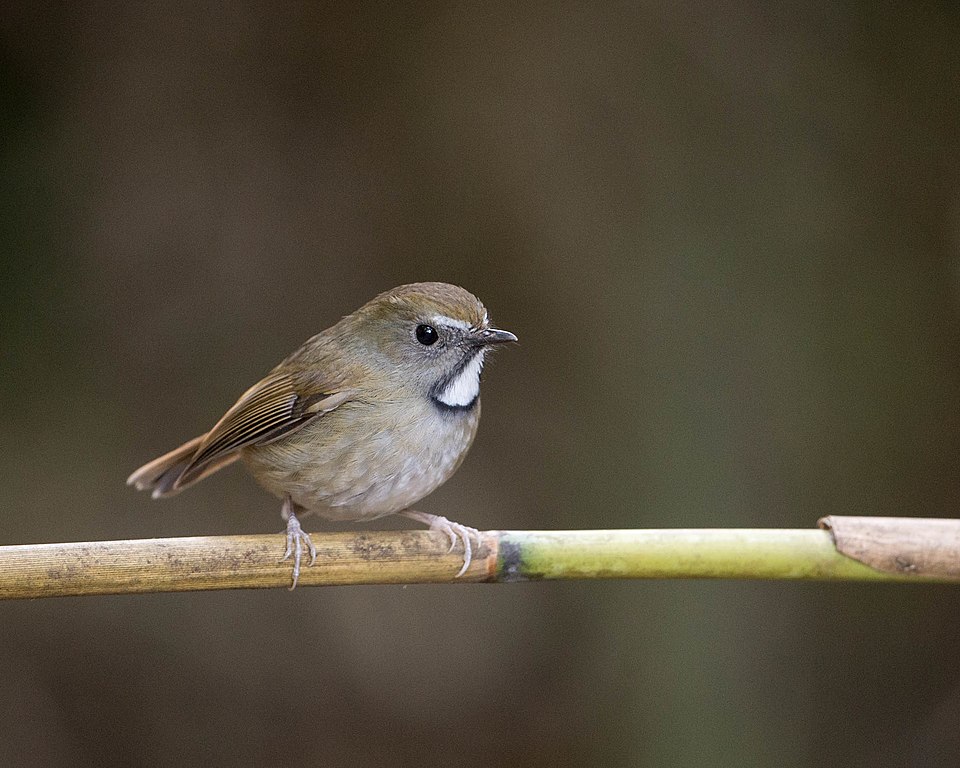
Olive Flycatcher
Muscicapa chlorotis
Order: Passeriformes / Family: Muscicapidae

Wikimedia Commons
About the Olive Flycatcher
The Olive Flycatcher, scientifically known as Muscicapa chlorotis, plays a vital role as an insectivore within its ecosystem. This bird is primarily found in subtropical and tropical moist lowland forests across regions in Southeast Asia, including countries like Malaysia, Indonesia, and the Philippines. Known for its adeptness in catching insects mid-flight, the Olive Flycatcher helps control insect populations, making it crucial for maintaining ecological balance. During the breeding season, which spans from late March to August, the Olive Flycatcher becomes more vocal, using its melodious calls to establish territory and attract mates. Outside of the breeding season, these birds are less conspicuous, often blending into the lush foliage with their olive-toned feathers. The Olive Flycatcher is highly adaptive, thriving in both primary and secondary forests. However, habitat destruction poses a significant threat to its population. Despite this, the bird remains fairly common within its range. Its presence serves as an indicator of the health of forested areas, as it relies on rich insect biodiversity. As a non-migratory bird, the Olive Flycatcher maintains year-round territories, often revisiting the same nesting sites annually. These birds contribute to seed dispersal indirectly by influencing the behavior and distribution of insect populations, which in turn affects plant pollination and propagation. During the wet season, increased insect activity provides ample food resources, supporting the Olive Flycatcher's reproductive success. This bird's ecological role extends beyond mere insect control; it is part of a complex web of interactions that sustain forest ecosystems. Observers of the Olive Flycatcher will often find it in mixed-species flocks, where its presence indicates healthy biodiversity levels. The bird's keen eyesight and rapid flight make it a master at snatching insects from the air, showcasing its evolutionary adaptations to forest life. In regions where its habitat remains intact, the Olive Flycatcher thrives, offering birdwatchers a glimpse into the intricate dynamics of forest ecosystems.
The Olive Flycatcher belongs to the family Muscicapidae, within the order Passeriformes. These birds typically live the average lifespan is around 4-6 years, with a maximum recorded of 8 years..
How to Identify a Olive Flycatcher
The Olive Flycatcher is a medium-sized songbird characterized by its olive-green upperparts and paler underparts. Adults typically measure about 12 cm in length. Both males and females exhibit similar plumage, making them difficult to distinguish in the field. Juveniles may appear slightly duller with streaks on their undersides. The bird's wings are darker with two pale wing bars, which can be a helpful identification marker. In flight, the Olive Flycatcher exhibits a characteristic agile and erratic flying pattern, designed to catch airborne insects. When perched, it often adopts an upright posture, scanning its surroundings for prey. The Olive Flycatcher can be confused with other greenish flycatchers, such as the Green-backed Flycatcher. However, it can be differentiated by its distinct call and subtle differences in plumage shade. Observers should note the bird's behavior; its constant flicking of the wings and tail is a typical trait of flycatchers. The Olive Flycatcher's eyes are relatively large, enhancing its ability to spot insects. With its short, straight bill designed for insectivory, this bird is well-equipped for its primary feeding strategy.
Having trouble telling birds apart? Upload a photo to our bird identification tool for an instant species match.
Olive Flycatcher Habitat and Range
Preferred Habitat
The Olive Flycatcher thrives in subtropical and tropical moist lowland forests, often found up to elevations of 1,200 meters. It prefers dense, humid environments where insect life flourishes. These birds are commonly seen in primary forests but also adapt to secondary growth and edge habitats. Seasonal changes do not significantly affect their habitat choice, as they are non-migratory. In urban areas, the Olive Flycatcher is less common, typically sticking to larger parks or reserves with abundant tree cover. In rural landscapes, they can be found in plantations and gardens that mimic their natural forest habitat. The presence of water bodies, such as streams and rivers within forests, enhances habitat suitability by supporting diverse insect populations.
Geographic Range
The Olive Flycatcher is predominantly found across Southeast Asia, with its range covering countries such as Malaysia, Indonesia, and the Philippines. Within these regions, the bird is primarily a resident species, maintaining territories year-round. It is most abundant in the lowland forests of Borneo and Sumatra, where population densities are higher due to optimal habitat conditions. While it does not undergo long-distance migrations, the Olive Flycatcher may exhibit some altitudinal movements in response to seasonal insect abundance. In areas like the Philippines, it occupies both the main islands and some smaller ones, where suitable forest habitats exist. Despite being widespread within its range, the Olive Flycatcher faces threats from deforestation, which can lead to localized population declines.
Want to know which birds visit your area? Browse our backyard birds by location guides for region-specific species lists.
What Does the Olive Flycatcher Eat?
The Olive Flycatcher's diet primarily consists of small insects, including flies, beetles, and moths. It employs a sallying technique, where it perches on a vantage point before launching into the air to capture prey. During the breeding season, the bird's diet may shift slightly to include a higher percentage of protein-rich insects to support rapid chick growth. Occasionally, it may consume small berries and fruits, though this is not a major component of its diet. The Olive Flycatcher typically feeds during the early morning and late afternoon, when insect activity peaks. Its foraging takes place in the mid-canopy, where it can effectively ambush unsuspecting prey. The bird's ability to adapt its foraging technique to different prey types highlights its versatility as a predator.
Olive Flycatcher Behavior and Social Structure
The Olive Flycatcher exhibits solitary or paired behavior during the breeding season, becoming territorial and vocal. Males engage in song displays from prominent perches to defend territory and attract mates. Courtship involves aerial displays, where the male showcases his agility and prowess. Outside the breeding season, the Olive Flycatcher is more social, often joining mixed-species flocks. These flocks provide safety in numbers and increase foraging efficiency. When threatened by predators such as raptors or snakes, the Olive Flycatcher emits loud alarm calls and may mob the intruder. This bird follows a diurnal activity pattern, with peak activities in the early morning and late afternoon. During midday heat, it tends to rest in shaded areas.
Olive Flycatcher Nesting and Reproduction
The Olive Flycatcher typically builds cup-shaped nests, using materials such as grass, leaves, and spider silk. Nests are often placed on horizontal branches or within the fork of a tree, usually at heights ranging from 2 to 10 meters above the ground. The female lays a clutch of 2 to 4 eggs, which she incubates for about 12 to 14 days. Both parents participate in feeding the chicks, which fledge approximately 12 to 16 days after hatching. The Olive Flycatcher may raise two broods per year if conditions are favorable. Parental roles are shared, with both sexes involved in nest defense and chick rearing. Once fledged, juveniles remain dependent on the parents for food and protection for several weeks.
Olive Flycatcher Sounds and Vocalizations
The Olive Flycatcher's song is a series of melodious whistles and trills, often delivered from a high perch. Its primary call is a sharp 'chip' or 'cheep', used in communication within pairs or to alert others of potential danger. During the dawn chorus, males sing vigorously, establishing territory and attracting mates. Alarm calls are harsher and more rapid, intended to warn of predators. The Olive Flycatcher's song is less complex than some other songbirds, but its rhythm and clarity make it easily recognizable. Experienced birders can identify individuals by subtle variations in their calls.
Interesting Facts About the Olive Flycatcher
- 1The Olive Flycatcher can catch insects mid-flight with astounding agility, a skill that makes it an effective insect predator.
- 2Despite its small size of about 12 cm, the Olive Flycatcher plays a big role in controlling insect populations in Southeast Asian forests.
- 3The Olive Flycatcher's olive-green plumage provides excellent camouflage among the dense foliage of its forest habitat.
- 4This bird often joins mixed-species flocks outside the breeding season, benefiting from increased foraging success and predator avoidance.
- 5Researchers have observed that the Olive Flycatcher can adjust its song pitch to communicate over the sounds of rushing water in its habitat.
- 6The Olive Flycatcher displays a preference for constructing nests in tree forks, which offers stability and protection from predators.
- 7Even though it primarily feeds on insects, the Olive Flycatcher occasionally supplements its diet with small fruits and berries.
Olive Flycatcher Conservation Status
Listed as Least Concern by the IUCN, the Olive Flycatcher maintains a stable population overall. However, habitat loss due to deforestation for agriculture and logging poses a significant threat, particularly in regions like Borneo. Conservation efforts focus on protecting remaining forest habitats and promoting sustainable land use practices. Historical data suggests that while some local populations have declined, others remain resilient due to habitat protection. Community-based conservation initiatives are crucial in maintaining the bird's habitat. Monitoring programs help track population trends and assess the effectiveness of conservation strategies.