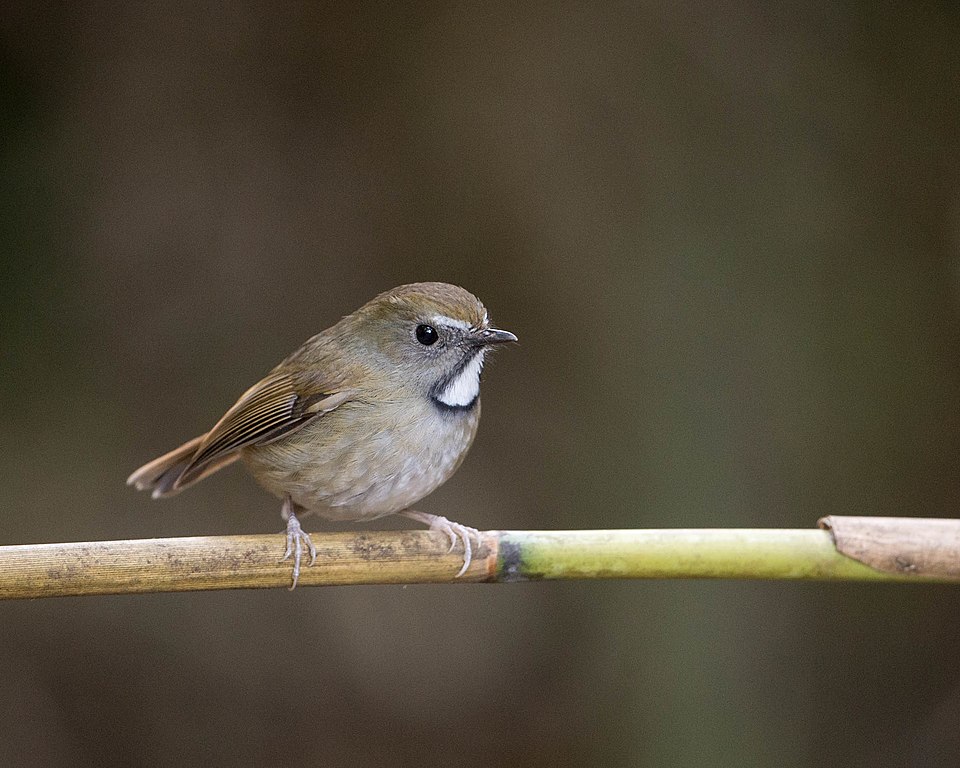
Muscicapa flabellifera
Muscicapa flabellifera
Order: Passeriformes / Family: Muscicapidae

Wikimedia Commons
About the Muscicapa flabellifera
The New Zealand Fantail, known scientifically as Muscicapa flabellifera, is a small passerine bird endemic to New Zealand. This species is a member of the family Muscicapidae and is widely recognized for its cheerful and agile flight, often seen flitting through forests and gardens. The Fantail plays a significant ecological role as an insectivore, consuming a large variety of insects and helping to control pest populations. Its presence in both dense native forests and urban areas underscores its adaptability, although it shows a preference for habitats with abundant insect life, such as near water bodies or in areas with rich understory vegetation. During the breeding season, typically from August to March, Fantails become particularly territorial. They are known to perform aerial displays to ward off intruders and to attract mates. Despite their small size, New Zealand Fantails exhibit a remarkable level of curiosity and may approach humans, making them a familiar and beloved sight in many gardens throughout New Zealand. This bird's adaptability has allowed it to thrive in various environments, from the North Island to the South Island, including Stewart Island and many offshore isles. The New Zealand Fantail's ecological role extends further as it serves as prey for larger birds, thus contributing to the complex web of forest life. In winter, when insects become scarce, these birds shift their diet to include more small invertebrates found in leaf litter. Their foraging behavior adapts seasonally, with a greater reliance on ground foraging during colder months. The New Zealand Fantail's successful adaptation to a wide range of environments and its role as both predator and prey emphasize its importance in maintaining ecological balance.
The Muscicapa flabellifera belongs to the family Muscicapidae, within the order Passeriformes. These birds typically live 3-6 years, with a maximum recorded of 8 years..
How to Identify a Muscicapa flabellifera
The New Zealand Fantail is easily recognized by its fan-shaped tail, which it often spreads while foraging, displaying a striking contrast of dark and light shades. Adults typically sport a distinctive combination of gray, white, and brown plumage. The underparts are white or pale with a hint of cinnamon on the flanks. The head is gray with a white eyebrow stripe that accentuates their expressive appearance. Juvenile Fantails lack the prominent white eyebrow and are generally duller, with softer and more muted tones. Males and females appear similar, making gender identification challenging based solely on plumage. However, their behavior can offer clues, especially during the breeding season, where males are more likely to engage in conspicuous aerial displays. When perched, the Fantail often holds its tail partially fanned, a posture that helps differentiate it from other small birds in its habitat. In flight, the bird's agile and erratic movement can be a distinguishing factor, as it often darts swiftly through the air, executing tight turns in pursuit of insects.
Having trouble telling birds apart? Upload a photo to our bird identification tool for an instant species match.
Muscicapa flabellifera Habitat and Range
Preferred Habitat
The New Zealand Fantail inhabits a diverse range of environments, from native forests and shrublands to urban gardens and parklands. It thrives in lowland and montane forests, particularly favoring regions with dense canopy and abundant undergrowth. These birds can be found from sea level to elevations of over 1000 meters, such as in the Southern Alps. Seasonal shifts in habitat use are less pronounced compared to other species, but during winter, they often move to more sheltered areas, such as dense woodlands and suburban gardens. While they are frequent visitors to urban areas, Fantails tend to prefer environments that provide ample access to insect prey, such as near streams or in gardens with diverse plantings.
Geographic Range
The New Zealand Fantail is primarily found throughout New Zealand, inhabiting both the North and South Islands. Its range extends to Stewart Island and numerous offshore islands, including the Chatham Islands. Within these regions, the Fantail is a common and widespread resident, showing little migratory behavior. Instead, they exhibit altitudinal movements, often descending to lower elevations during winter months when colder conditions prevail in higher areas. Population density is highest in native forests and well-vegetated urban gardens. While they are resilient and adaptable, regional population densities can fluctuate based on habitat availability and environmental conditions.
Want to know which birds visit your area? Browse our backyard birds by location guides for region-specific species lists.
What Does the Muscicapa flabellifera Eat?
Primarily insectivorous, the New Zealand Fantail feeds on a wide variety of insects, including flies, beetles, and moths. It employs a highly active foraging technique known as 'hawking,' where it catches insects mid-flight with remarkable agility. This bird also engages in 'gleaning,' picking insects off leaves and branches. During the warmer months, its diet consists largely of flying insects, while in winter, it shifts to include more ground-dwelling invertebrates. The Fantail's feeding schedule is diurnal, with peaks in activity during early morning and late afternoon, aligning with the times when insect activity is highest.
Muscicapa flabellifera Behavior and Social Structure
New Zealand Fantails exhibit a highly active and social behavior, often seen in pairs or small family groups. They maintain territories during the breeding season, with males defending their areas through acrobatic flights and vocalizations. Courtship involves elaborate displays, where males fan their tails and sing to attract females. Outside of the breeding season, they may form loose flocks, particularly in areas with abundant food resources. When threatened by predators, such as hawks or domestic cats, Fantails employ alarm calls and rapid, erratic flight to evade capture. Their daily activity patterns revolve around foraging, with frequent rest periods during which they may engage in preening or sunning.
Muscicapa flabellifera Nesting and Reproduction
The New Zealand Fantail constructs a small, cup-shaped nest using grass, bark fibers, and spider webs, typically placed in a fork of a tree or shrub. Nests are often situated 1 to 3 meters above the ground, providing some protection from ground predators. The breeding season runs from August to March, with females laying a clutch of 3 to 4 eggs. Incubation lasts about 14 days, primarily undertaken by the female, while males assist by feeding the incubating female and later the chicks. Fledging occurs approximately 13 days after hatching, with young remaining dependent on parental care for several weeks post-fledging. Fantails often raise two broods in a single season, leveraging their long breeding period.
Muscicapa flabellifera Sounds and Vocalizations
The New Zealand Fantail's primary song is a series of high-pitched, cheerful notes delivered in a rapid tempo. The song is repetitive and serves both as a territorial proclamation and a mating call. Call notes are sharp and distinct, often described as 'cheet cheet,' used in communication between individuals. Alarm calls are more abrupt and harsh, signaling the presence of predators. During dawn, their song can be heard as part of the avian chorus, adding to the vibrant soundscape of New Zealand's forests.
Interesting Facts About the Muscicapa flabellifera
- 1The New Zealand Fantail can change its tail angle by 180 degrees, aiding its agile flight.
- 2Fantails consume thousands of insects each day, crucial for pest control in their habitats.
- 3During courtship, the male Fantail performs complex aerial displays to impress potential mates.
- 4Fantails are known for their fearless nature, often approaching humans and investigating their activities.
- 5Fantails can recognize individuals, showing different responses to familiar humans compared to strangers.
- 6The species exhibits partial albinism in some individuals, leading to unique plumage patterns.
- 7Despite their small size, Fantails exhibit aggressive behavior towards larger birds intruding on their territory.
Muscicapa flabellifera Conservation Status
The New Zealand Fantail is classified as Least Concern by the IUCN, with stable population trends across its range. Despite its adaptability, habitat destruction and predation by introduced species pose threats. Conservation efforts focus on habitat preservation and predator control, particularly in sensitive areas. Historically, the Fantail has shown resilience to environmental changes, maintaining its presence even in modified landscapes. Continued vigilance in conservation practices will help ensure its stable population in the future.