
Muscicapa hirundinacea
Muscicapa hirundinacea
Order: Passeriformes / Family: Muscicapidae

Wikimedia Commons
About the Muscicapa hirundinacea
The Muscicapa hirundinacea, commonly referred to as the Fork-tailed Flycatcher, is a remarkable member of the Muscicapidae family. This species plays a significant ecological role as an insect predator in various habitats. Found primarily in the Neotropics, the Fork-tailed Flycatcher inhabits both primary and secondary forests, where it contributes to the control of insect populations. The bird is notable for its seasonal migrations, which take it from breeding grounds in South America to wintering habitats further north. During the breeding season, the Fork-tailed Flycatcher is often observed in open woodlands and forest edges in countries such as Brazil, Argentina, and Paraguay. Here, it engages in aerial foraging, catching insects in flight with remarkable agility. Outside the breeding season, the species migrates as far as Central America, making use of a range of habitats including savannas and agricultural landscapes. Its adaptability to different environments allows the Fork-tailed Flycatcher to maintain stable population levels across various regions, despite the pressures of habitat loss and climate change.
The Muscicapa hirundinacea belongs to the family Muscicapidae, within the order Passeriformes. These birds typically live average 5-7 years, with a max recorded of 10 years..
How to Identify a Muscicapa hirundinacea
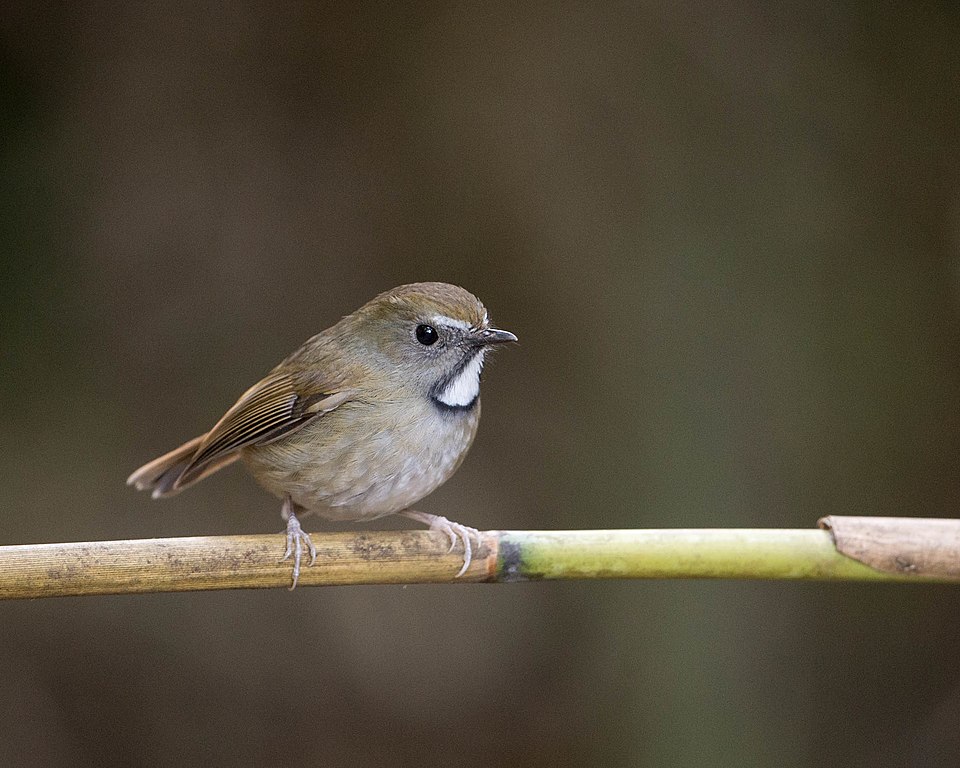
The Fork-tailed Flycatcher is easily recognized by its striking forked tail, which can measure up to twice the length of its body in adult males. This tail feature is less pronounced in females and juveniles, making them slightly less conspicuous. Adults exhibit a predominantly gray upper body contrasted with a white underbelly. Their wings are dark with a slight gloss, and their head is marked by a subtle black cap extending into a thin eye line. Juveniles display a more muted plumage, with brownish hues replacing the sharper black and white contrasts seen in adults. In flight, the tail opens wide, creating a distinctive silhouette, while at rest, the bird perches upright, often on exposed branches or wires. The Fork-tailed Flycatcher might be confused with the Scissor-tailed Flycatcher due to similar tail structures, but the latter species is generally found further north and has a more colorful plumage.
Having trouble telling birds apart? Upload a photo to our bird identification tool for an instant species match.
Muscicapa hirundinacea Habitat and Range
Preferred Habitat
The Fork-tailed Flycatcher thrives in diverse habitats ranging from tropical and subtropical forests to savannas and open woodlands. It is commonly found at elevations up to 1,500 meters, particularly favoring forest edges and clearings where insect availability is high. During migration, it shows a preference for rural landscapes, including pastures and agricultural fields, where it can easily spot and catch prey. Though less commonly seen in urban areas, it occasionally visits parks and gardens, especially if they are located near forested regions.
Geographic Range
The breeding range of the Fork-tailed Flycatcher primarily encompasses southern South America, including nations such as Argentina, Brazil, and Uruguay. As a migratory species, it moves northward during the non-breeding season, reaching as far as Panama and Costa Rica, with occasional sightings in Mexico. Migration corridors often follow the eastern slopes of the Andes, allowing the birds to exploit diverse ecological zones. Population density is highest in the Pampas region during the breeding season, where suitable habitats are plentiful.
Want to know which birds visit your area? Browse our backyard birds by location guides for region-specific species lists.
What Does the Muscicapa hirundinacea Eat?
Primarily insectivorous, the Fork-tailed Flycatcher feeds on a variety of flying insects, including beetles, wasps, and flies. It employs a sallying technique, launching from a perch to snatch prey mid-air before returning to its vantage point. This opportunistic feeder adjusts its diet seasonally, incorporating small fruits into its diet when insects are less abundant. Prey size typically ranges from small flies to larger beetles, and feeding activity peaks during early morning and late afternoon when insects are most active.
Muscicapa hirundinacea Behavior and Social Structure
The Fork-tailed Flycatcher exhibits solitary or paired behavior during the breeding season, becoming more social during migration. Males are territorial, often engaging in aerial displays to ward off intruders and attract mates. These displays include impressive dives and acrobatics, accentuated by their long tails. During migration, flocking is common, with groups often seen traveling together along established routes. The species is diurnal, with activity concentrated in the cooler parts of the day. When threatened by predators, the Fork-tailed Flycatcher relies on its agile flight and open habitats to evade capture.
Muscicapa hirundinacea Nesting and Reproduction
Nesting occurs in open woodlands or forest edges, where the Fork-tailed Flycatcher constructs cup-shaped nests using twigs, grasses, and feathers. These nests are typically positioned on a horizontal branch or fork in a tree. Clutch sizes range from two to four eggs, with an incubation period of approximately 14 days. Both parents participate in feeding the chicks, which fledge about three weeks after hatching. The species typically raises one brood per year, although a second brood is possible in regions with extended breeding seasons.
Muscicapa hirundinacea Sounds and Vocalizations
The Fork-tailed Flycatcher's song is characterized by a series of sharp, chirping notes that often increase in pitch and tempo. Calls are frequently used to communicate between mates and signal alarm, consisting of rapid, high-pitched chatter. During the dawn chorus, their vocalizations blend with those of other woodland songbirds, creating a rich tapestry of sound. The alarm call, a harsh 'chip' note, is distinct and serves as a warning of nearby threats.
Interesting Facts About the Muscicapa hirundinacea
- 1The Fork-tailed Flycatcher's tail can be twice as long as its body, aiding in its stunning aerial maneuvers.
- 2This species migrates over 5,000 kilometers annually, showcasing its impressive endurance and navigational skills.
- 3Unlike many songbirds, the Fork-tailed Flycatcher often forages by catching insects mid-flight rather than from vegetation.
- 4During courtship, males perform spectacular aerial dances, using their long tails to impress potential mates.
- 5The species is known to occasionally hybridize with the Scissor-tailed Flycatcher, producing unique offspring.
- 6Fork-tailed Flycatchers can adapt to urban environments, though they prefer areas closer to natural habitats.
- 7Despite their small size, these birds play a vital role in controlling insect populations across their range.
Muscicapa hirundinacea Conservation Status
According to the IUCN, the Fork-tailed Flycatcher is currently classified as Least Concern, with a stable population trend. Despite facing habitat loss in some regions, the bird benefits from its adaptability to varied environments. However, ongoing deforestation and agricultural expansion pose significant threats. Conservation efforts focus on preserving critical habitats and maintaining ecological corridors essential for migration. Historically, the species has maintained a robust presence across its range, although localized declines have occurred.
Other Muscicapidae Species


Birds Similar to the Muscicapa hirundinacea
These species are often confused with the Muscicapa hirundinacea due to similar appearance or overlapping range.
