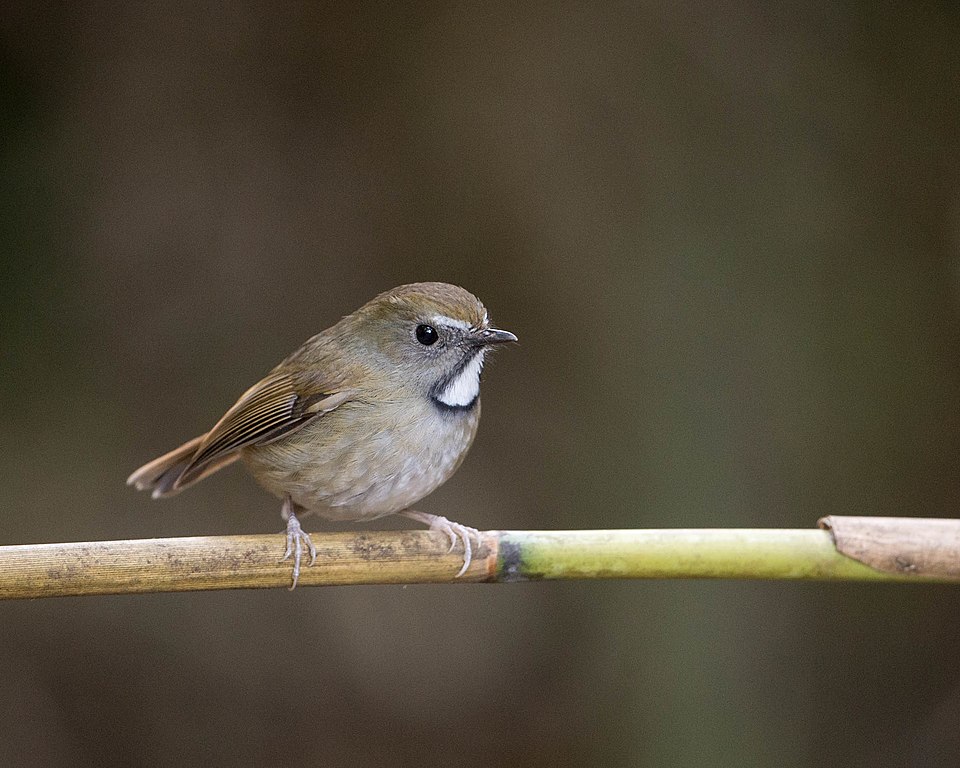
Black-headed Flycatcher
Muscicapa melanocephala
Order: Passeriformes / Family: Muscicapidae

Wikimedia Commons
About the Black-headed Flycatcher
The Black-headed Flycatcher, known scientifically as Muscicapa melanocephala, is a captivating member of the Muscicapidae family. This small passerine bird is primarily recognized for its distinct black head, which sharply contrasts with its light underparts, making it a striking presence in its natural habitat. The species is native to parts of Africa, where it plays a significant ecological role in controlling insect populations. Predominantly found in the dense forests of West and Central Africa, the Black-headed Flycatcher thrives in environments that offer abundant insect prey. Its presence is most notable in countries such as Ghana, Nigeria, and Cameroon, where it frequents both lowland rainforests and montane regions. During the breeding season, which varies across its range, the Black-headed Flycatcher becomes particularly active. It displays increased vocalization and territorial behavior, marking its presence with distinct calls. Unlike some migratory birds, the Black-headed Flycatcher tends to remain within its established territories year-round, although some altitudinal or local movements might occur in response to food availability. As an integral part of the forest ecosystem, the Black-headed Flycatcher contributes to the health of its habitat by controlling insect populations that could otherwise become pests. Its feeding habits help maintain a balance, supporting the diversity of species within its ecosystem. The Black-headed Flycatcher's ecological role is further highlighted by its interactions with other species, as it often forages alongside mixed-species flocks, benefiting from the collective vigilance against predators. Observing the Black-headed Flycatcher in its natural setting offers insight into the complex dynamics of tropical forest ecosystems. Its behaviors, such as sallying from perches to catch flying insects, demonstrate a specialized adaptation to its niche. The bird's presence is a testament to the intricate web of life that thrives in these rich and diverse environments. As conservation efforts continue to focus on preserving critical habitats in Africa, the Black-headed Flycatcher serves as both an indicator of environmental health and a symbol of the vibrant biodiversity found within these regions.
The Black-headed Flycatcher belongs to the family Muscicapidae, within the order Passeriformes. These birds typically live 6 years on average, with a maximum recorded of 8 years..
How to Identify a Black-headed Flycatcher
The Black-headed Flycatcher exhibits distinct field marks that assist birders in identifying it amidst the forest canopy. Adults display a striking black head, extending from the forehead to the nape, which starkly contrasts with their white throat and underparts. The upperparts are generally olive-brown, a subtle coloration that blends seamlessly with their arboreal surroundings. Juveniles, however, possess a more muted head coloration, often appearing dusky rather than fully black, and exhibit streaking on the underparts, which fades as they mature. Sexual dimorphism in this species is minimal, with males and females sharing similar plumage, though males may appear slightly more vibrant during the breeding season. In flight, the Black-headed Flycatcher showcases a distinct silhouette with its compact body and relatively short wings, traits typical of the Muscicapidae family. Its flight is characterized by rapid wingbeats, interspersed with gliding. When perched, the bird often adopts an upright posture, a common stance among flycatchers, allowing for optimal viewing of its surroundings as it scans for prey. Confusion with other species is possible, notably with the Dusky-blue Flycatcher (Muscicapa comitata), which shares some overlapping habitats. However, the Black-headed Flycatcher's definitive black head serves as a reliable distinguishing feature.
Having trouble telling birds apart? Upload a photo to our bird identification tool for an instant species match.
Black-headed Flycatcher Habitat and Range
Preferred Habitat
The Black-headed Flycatcher primarily inhabits dense tropical forests, favoring regions with a high canopy and rich undergrowth. It thrives in both primary and secondary forests, often found in areas with abundant insect populations. While it predominantly occupies lowland rainforests, it is also present in montane forests at elevations ranging from 200 to 1800 meters. The bird exhibits a preference for humid environments, where it can take advantage of the diverse insect life. Although generally associated with rural forested areas, the Black-headed Flycatcher occasionally ventures into more disturbed habitats, such as forest edges and gardens, particularly when food is scarce. Unlike some species that are highly adaptable to urbanization, the Black-headed Flycatcher is rarely observed in highly urbanized settings, maintaining a preference for natural habitats where its ecological role as an insectivore is best fulfilled.
Geographic Range
The Black-headed Flycatcher's range is primarily concentrated in West and Central Africa. It inhabits a swath of territory that includes countries such as Ghana, Nigeria, Cameroon, and the Ivory Coast. Within these regions, it occupies an array of forested environments, from lowland rainforests to higher elevation montane forests. This species is generally non-migratory, residing in its territory throughout the year. However, it may exhibit some altitudinal movement or local dispersal in response to seasonal changes in food availability. Despite its relatively wide distribution, the Black-headed Flycatcher is not uniformly abundant across its range, with population densities varying according to habitat quality and availability. In some areas, particularly where forest habitats remain intact, the bird is more common, forming a regular component of the avian community.
Want to know which birds visit your area? Browse our backyard birds by location guides for region-specific species lists.
What Does the Black-headed Flycatcher Eat?
The diet of the Black-headed Flycatcher consists predominantly of insects and other small invertebrates. This insectivorous diet includes a wide range of prey such as flies, beetles, ants, and caterpillars, which it captures through agile aerial sallies from a perch. Seasonal variations in diet occur depending on prey availability, with the bird taking advantage of the most abundant food sources at any given time. Smaller insects are often caught on the wing, while larger prey may be snatched from leaves or branches. The Black-headed Flycatcher typically forages during the day, with peak activity occurring in the morning and late afternoon when insect activity is highest. Its foraging strategy involves a combination of quick, darting flights to capture prey mid-air and more deliberate movements through the foliage to glean insects from surfaces. This flexible feeding behavior allows the Black-headed Flycatcher to exploit a wide range of microhabitats within its forest environment.
Black-headed Flycatcher Behavior and Social Structure
The Black-headed Flycatcher exhibits a range of intriguing behaviors that reflect its adaptation to a forest-dwelling lifestyle. This species often participates in mixed-species flocks, a behavior that provides enhanced protection from predators through collective vigilance. Within these flocks, the Black-headed Flycatcher maintains a degree of territoriality, defending prime foraging spots from others of its kind. Courtship displays are subtle yet effective, involving a series of vocalizations and flight maneuvers designed to attract a mate and establish territory. The bird is primarily diurnal, with peak activity occurring during the cooler hours of the morning and late afternoon. Its response to predators is typically evasive, relying on quick, agile flight to escape potential threats. During the breeding season, the Black-headed Flycatcher becomes more vocal, often heard before seen, as it asserts its presence within its territory. Despite its generally solitary tendencies outside the breeding season, the species exhibits social behavior within the context of mixed flocks, underscoring its adaptability within the complex forest ecosystem.
Black-headed Flycatcher Nesting and Reproduction
The nesting habits of the Black-headed Flycatcher reflect its adaptation to the dense forest environment. Nests are typically constructed in the fork of a tree or among dense foliage, providing concealment from predators. The nest itself is a cup-shaped structure made from a combination of grasses, leaves, and fine rootlets, bound together with spider webs to ensure stability. The female typically lays a clutch of two to three eggs, which she incubates for a period of approximately 12 to 14 days. During this time, the male plays a supportive role by foraging and bringing food to the nesting site. Once hatched, the chicks remain in the nest for another 14 to 16 days, during which both parents participate in feeding and caring for the young. The Black-headed Flycatcher generally produces one brood per year, although favorable conditions may allow for a second. Parental investment continues until the fledglings are independent, ensuring a high survival rate in their early life stages.
Black-headed Flycatcher Sounds and Vocalizations
The primary song of the Black-headed Flycatcher is a series of short, melodious phrases that are often repeated in quick succession. These phrases have a clear, whistling quality, with a rhythm that is both lively and intricate. Call notes tend to be sharp and piercing, serving as an alarm or contact call among individuals. During the early morning hours, the Black-headed Flycatcher contributes to the dawn chorus with its distinctive song, adding to the rich tapestry of sounds within the forest. Comparatively, its song shares similarities with other flycatchers in the region but can be distinguished by its unique pattern and tone. The bird's vocalizations play a crucial role in maintaining territory and attracting mates during the breeding season.
Interesting Facts About the Black-headed Flycatcher
- 1The Black-headed Flycatcher can capture prey in mid-air with remarkable precision, showcasing its agile flight capabilities.
- 2This species often joins mixed-species flocks, benefiting from shared vigilance against predators, a common strategy among forest birds.
- 3Despite its small size, the Black-headed Flycatcher plays a crucial role in pest control, consuming a variety of insects that impact forest health.
- 4The Black-headed Flycatcher's nest construction involves the innovative use of spider webs to bind materials, enhancing nest stability.
- 5During courtship, males of the species engage in subtle yet complex flight displays to attract potential mates.
Black-headed Flycatcher Conservation Status
The Black-headed Flycatcher is currently classified as Least Concern by the IUCN, reflecting its relatively stable population across its range. However, habitat loss due to deforestation poses a significant threat to its long-term survival. Conservation efforts focus on preserving vital forest habitats and promoting sustainable land-use practices in regions where the species resides. Historically, the population has experienced fluctuations in response to habitat changes, emphasizing the need for ongoing monitoring. While not currently endangered, the Black-headed Flycatcher's future depends on continued conservation initiatives aimed at protecting the rich biodiversity of West and Central African forests.