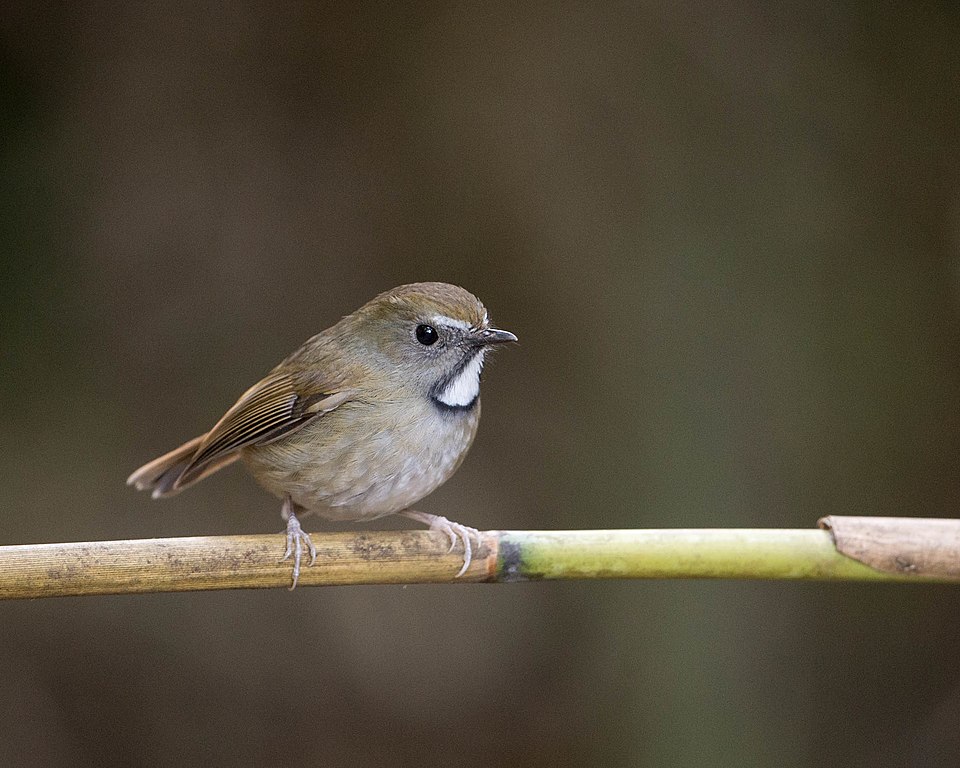
Muscicapa senegalensis
Muscicapa senegalensis
Order: Passeriformes / Family: Muscicapidae
About the Muscicapa senegalensis
The African Pied Flycatcher, known scientifically as Muscicapa senegalensis, is a small passerine bird belonging to the family Muscicapidae. This bird is primarily found across sub-Saharan Africa, exhibiting a strong preference for wooded habitats. Its presence ranges from Senegal in the west to Ethiopia in the east, extending southward to the northern parts of South Africa. As a species, it plays a crucial ecological role by controlling insect populations, effectively maintaining a balance in its ecosystem.
A notable aspect of the African Pied Flycatcher's life is its migratory pattern. While many populations remain resident throughout the year, some undertake short-distance migrations in response to seasonal changes. During the rainy season, they are more widely dispersed, taking advantage of the increased availability of insects, their primary food source. In the dry season, however, they may concentrate in riverine forests or areas with a reliable water supply.
The African Pied Flycatcher is an adept aerial hunter. It exhibits remarkable agility as it darts through the air, capturing flying insects with precision. This behavior not only highlights its role as a natural pest control agent but also demonstrates its significance to the ecological community. Beyond its feeding habits, the African Pied Flycatcher is also involved in a variety of interspecies interactions, serving as prey for larger birds of prey and small mammals, thus contributing to the broader food web.
Overall, the African Pied Flycatcher is a vibrant component of Africa's avian biodiversity. Its adaptability to different environments and resilience against certain habitat changes make it a species of interest for both ornithologists and conservationists. Understanding its role in various ecosystems enhances our appreciation and knowledge of the complex dynamics within African habitats.
The Muscicapa senegalensis belongs to the family Muscicapidae, within the order Passeriformes. These birds typically live average 5 years, with some individuals reaching up to 7 years..
How to Identify a Muscicapa senegalensis
African Pied Flycatchers are small, measuring approximately 14 cm in length, with a wingspan reaching around 25 cm. Adults display a distinctive black and white plumage, with males showing a more pronounced contrast than females. The male's glossy black upperparts starkly contrast with its white underparts, while the wings feature a conspicuous white wing bar. Females, although similar in pattern, generally exhibit a more muted brownish tone on the upperparts, which can lead to confusion with other similar species within its range.
Juveniles differ from adults, showcasing a mottled brown appearance with less distinct wing bars, gradually acquiring the adult plumage as they mature. When perched, the African Pied Flycatcher often adopts an upright stance, frequently flicking its wings and tail. This behavior, combined with its striking coloration, aids in its identification in the field.
In flight, the African Pied Flycatcher's silhouette is characterized by rapid, direct wingbeats interspersed with brief glides. This flight pattern, coupled with its agile aerial maneuvers, is typical of flycatchers. While it can be confused with other black-and-white birds, such as the Collared Flycatcher, its distinct habitat preferences and range help in differentiating it from similar species.
Having trouble telling birds apart? Upload a photo to our bird identification tool for an instant species match.
Muscicapa senegalensis Habitat and Range
Preferred Habitat
The African Pied Flycatcher inhabits a variety of woodland environments, ranging from dry wooded savannas to dense riverine forests. It favors areas with plentiful tree cover, which provide ample foraging opportunities and nesting sites. In terms of elevation, this species is adaptable, residing from sea level up to 2000 meters, depending on the region.
Seasonal habitat shifts occur in response to changes in insect abundance. During the wet season, the African Pied Flycatcher may venture into more open woodland areas, where insect prey is abundant, while in the dry season, it often retreats to well-vegetated areas near water sources. Despite its preference for natural habitats, the African Pied Flycatcher can occasionally be found in agricultural landscapes and large gardens, particularly where trees are present.
In urban settings, this species is less commonly observed, as it tends to avoid heavily built-up areas. However, it may be seen in city parks or suburban areas with sufficient tree cover, illustrating its adaptability to varying habitat conditions.
Geographic Range
The African Pied Flycatcher, Muscicapa senegalensis, occupies a broad range across sub-Saharan Africa. Its breeding range extends from Senegal and Gambia in the west, through the forested regions of Central Africa, to Ethiopia in the east. In southern Africa, it reaches as far south as northern South Africa, including countries like Botswana and Zimbabwe.
This species is generally a resident bird, although some populations display short-distance migratory behavior, moving locally in search of food and suitable breeding sites. During migration, it often utilizes well-vegetated corridors, such as riverine forests, which provide both food and cover.
Population density tends to be higher in regions with abundant insect prey and suitable nesting conditions. Notable hotspots include the moist forests of West Africa and the woodlands of East Africa, where its presence is more consistently recorded throughout the year.
Want to know which birds visit your area? Browse our backyard birds by location guides for region-specific species lists.
What Does the Muscicapa senegalensis Eat?
The African Pied Flycatcher's diet primarily consists of insects, with a particular emphasis on flying insects such as flies, beetles, and moths. It employs a sit-and-wait hunting strategy, perching conspicuously before launching into the air to capture prey. This method allows it to efficiently exploit the rich insect life found in its preferred habitats.
Seasonal changes influence its diet, as the availability of specific insect prey fluctuates throughout the year. During the rainy season, when insects are most plentiful, the African Pied Flycatcher can afford to be selective, often targeting larger and more energetic prey. In contrast, during drier periods, it may consume a wider variety of insects, including ants and other terrestrial invertebrates.
The bird's foraging activity is primarily diurnal, with peak feeding occurring in the early morning and late afternoon. This schedule coincides with periods of higher insect activity, maximizing its foraging efficiency. The African Pied Flycatcher's role in controlling insect populations underscores its importance within its ecosystem.
Muscicapa senegalensis Behavior and Social Structure
The African Pied Flycatcher exhibits a variety of behaviors that reflect its adaptability and ecological niche. As a generally solitary bird outside of the breeding season, it maintains a defined territory where it forages and engages in daily activities. Territorial disputes are common, particularly among males, and often involve vocal displays and aerial chases to assert dominance.
During the breeding season, which coincides with the rainy season in many regions, the African Pied Flycatcher becomes more social. Courtship displays include singing and wing-flicking to attract mates. Once a pair bond is established, both sexes contribute to nest building and parental care.
Flocking behavior is rare, although loose associations may form in areas with high insect abundance. In response to predators, the African Pied Flycatcher exhibits a combination of evasive flight and alarm calls to alert nearby conspecifics. Its daily activity pattern involves periods of active foraging interspersed with rest during the hottest parts of the day, showcasing its ability to optimize energy expenditure.
Muscicapa senegalensis Nesting and Reproduction
The African Pied Flycatcher constructs its nest in tree cavities or on sheltered branches, utilizing materials such as grass, leaves, and feathers. The choice of nesting site often depends on the availability of suitable trees, with preference given to locations that provide protection from predators and harsh weather conditions.
A typical clutch consists of 3 to 5 eggs, which are incubated primarily by the female for about 12 to 14 days. During this period, the male plays a supportive role by defending the territory and providing food for the incubating female. Once the eggs hatch, both parents participate in feeding the chicks, which fledge approximately 14 to 16 days post-hatching.
The African Pied Flycatcher generally produces one brood per year, although favorable conditions may lead to a second brood in some regions. Parental roles are well-defined, with both sexes contributing to the successful rearing of their young, ensuring their survival in the competitive ecosystem.
Muscicapa senegalensis Sounds and Vocalizations
The African Pied Flycatcher's song is a series of melodious, whistled notes delivered with a rhythm that is both fluid and lively. The pitch varies, adding a musical quality to its vocalizations, often heard during the early morning hours as part of the dawn chorus. This song serves both to establish territory and attract a mate.
Call notes include a sharp 'weeet' used as an alarm when potential threats are detected. These calls are particularly prominent during the breeding season when the protection of the nest is paramount. The alarm calls serve to alert other birds in the vicinity, contributing to a communal defense strategy.
In addition to its primary song and alarm calls, the African Pied Flycatcher also produces softer contact calls to maintain communication with its mate or offspring, enhancing the social bonds within its family unit.
Interesting Facts About the Muscicapa senegalensis
- 1The African Pied Flycatcher can consume over half its body weight in insects each day, highlighting its role as a pest control agent.
- 2Despite its small size, the African Pied Flycatcher exhibits complex courtship displays, including aerial acrobatics and vocal performances.
- 3African Pied Flycatchers are known to occasionally use abandoned nests of other bird species, showcasing their adaptability.
- 4The species' distinctive black and white plumage provides effective camouflage in the dappled light of its woodland habitats.
- 5Although primarily insectivorous, the African Pied Flycatcher may consume small fruits opportunistically, particularly during food scarcity.
- 6The African Pied Flycatcher's migratory movements are often triggered by local climate conditions, demonstrating its dependence on seasonal insect abundance.
- 7Even though it is not a migratory species, the African Pied Flycatcher is capable of long flights when necessary, such as when seeking new territories.
Muscicapa senegalensis Conservation Status
The African Pied Flycatcher is currently listed as Least Concern by the IUCN, reflecting a stable overall population trend. Despite this, certain localized populations have faced pressures due to habitat loss and degradation, primarily from agricultural expansion and deforestation. Conservation efforts focus on preserving the natural habitats that support this species, with particular emphasis on protecting forests and woodland areas. Community engagement and sustainable land management practices have been encouraged to mitigate the impact of human activities. Historically, the African Pied Flycatcher has shown resilience to habitat changes, but continued monitoring is essential to ensure that it remains a thriving component of Africa's avian biodiversity. Conservationists advocate for increased awareness and research to better understand the species' ecological requirements and threats.