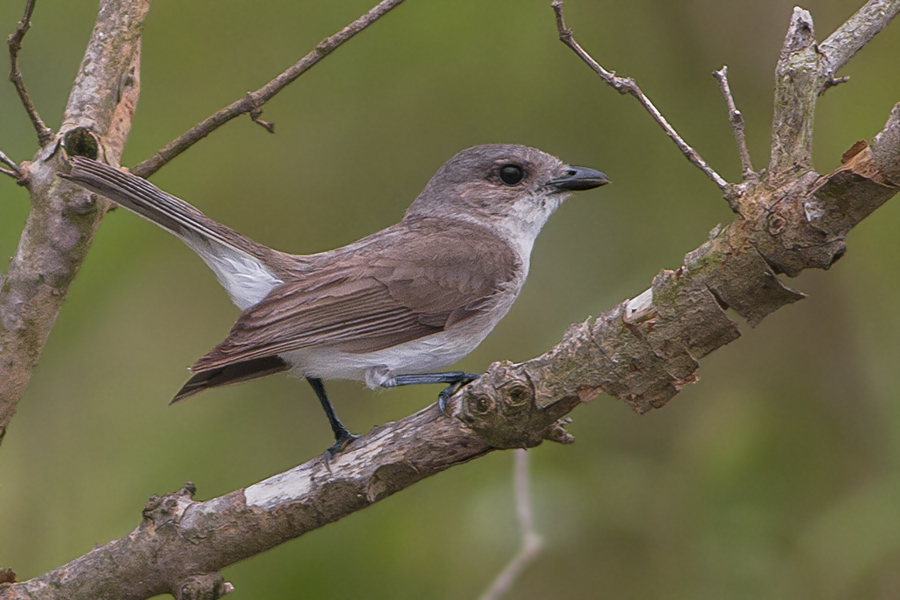
New Caledonian Whistler
Pachycephala caledonica
Order: Passeriformes / Family: Pachycephalidae

Wikimedia Commons
About the New Caledonian Whistler
The New Caledonian Whistler, Pachycephala caledonica, is an intriguing songbird found exclusively on the island of New Caledonia in the southwestern Pacific Ocean. As a member of the family Pachycephalidae, this bird exemplifies the rich biodiversity and endemism of New Caledonia. The island's unique ecosystem supports a wide variety of species that are not found anywhere else in the world, and the New Caledonian Whistler is a proud representative of this remarkable avian diversity.
This species plays a significant ecological role in its habitat. Its presence is indicative of healthy forest ecosystems, as it primarily inhabits mature forests, ranging from lowland to montane regions. The bird's foraging habits contribute to the control of insect populations, helping to maintain ecological balance. By feeding on various insects and occasionally small fruit, the New Caledonian Whistler aids in seed dispersal, thereby supporting forest regeneration.
The whistler's vibrant plumage and distinctive calls make it a key species for birdwatchers visiting New Caledonia. Its bright yellow underparts contrast with the olive-green back and gray head, creating a striking visual appeal. The New Caledonian Whistler is also significant in local culture and ecotourism. Conservation efforts focused on preserving its habitat help protect numerous other species that share the same ecological niche.
Seasonally, the New Caledonian Whistler does not undertake long migrations, but it may exhibit some local movements within the island in response to food availability and breeding conditions. Its adaptation to the island's varied forest types, from dense humid forests to more open woodlands, showcases its ecological versatility. The whistler's role in the ecosystem underscores the importance of conservation measures aimed at protecting New Caledonia's unique flora and fauna.
The New Caledonian Whistler belongs to the family Pachycephalidae, within the order Passeriformes. These birds typically live average lifespan is around 6-8 years, with some individuals living up to 12 years..
How to Identify a New Caledonian Whistler
The New Caledonian Whistler is a medium-sized songbird, measuring about 18 centimeters in length. Adult males exhibit striking plumage with vibrant yellow underparts, olive-green upperparts, and a gray head. This coloration offers a stark contrast that makes the bird easily recognizable. Females are generally duller, with more subdued yellow tones and brownish-olive upperparts, making them less conspicuous in their forested habitat.
Juveniles resemble females but are even duller, with a more pronounced brown wash over the yellow underparts. This muted coloration provides camouflage, protecting them from potential predators as they develop their skills. In flight, the New Caledonian Whistler displays a direct and slightly undulating flight pattern, typical of many forest-dwelling songbirds.
Despite its distinctive appearance, the New Caledonian Whistler can occasionally be confused with other sympatric species, such as the New Caledonian Flycatcher. However, the whistler's distinctive yellow underparts and robust, rounded body shape help differentiate it from the sleeker, more streamlined flycatcher. Its perch is often horizontal, and it may be seen foraging actively among the mid to upper canopy, where it spends much of its time.
Having trouble telling birds apart? Upload a photo to our bird identification tool for an instant species match.
New Caledonian Whistler Habitat and Range
Preferred Habitat
The New Caledonian Whistler predominantly inhabits the island's mature forests, thriving in both lowland and montane regions. These forests provide abundant food resources and suitable nesting sites. The bird favors areas with dense foliage, which offer ample protection and foraging opportunities. Elevation-wise, it can be found from sea level up to 1,500 meters, although it shows a preference for mid-elevation forests where the habitat complexity supports a rich insect community.
Within its range, the New Caledonian Whistler is adaptable to various forest types, including humid primary forests, secondary growth, and even selectively logged areas, provided there is enough tree cover. During the breeding season, it is more commonly observed in undisturbed forest tracts, which offer greater nesting security.
Although primarily a forest species, the New Caledonian Whistler occasionally ventures into more open woodland or edge habitats, especially when pursuing insect prey. Its presence in rural areas near forest edges highlights its adaptability, but it remains rare in heavily urbanized settings. Seasonal movements within its habitat are generally minor, dictated by food availability rather than climatic changes.
Geographic Range
The New Caledonian Whistler is endemic to New Caledonia, a French territory in the Pacific Ocean. Its distribution is confined to the main island, Grande Terre, where it occupies a range of forested environments. Unlike migratory species, the whistler is a year-round resident, relying on the island's stable climate and abundant food resources to sustain its population.
Within New Caledonia, the whistler's population density varies with habitat quality, being most numerous in mature forests with dense canopy cover. These forests, concentrated in the central mountains and extending along the eastern and western slopes, provide ideal conditions for the whistler's survival and reproduction. The species is less common in coastal mangroves and fragmented forest patches, where habitat degradation has reduced suitable living space.
The New Caledonian Whistler does not engage in long-distance migrations, but it may undertake short seasonal movements in search of food or suitable nesting sites. These localized shifts help the bird exploit varying ecological conditions across different forest zones. Conservation areas and reserves within New Caledonia play a critical role in safeguarding the whistler's habitat and ensuring its continued survival amidst increasing environmental pressures.
Want to know which birds visit your area? Browse our backyard birds by location guides for region-specific species lists.
What Does the New Caledonian Whistler Eat?
The New Caledonian Whistler primarily feeds on insects, making it an important insectivore within its ecosystem. Its diet consists of a wide variety of invertebrates, including beetles, caterpillars, and spiders, which it actively forages from the mid to upper canopy of the forest. The bird employs a gleaning technique, meticulously picking prey from leaves and branches, using its sharp eyesight to detect hidden insects.
During certain seasons, the whistler's diet may also include small fruits and berries, providing a supplemental food source when insect abundance fluctuates. This dietary flexibility allows the bird to maintain its energy needs throughout the year, even when primary food sources are scarce.
The New Caledonian Whistler exhibits a diurnal feeding schedule, with peak activity in the early morning and late afternoon when insect activity is highest. Its foraging strategy involves a combination of solitary and paired hunting, with occasional participation in mixed-species flocks, which increases foraging efficiency and reduces the risk of predation.
New Caledonian Whistler Behavior and Social Structure
The New Caledonian Whistler exhibits fascinating social and territorial behaviors, primarily maintaining a solitary or paired existence. During the breeding season, males become particularly territorial, engaging in vocal displays and occasional physical confrontations to defend their space. Their distinctive calls serve as both an advertisement to potential mates and a deterrent to rival males.
Courtship displays involve males showcasing their vibrant plumage and engaging in synchronized movements, often accompanied by song. These behaviors are crucial for attracting females and establishing strong pair bonds. Once paired, they exhibit monogamous tendencies, with both sexes participating in territory defense and nest building.
Outside the breeding season, the New Caledonian Whistler may join mixed-species flocks, benefiting from increased foraging opportunities and safety in numbers. This behavior underscores its adaptability and social flexibility in the face of environmental challenges. The bird's daily activity patterns are primarily diurnal, with most activity occurring during the cooler parts of the day. When threatened by predators, the whistler employs a variety of alarm calls and evasive maneuvers to protect itself and communicate danger to others.
New Caledonian Whistler Nesting and Reproduction
The New Caledonian Whistler constructs cup-shaped nests, meticulously woven from fine materials such as grass, twigs, and spider silk. These nests are strategically placed in the fork of a tree branch, usually at a height of 2 to 5 meters above ground, providing both concealment and protection from predators.
A typical clutch consists of two to three eggs, which are incubated primarily by the female for about 14 days. During this period, the male plays a supportive role, guarding the nest and occasionally providing food to the incubating female. Once hatched, the chicks are altricial, requiring substantial parental care, which both parents provide.
Fledging occurs approximately 12 to 15 days after hatching, with both parents continuing to feed the young until they gain independence. The New Caledonian Whistler typically produces one to two broods per year, depending on environmental conditions and food availability. Nesting success is closely tied to habitat quality, with undisturbed forest areas offering the highest likelihood of fledgling survival.
New Caledonian Whistler Sounds and Vocalizations
The New Caledonian Whistler is renowned for its melodious song, a complex and varied sequence of clear whistles and trills. The primary song, delivered mainly by males, features a series of rising and falling notes, often repeated in rapid succession. This vocalization serves to establish territory and attract mates, showcasing the bird's vocal prowess.
In addition to its song, the whistler produces distinctive call notes, characterized by short, sharp whistles that serve as communication signals within pairs or family groups. Alarm calls, triggered by the presence of predators, are more urgent and staccato, alerting nearby birds to potential danger.
During the dawn chorus, the New Caledonian Whistler's song is particularly prominent, contributing to the vibrant acoustic landscape of the forest. Its vocalizations bear some resemblance to the calls of other whistler species, but the unique combination of notes and rhythms helps distinguish it from its relatives.
Interesting Facts About the New Caledonian Whistler
- 1The New Caledonian Whistler is part of the Pachycephalidae family, known for their strong, distinct vocalizations.
- 2Despite its vibrant appearance, the New Caledonian Whistler often remains hidden in dense foliage, making it a rewarding find for patient birdwatchers.
- 3The whistler's song is not only a mating call but also a territorial declaration, often leading to vocal duels between rival males.
- 4New Caledonia's isolation has allowed the evolution of many endemic species, with the New Caledonian Whistler being a prime example.
- 5This whistler's diet flexibility, including occasional fruit consumption, helps it survive in varied ecological conditions.
- 6The New Caledonian Whistler is an indicator species, reflecting the health of its forest ecosystem.
- 7The species' role in controlling insect populations highlights its importance in maintaining ecological balance.
New Caledonian Whistler Conservation Status
The New Caledonian Whistler is currently classified as Least Concern by the IUCN, with a stable population trend. However, its restricted range on New Caledonia makes it susceptible to habitat loss and degradation. Deforestation, driven by logging and agricultural expansion, poses a significant threat to the species' habitat. Conservation efforts in New Caledonia focus on preserving primary forests and establishing protected areas to safeguard critical habitats. These measures not only benefit the whistler but also help conserve the island's unique biodiversity. Historical population changes remain poorly documented, but ongoing monitoring aims to detect any shifts in population dynamics. Community engagement and ecotourism initiatives play a vital role in raising awareness about the importance of conserving the New Caledonian Whistler and its habitat. By promoting sustainable practices and habitat restoration, these efforts contribute to the long-term survival of this emblematic species.
Other Pachycephalidae Species


Birds Similar to the New Caledonian Whistler
These species are often confused with the New Caledonian Whistler due to similar appearance or overlapping range.