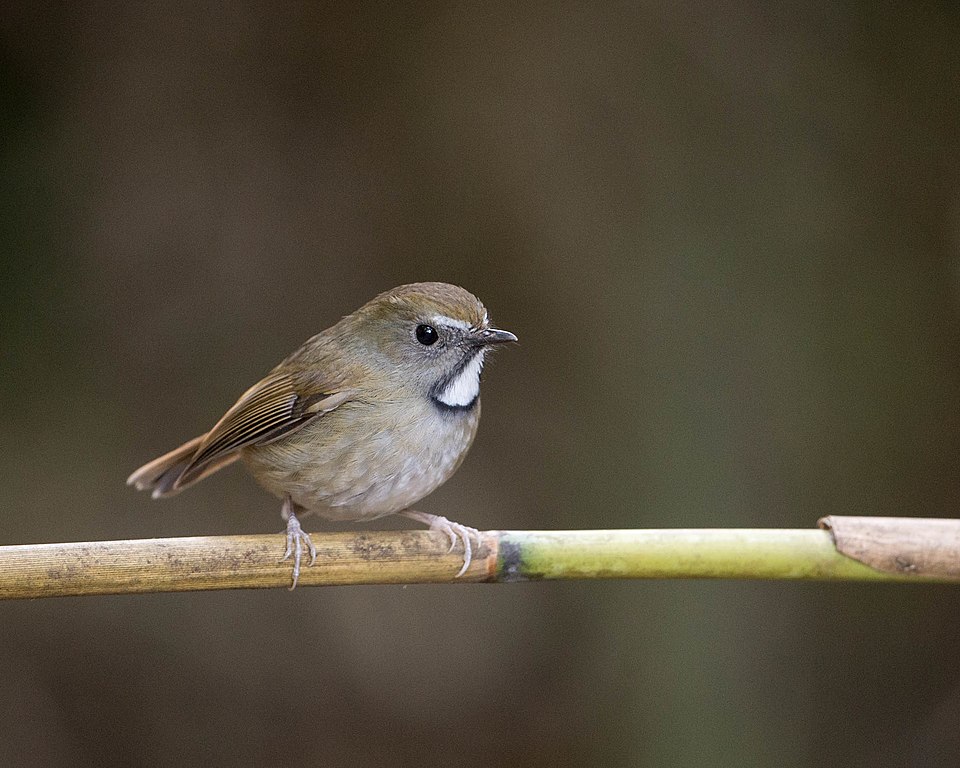
Northern Anteater-Chat
Myrmecocichla aethiops
Order: Passeriformes / Family: Muscicapidae

Wikimedia Commons
About the Northern Anteater-Chat
The Northern Anteater-Chat, scientifically known as Myrmecocichla aethiops, is a fascinating bird native to a range of African habitats. This bird is a member of the Muscicapidae family, commonly known for its adaptability to various environments. The Northern Anteater-Chat primarily inhabits the savannas and open woodlands of sub-Saharan Africa, demonstrating remarkable versatility in its ecological roles. Its presence is particularly pronounced in countries such as Nigeria, Chad, and Sudan, where it thrives in both rural and semi-urban areas.
The significance of the Northern Anteater-Chat extends beyond its striking appearance. As an insectivorous bird, it plays a crucial role in controlling insect populations, thus maintaining ecological balance. Its diet primarily consists of ants and termites, as the name suggests, but it also consumes other small invertebrates, which makes it an integral part of the food web. The bird's foraging habits become more pronounced during the dry season when insect availability decreases, showcasing its adaptability.
During the breeding season, which typically occurs in the rainy months, the Northern Anteater-Chat exhibits fascinating behaviors. It engages in elaborate courtship displays that are both a spectacle and an essential part of its mating rituals. These displays often involve the male showcasing its prominent white wing patches to attract a mate. Its ecological role is further underscored during this period, as it becomes more territorial, ensuring optimal nesting sites and food sources for its offspring.
The Northern Anteater-Chat's ability to thrive in diverse environments highlights its ecological resilience. It often inhabits transitional zones between forest and grassland, adapting to seasonal changes by shifting its range slightly based on food availability. This adaptability not only emphasizes the bird's ecological significance but also its potential as an indicator species for environmental changes. As climates shift and habitats transform, the Northern Anteater-Chat's movements and population dynamics can provide valuable insights into the health of its ecosystems.
The Northern Anteater-Chat belongs to the family Muscicapidae, within the order Passeriformes. These birds typically live average 4-6 years with a maximum recorded of 8 years..
How to Identify a Northern Anteater-Chat
Field identification of the Northern Anteater-Chat reveals several distinctive features. The adult bird predominantly displays a glossy black plumage, which contrasts sharply with its striking white wing patches, particularly visible during flight. These white patches serve as a key identification mark, setting it apart from other similar-sized birds within its range.
Juvenile Northern Anteater-Chats exhibit a slightly duller plumage compared to adults, with the black feathers having a brownish hue. This difference in coloration helps distinguish young birds from mature individuals. There is minimal sexual dimorphism in this species, with both males and females displaying similar plumage characteristics, although males may exhibit a slightly more intense black hue during the breeding season.
In terms of similar species, confusion might arise with other black-plumaged birds, such as the Southern Black Flycatcher. However, the Northern Anteater-Chat’s distinctive white wing patches and its upright perching posture are reliable identifiers. When in flight, the bird’s silhouette is compact, and the white wing patches become prominently visible. On the ground, it often assumes an upright stance, a characteristic posture among chats.
Having trouble telling birds apart? Upload a photo to our bird identification tool for an instant species match.
Northern Anteater-Chat Habitat and Range
Preferred Habitat
The Northern Anteater-Chat predominantly inhabits open savannas and light woodland areas. It is frequently observed in regions with scattered trees and shrubs, which provide ample perching sites and foraging grounds. This bird is adaptable to various altitudes but is typically found at elevations ranging from 500 to 2,000 meters.
In terms of seasonal habitat shifts, the Northern Anteater-Chat may move to slightly denser woodlands or forest edges during the dry season. This movement is largely driven by the availability of insects, its primary food source. While the bird is more common in rural and semi-natural habitats, it does occasionally venture into urban fringes where suitable conditions exist.
The presence of the Northern Anteater-Chat in urban areas is often limited to parks and larger gardens where natural vegetation is preserved. Its adaptability to both rural and peri-urban environments highlights its resilience and ability to thrive in varied habitats.
Geographic Range
The Northern Anteater-Chat has a widespread distribution across sub-Saharan Africa. Its breeding range extends from the Sahelian regions of West Africa through Central Africa, including countries such as Mali, Burkina Faso, and Cameroon. In the east, its range includes parts of Uganda and Kenya.
During the breeding season, the bird is more concentrated in areas with abundant food resources, such as termite mounds and anthills, which provide ample feeding opportunities. The population density is often higher in regions with a mix of open grassland and sparse woodland, offering both foraging grounds and nesting sites.
While the Northern Anteater-Chat is largely resident, some populations may exhibit local movements in response to environmental conditions, particularly during periods of extreme drought or habitat degradation. These movements, however, are not extensive and typically involve short-distance shifts within the same ecological zone.
Want to know which birds visit your area? Browse our backyard birds by location guides for region-specific species lists.
What Does the Northern Anteater-Chat Eat?
The diet of the Northern Anteater-Chat primarily consists of ants and termites, which it actively forages for on the ground. These insects form the bulk of its diet throughout the year, with the bird often seen meticulously inspecting the ground for prey. The bird's feeding schedule is most active during the cooler parts of the day, such as early morning and late afternoon.
In addition to ants and termites, the Northern Anteater-Chat occasionally consumes other small invertebrates, including beetles and spiders, especially when its primary food sources are scarce. During the rainy season, when insect populations typically flourish, the bird may diversify its diet to include a wider range of invertebrates.
The foraging technique involves short flights from one perching spot to another, using its keen eyesight to locate prey. Once a target is spotted, the bird employs a quick, downward swoop to capture the insect, a behavior typical among chats and flycatchers. The prey size generally ranges from small to medium, aligning with the bird's moderate size and foraging capabilities.
Northern Anteater-Chat Behavior and Social Structure
The Northern Anteater-Chat is a territorial bird, often found solitarily or in pairs during the breeding season. This social structure shifts slightly during the non-breeding season, when it may form small, loose flocks to forage. Territorial behavior is most pronounced during the breeding season, with males establishing and defending territories through vocalizations and displays.
Courtship displays are a notable behavioral aspect, involving the male showcasing its white wing patches and engaging in a series of aerial displays to attract a mate. These displays are accompanied by vocalizations that play a crucial role in pair formation and territory establishment.
In response to predators, the Northern Anteater-Chat exhibits alertness and agility, often taking flight to a nearby perch at the first sign of danger. Its daily activity patterns are diurnal, with peak activity occurring during the early morning and late afternoon. These patterns align with its foraging habits, taking advantage of cooler temperatures when insects are more active.
Northern Anteater-Chat Nesting and Reproduction
The Northern Anteater-Chat typically nests in cavities, often utilizing holes in trees or abandoned burrows. The nest is constructed from a variety of materials, including grass, leaves, and feathers, providing insulation and camouflage for the eggs.
Location preferences for nesting sites include areas with adequate cover and proximity to foraging grounds. The clutch size generally ranges from two to four eggs, with incubation lasting approximately two weeks. Both parents participate in incubation and feeding, highlighting a cooperative breeding strategy.
The fledging timeline is relatively swift, with chicks leaving the nest approximately three weeks after hatching. The bird typically raises one to two broods per year, depending on environmental conditions and food availability. Parental roles are shared, with both male and female contributing to feeding and protecting the young.
Northern Anteater-Chat Sounds and Vocalizations
The Northern Anteater-Chat's primary song consists of a series of melodious, flute-like notes, often delivered from a prominent perch. The rhythm is steady, with a clear and pleasant tone that can carry over considerable distances. This song plays a vital role in territory establishment and mate attraction.
In addition to its primary song, the bird produces a variety of call notes, including sharp, repetitive chips often used in communication between pairs. Alarm calls are harsher and more abrupt, serving as warnings to other birds in the vicinity.
During the dawn chorus, the Northern Anteater-Chat can be heard prominently, contributing to the symphony of sounds that characterize its habitat. The bird's vocalizations are comparable to those of other chats and flycatchers, distinguished by their clarity and musicality.
Interesting Facts About the Northern Anteater-Chat
- 1The Northern Anteater-Chat's white wing patches are not just for show; they play a crucial role in communication and courtship displays.
- 2Despite its name, the Northern Anteater-Chat's diet includes more than just ants and termites; it also consumes a variety of small invertebrates.
- 3This bird can be found at elevations up to 2,000 meters, showcasing its adaptability to different heights and climates.
- 4The Northern Anteater-Chat often uses abandoned burrows for nesting, illustrating its resourceful use of environmental features.
- 5During the breeding season, the Northern Anteater-Chat becomes highly territorial, a behavior that ensures optimal nesting conditions.
- 6Its melodious song, often heard at dawn, serves as a key component of its territory establishment and mate attraction strategies.
- 7The bird's presence in urban fringes highlights its ability to adapt to human-altered landscapes, provided suitable habitat conditions exist.
Northern Anteater-Chat Conservation Status
The Northern Anteater-Chat currently holds a conservation status of Least Concern according to the IUCN. Its population trend appears stable, with no significant declines noted across its range. However, localized threats such as habitat loss due to agricultural expansion and deforestation could impact certain populations. Conservation efforts for this species primarily focus on habitat preservation and sustainable land management practices. Protecting key habitats where the bird forages and nests is crucial for maintaining healthy population levels. Historically, the Northern Anteater-Chat has demonstrated resilience, adapting to changing environmental conditions, which aids its conservation outlook. While not endangered, ongoing monitoring of population trends and habitat conditions is essential to ensure the continued health of Northern Anteater-Chat populations. Conservationists emphasize the importance of community-based initiatives to promote awareness and protection of this and other similar bird species.