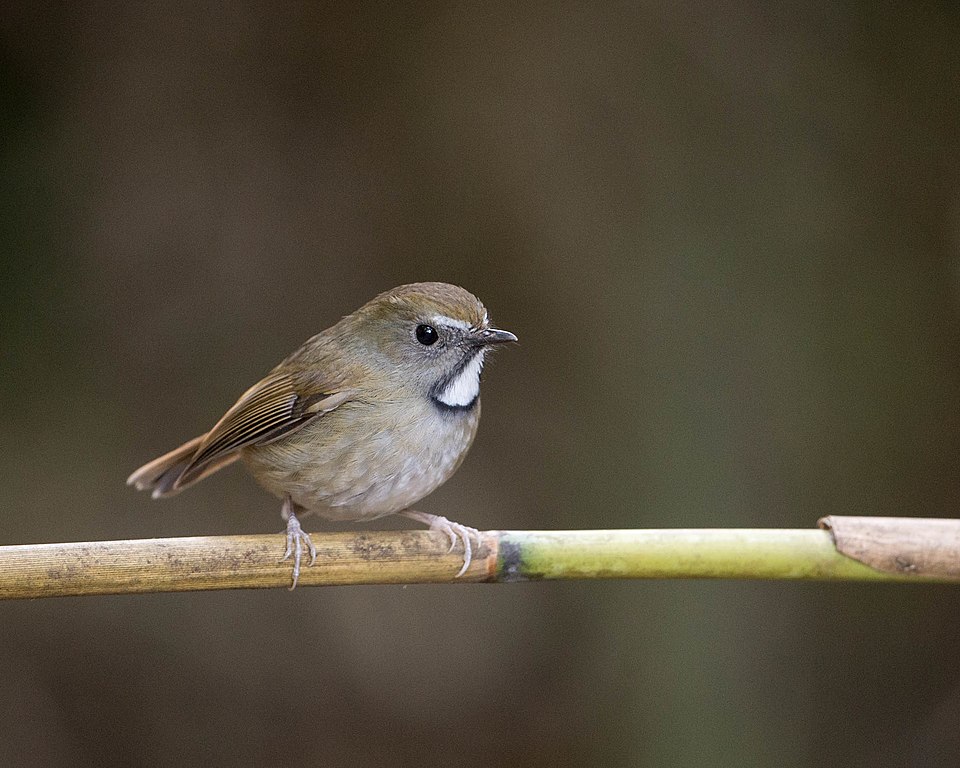
Northern Wheatear
Oenanthe oenanthe
Order: Passeriformes / Family: Muscicapidae

Wikimedia Commons
About the Northern Wheatear
The Northern Wheatear (Oenanthe oenanthe) is a captivating small passerine bird known for its remarkable migratory journey, spanning continents from Europe and Asia to Africa. This species, belonging to the family Muscicapidae, plays a significant ecological role across a variety of habitats. It thrives in open landscapes, where its insectivorous diet helps control insect populations, contributing to the ecological balance of these ecosystems. The Northern Wheatear exhibits fascinating seasonal behaviors, including long-distance migrations that cover up to 30,000 kilometers annually. During breeding season, which occurs in the Northern Hemisphere's spring and summer, these birds are found in open, rocky terrains, grasslands, and tundras, extending from the British Isles across Scandinavia and Siberia, and reaching as far as Alaska and parts of Canada. In these regions, the Northern Wheatear is a key part of the avian community, interacting with other ground-nesting birds and sharing resources. As autumn approaches, the Northern Wheatear undertakes its arduous journey to sub-Saharan Africa, where it winters in more arid and semi-desert regions. This migration is not only a testament to the bird's endurance but also highlights the interconnectedness of global ecosystems. The species is a vital link in the food chain, serving as prey for larger birds of prey, while also helping to regulate insect populations in its breeding and wintering habitats. The Northern Wheatear's ability to adapt to diverse environments, from coastal regions to mountainous terrains, underscores its ecological importance and resilience. Furthermore, its presence across multiple continents emphasizes the importance of international conservation efforts to ensure the survival of this remarkable bird. The Northern Wheatear is a symbol of the complex interplay between species and habitats, illustrating the need for a global perspective in bird conservation.
The Northern Wheatear belongs to the family Muscicapidae, within the order Passeriformes. These birds typically live average 5-7 years with a maximum recorded lifespan of 9 years..
How to Identify a Northern Wheatear
Adult Northern Wheatears are easily recognized by their distinctive plumage. Males in breeding condition display a striking contrast of blue-gray upperparts and a black eye-mask, which is sharply defined against their pale underparts. Their rump and tail are white, with a characteristic T-shaped black terminal band. Females and non-breeding males are less vivid, with brownish tones replacing the stark gray, although they retain the eye-mask and tail pattern. Juveniles resemble females but with more mottled plumage and less defined markings, making them somewhat challenging to identify at a distance. In flight, the Northern Wheatear's white rump is a key identification feature, visible even at great distances. Its silhouette is compact, with a short tail and relatively long wings for its size. When perched, this species exhibits an upright posture, often bobbing its tail, a behavior that can aid in field identification. Despite its distinctive characteristics, the Northern Wheatear may be confused with other ground-dwelling birds, such as the Stonechat or Whinchat. However, the Northern Wheatear's larger size, longer legs, and unique eye-mask help differentiate it from these similar species.
Having trouble telling birds apart? Upload a photo to our bird identification tool for an instant species match.
Northern Wheatear Habitat and Range
Preferred Habitat
The Northern Wheatear inhabits a diverse range of open habitats, reflecting its adaptability. It is commonly found in rocky areas, upland meadows, and coastal cliffs, favoring habitats with sparse vegetation that offer ample foraging opportunities. During the breeding season, this bird prefers elevations up to 3,000 meters in mountainous regions such as the Alps and the Pyrenees. In contrast, wintering habitats in sub-Saharan Africa often include arid grasslands and semi-deserts, where the bird can exploit the abundance of insects. These habitats offer a stark contrast to its breeding grounds, yet the Northern Wheatear thrives in both environments. The species also occasionally ventures into urban areas, particularly in migration periods when it may be observed in parks and gardens.
Geographic Range
The Northern Wheatear boasts an extensive range, breeding across the entire Northern Hemisphere. In Europe, it is found as far west as Iceland and the British Isles, extending eastward through Scandinavia, Russia, and into Alaska and northern Canada. Its range also includes high-altitude regions of central Asia. During migration, the Northern Wheatear traverses vast corridors, crossing Europe and the Middle East to reach its wintering grounds in sub-Saharan Africa. Countries such as Nigeria, Chad, and Sudan host large populations during the northern winter months. These migration routes highlight the bird's incredible endurance and navigational abilities. Notably, population density is highest in regions like the British Isles and Scandinavia, where suitable breeding habitats are abundant.
Want to know which birds visit your area? Browse our backyard birds by location guides for region-specific species lists.
What Does the Northern Wheatear Eat?
Primarily insectivorous, the Northern Wheatear's diet consists of beetles, ants, caterpillars, and other small invertebrates. It forages by hopping across open ground, using its keen eyesight to spot prey. The bird often employs a sit-and-wait strategy, perching on rocks or low shrubs before darting down to capture prey. Seasonal changes in diet occur, with the addition of berries and seeds during migration and in winter months when insect availability decreases. Prey size typically ranges from small ants to larger beetles, demonstrating the bird's versatility as a forager. The Northern Wheatear often feeds during the cooler parts of the day, such as early morning and late afternoon, to maximize energy efficiency.
Northern Wheatear Behavior and Social Structure
The Northern Wheatear exhibits a range of intriguing behaviors, particularly during the breeding season. Males are territorial, often engaging in aerial displays to deter rivals and attract mates. These displays include singing while in flight, a behavior that showcases their vocal prowess and agility. Courtship involves males presenting food items to females, a ritual that strengthens pair bonds. The species is generally solitary or found in pairs during breeding but forms loose flocks during migration, taking advantage of safety in numbers. The Northern Wheatear is diurnal, most active at dawn and dusk when it forages for food. Its response to predators involves a combination of alarm calls and evasive flight, relying on its speed and agility to escape threats.
Northern Wheatear Nesting and Reproduction
The Northern Wheatear constructs its nest in crevices, rock piles, or abandoned burrows, preferring secluded locations that offer protection from predators. The nest is a cup-shaped structure made from grasses, moss, and lined with feathers. Clutch size typically ranges from 4 to 7 eggs, which are pale blue and speckled. The female incubates the eggs for about 12 to 14 days, while the male provides food. After hatching, both parents feed the chicks until they fledge, around 15 to 17 days later. The species typically raises one brood per year, although a second brood is possible in optimal conditions.
Northern Wheatear Sounds and Vocalizations
The Northern Wheatear's song is a melodious series of warbling notes, often delivered from a prominent perch. The rhythm is fast-paced, with a mix of high-pitched whistles and trills that carry across open landscapes. Call notes include a distinctive 'chack-chack' sound, used to communicate with mates or signal alarm. During the dawn chorus, the Northern Wheatear's song can dominate the soundscape, particularly in breeding territories. Its vocalizations are reminiscent of other thrush-like birds, though its unique combination of notes makes it identifiable to seasoned listeners.
Interesting Facts About the Northern Wheatear
- 1The Northern Wheatear undertakes one of the longest migrations of any songbird, covering up to 30,000 kilometers annually.
- 2Despite its small size, this bird can weigh as little as 23 grams yet endure transatlantic flights during migration.
- 3The Northern Wheatear has the unique distinction of breeding in both the Old World and the New World, including parts of Alaska and Canada.
- 4In parts of Europe, the Northern Wheatear is known to nest in rabbit burrows, taking advantage of these ready-made shelters.
- 5Its scientific name, Oenanthe oenanthe, derives from Greek words meaning 'wine flower,' referring to its return to Europe during grape flowering.
- 6The Northern Wheatear is one of the few bird species that has adapted to breed above the Arctic Circle, showcasing its remarkable adaptability.
- 7In North America, it is one of the earliest migrants to return to breeding grounds, often arriving as early as March.
Northern Wheatear Conservation Status
Currently, the Northern Wheatear is listed as Least Concern by the IUCN, with global populations considered stable. However, localized declines have occurred due to habitat loss and degradation. The conversion of grasslands to agriculture and urban development poses significant threats, particularly in Europe. Conservation efforts focus on habitat preservation and restoration, alongside research into migration patterns to better understand the challenges faced during their long journeys. Historically, the Northern Wheatear has shown resilience, adapting to changes in land use, but continued conservation action is crucial to ensure its future.