
Orange-banded Flycatcher
Myiophobus lintoni
Order: Passeriformes / Family: Tyrannidae
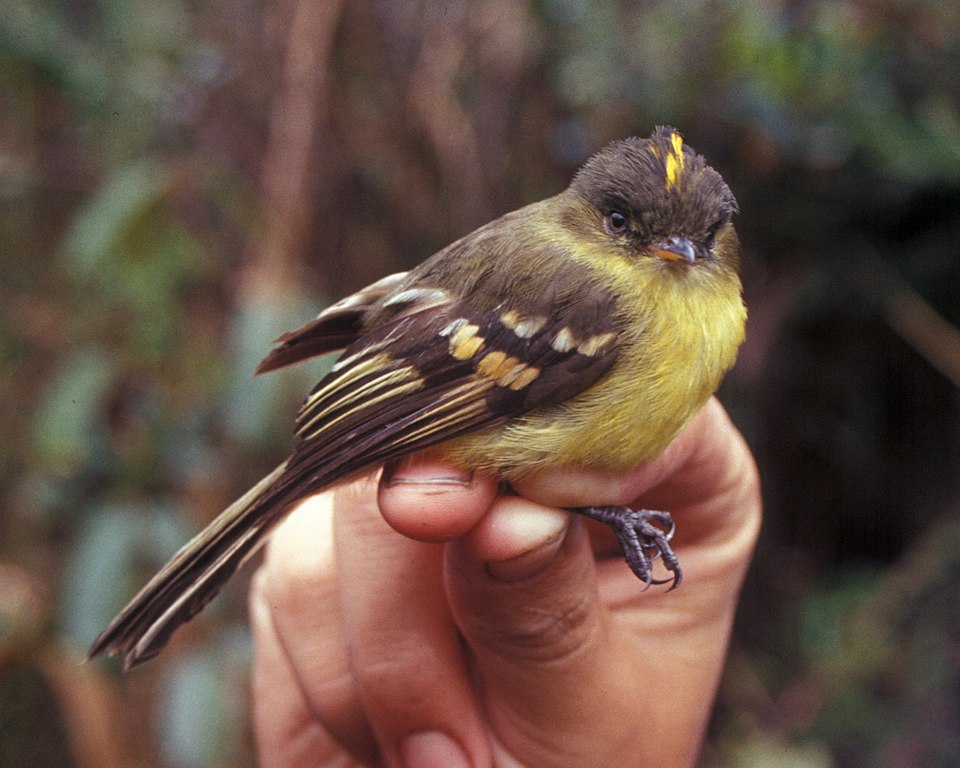
Wikimedia Commons
About the Orange-banded Flycatcher
The Orange-banded Flycatcher, scientifically known as Myiophobus lintoni, is a captivating member of the Tyrannidae family. This small passerine bird is primarily found in the subtropical and tropical moist montane forests of the Andes in Ecuador and Colombia. The species thrives at elevations between 1,500 and 2,500 meters, where it plays a crucial role in the ecological balance by controlling insect populations.
The bird exhibits remarkable adaptability, adjusting its foraging techniques and diet according to seasonal changes. During the rainy season, when insect abundance is high, the Orange-banded Flycatcher becomes more active and visible, often seen flitting through the understory in search of prey. In contrast, during the drier months, it may retreat to denser foliage to conserve energy and find food.
Ecologically, Myiophobus lintoni contributes significantly to the health of its forest habitat by managing insect populations and assisting in seed dispersal. Its presence indicates a well-preserved forest ecosystem, as it prefers areas with minimal human disturbance. Conservation efforts focus on protecting its habitat from deforestation and fragmentation, ensuring the species continues to thrive and fulfill its ecological role.
The Orange-banded Flycatcher belongs to the family Tyrannidae, within the order Passeriformes. These birds typically live average 5 years with a maximum recorded of 9 years..
How to Identify a Orange-banded Flycatcher
The Orange-banded Flycatcher is easily recognizable by its distinct orange band across the chest, contrasting sharply with its olive-green back and wings. Adult plumage shows a subtle gradation from a grayish head to this striking orange band, which is their most defining feature. Juvenile birds, however, may exhibit a duller orange or even lack the band altogether, displaying more subdued colors until they mature.
In terms of sexual dimorphism, males and females share similar plumage characteristics, making it challenging to differentiate between them in the field. One reliable method is behavioral observation during the breeding season, when males actively engage in courtship displays.
Birders should be cautious of confusion with similar species such as the Cinnamon Flycatcher, which shares the habitat. However, the Orange-banded Flycatcher’s vibrant chest band and slightly smaller size help distinguish it. In flight, the bird presents a compact silhouette with rapid wing beats, and while perched, it adopts an upright posture typical of its family.
Having trouble telling birds apart? Upload a photo to our bird identification tool for an instant species match.
Orange-banded Flycatcher Habitat and Range
Preferred Habitat
The Orange-banded Flycatcher primarily inhabits subtropical and tropical moist montane forests, where it finds ample food and nesting sites. These forests, rich in biodiversity, provide the dense foliage and varied insect life essential for the flycatcher’s survival. Myiophobus lintoni favors elevations between 1,500 and 2,500 meters, where the climate remains consistent and the ecosystem supports a wide array of insect prey.
In regions such as the Andes of Ecuador and Colombia, the Orange-banded Flycatcher can be found in both primary and secondary forests. While it generally avoids urban areas, it may occasionally venture into rural gardens and forest edges, especially if these areas maintain a semblance of their natural state.
Seasonal changes do not significantly alter its preferred habitat, as the species is non-migratory. It remains within its montane forest home year-round, adapting to seasonal variations in insect abundance and forest dynamics.
Geographic Range
The breeding range of the Orange-banded Flycatcher is confined to the Andean regions of Ecuador and Colombia. This bird is non-migratory, meaning it resides in these areas throughout the year, taking full advantage of the rich biodiversity found in these montane forests.
Within its range, the Orange-banded Flycatcher is most commonly found at elevations of 1,500 to 2,500 meters, where it can access its preferred habitat and resources. Population density tends to be higher in well-preserved forest areas, particularly in national parks and reserves where conservation efforts provide protection from habitat destruction.
While its range is relatively limited geographically, within these boundaries, the species is widespread, occupying suitable forest habitats. The bird's presence serves as an indicator of forest health, making it a species of interest for conservationists monitoring ecosystem stability.
Want to know which birds visit your area? Browse our backyard birds by location guides for region-specific species lists.
What Does the Orange-banded Flycatcher Eat?
The Orange-banded Flycatcher primarily feeds on a diet rich in insects, which it skillfully captures through agile aerial maneuvers. Flies, beetles, and small moths constitute the bulk of its diet, making it an essential player in controlling insect populations in its mountainous habitat.
Seasonal shifts influence its dietary habits, with the rainy season bringing an abundance of insect prey. During this period, the flycatcher becomes more active, frequently seen darting through the understory in pursuit of its quarry. In drier months, its diet may diversify slightly to include small fruits and seeds, although insects remain the primary focus.
The bird employs a sit-and-wait foraging strategy, often perching on a low branch and scanning for movement before launching into the air to snatch its prey. This methodical approach maximizes its energy efficiency, allowing it to thrive in various forest conditions where its food sources may fluctuate.
Orange-banded Flycatcher Behavior and Social Structure
The Orange-banded Flycatcher exhibits intriguing social behavior, often observed alone or in pairs rather than in large flocks. This territorial bird vigorously defends its home range, particularly during the breeding season, when competition for resources intensifies.
Courtship displays are subtle yet effective, with males performing aerial acrobatics and vocalizations to attract females. Once paired, both sexes participate in nest building and rearing of the young, showcasing a strong parental bond.
Daily activity patterns involve periods of high activity during the morning and late afternoon, coinciding with peak insect activity. The Orange-banded Flycatcher adopts a more subdued presence during the midday heat, retreating to shaded areas to conserve energy.
In response to predators, such as birds of prey and larger mammals, the flycatcher relies on its agility and dense foliage for cover. Alarm calls serve as an early warning system, helping neighboring birds stay alert to potential threats.
Orange-banded Flycatcher Nesting and Reproduction
Nesting for the Orange-banded Flycatcher typically begins as the rainy season approaches, providing ample food and resources for raising young. The species prefers to build cup-shaped nests positioned in the forks of tree branches, often well-camouflaged with moss and lichen to blend into the forest environment.
A typical clutch consists of 2 to 3 eggs, with both parents sharing responsibilities during the incubation period, which lasts approximately 14 to 16 days. After hatching, the chicks remain in the nest for another 15 to 18 days before fledging.
Parental care extends until the young are fully capable of foraging independently, ensuring a high survival rate among the fledglings. The flycatcher may produce one or two broods per year, depending on environmental conditions and resource availability, with second broods more common in years of plentiful food.
Orange-banded Flycatcher Sounds and Vocalizations
The primary song of the Orange-banded Flycatcher consists of a series of melodious whistles, each note clear and rising in pitch. This song is often interspersed with shorter, sharper call notes, used to communicate with mates and signal territorial presence.
Alarm calls are distinctive, characterized by a rapid series of 'chip-chip-chip' sounds, alerting other birds to nearby threats. During the dawn chorus, the Orange-banded Flycatcher adds its voice to the forest's symphony, its song carrying well through the dense foliage.
The quality of its vocalizations, though not as varied as some songbirds, is nevertheless an important aspect of its communication, playing a critical role in mate attraction and territory defense.
Interesting Facts About the Orange-banded Flycatcher
- 1The Orange-banded Flycatcher was first described scientifically in 1921, highlighting its relatively recent emergence in ornithology.
- 2Males and females of the species are nearly identical in appearance, a rarity among many bird species where sexual dimorphism is common.
- 3Despite its small size, the Orange-banded Flycatcher can consume insects nearly half its body length through agile aerial foraging.
- 4This flycatcher has been observed using its vibrant orange chest band in courtship displays to attract potential mates.
- 5The bird's adaptability to varying insect populations allows it to thrive in diverse forest ecosystems despite environmental fluctuations.
- 6Its presence in a forest indicates a healthy ecosystem, as it thrives in areas with minimal human disturbance and abundant insect life.
- 7The Orange-banded Flycatcher's nesting success is closely linked to the timing of the rainy season, ensuring food availability for its young.
Orange-banded Flycatcher Conservation Status
The IUCN currently lists the Orange-banded Flycatcher as Least Concern, with population trends considered stable. However, ongoing threats such as habitat destruction due to deforestation and agricultural expansion pose significant challenges to its long-term survival. Conservation efforts focus on habitat preservation, particularly in regions of Ecuador and Colombia where this species is prevalent. National parks and reserves play a vital role in safeguarding the flycatcher's habitat, offering protection from logging and land conversion. While historical population changes remain difficult to quantify due to limited data, the species' reliance on intact forest ecosystems highlights the importance of continued conservation initiatives. By maintaining these natural habitats, conservationists aim to ensure the Orange-banded Flycatcher continues to thrive.


