
Pallas's Grasshopper-Warbler
Locustella certhiola
Order: Passeriformes / Family: Locustellidae
Wikimedia Commons
About the Pallas's Grasshopper-Warbler
The Pallas's Grasshopper-Warbler (Locustella certhiola) is a bird species that captures the interest of birders with its elusive nature and preference for dense, marshy habitats. This medium-sized warbler belongs to the family Locustellidae and is widespread across parts of Asia and Europe, notably breeding in regions such as Siberia, northern China, and Mongolia. Known for its unobtrusive behavior, it often remains hidden in thick grasses and reeds, making it a challenge to spot. During the breeding season, its secretive lifestyle comes to the forefront as it constructs nests in dense vegetation to avoid predators and human interference.
The significance of the Pallas's Grasshopper-Warbler lies in its role as an indicator of wetland health. Its presence signals a well-maintained ecosystem because it requires specific conditions to thrive. As a migratory species, it also highlights the connectivity of ecosystems across vast geographical ranges. From its breeding grounds, the bird travels to wintering areas in Southeast Asia, including India, Bangladesh, and Thailand, adapting to different environments along its migratory route.
Ecologically, Pallas's Grasshopper-Warbler serves as both predator and prey. It helps control insect populations, feeding primarily on a variety of invertebrates. Its nesting habits and foraging techniques reflect an adaptation to wetland environments, contributing to the biodiversity of these habitats. The reliance on dense, undisturbed vegetation makes it particularly sensitive to habitat destruction, underscoring the importance of conservation efforts aimed at preserving wetlands and grasslands.
The Pallas's Grasshopper-Warbler belongs to the family Locustellidae, within the order Passeriformes. These birds typically live average 3-4 years, with some individuals reaching up to 7 years..
How to Identify a Pallas's Grasshopper-Warbler
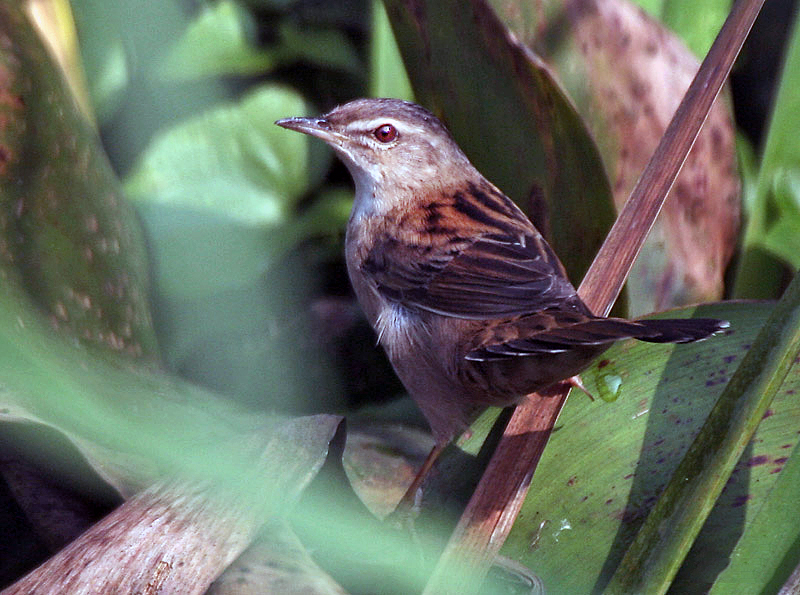
Pallas's Grasshopper-Warbler presents a modest appearance, with earthy brown plumage that provides excellent camouflage among grasses and reeds. Adults possess a streaked brown back and a paler, buffy underbelly, with a notable whitish supercilium above the eye, which helps distinguish it from similar species. Males and females exhibit similar plumage, making them hard to differentiate based on appearance alone. Juveniles resemble adults but tend to have more pronounced streaking and a slightly duller coloration.
When comparing the Pallas's Grasshopper-Warbler to similar species, such as the Grasshopper Warbler (Locustella naevia), subtle differences emerge. The Pallas's species is generally larger, with a longer tail and less defined streaking on its breast. Observing its flight silhouette, one notes a relatively long, rounded tail and a slightly hunched posture, characteristic of many Locustella warblers.
In its preferred habitat, the warbler often perches low, staying close to the ground or within dense foliage where it can remain concealed. Its cryptic behavior, combined with its specific plumage, makes field identification a rewarding challenge for birders.
Having trouble telling birds apart? Upload a photo to our bird identification tool for an instant species match.
Pallas's Grasshopper-Warbler Habitat and Range
Preferred Habitat
Pallas's Grasshopper-Warbler thrives in dense wetland habitats, where tall reeds and grasses dominate. These environments provide both cover and abundant food sources. The bird can be found from lowland marshes and riverine grasslands to higher altitude wetlands, often up to 2,000 meters in mountainous regions during migration.
Seasonal habitat shifts are noticeable in this species. While breeding, it frequents temperate zones with dense undergrowth and water bodies. During winter, it descends to warmer lowland areas in Southeast Asia, preferring similar wetland environments but can also be found in rice paddies and agricultural fields.
In urban settings, the Pallas's Grasshopper-Warbler is rarely observed, as it avoids heavily populated areas. Its preference for remote, undisturbed habitats underscores the importance of preserving natural wetland ecosystems for its survival.
Geographic Range
The Pallas's Grasshopper-Warbler has a vast breeding range across the Palearctic region, primarily in Siberia, northern China, and Mongolia. During the breeding season, it occupies a broad swath of territory from the Ural Mountains in the west to the Amur River basin in the east.
Come autumn, the bird embarks on a lengthy migration to its wintering grounds. These include numerous countries across Southeast Asia, such as India, Nepal, Bangladesh, Myanmar, and Thailand. It is during this time that the bird can be found in more varied habitats, adapting to the subtropical climates of the region.
Migration corridors often pass through eastern China, making these areas critical stopover sites. In some years, vagrants have been recorded as far west as Europe, with rare sightings in countries like the United Kingdom and Denmark, highlighting its occasional long-distance dispersal capabilities.
Want to know which birds visit your area? Browse our backyard birds by location guides for region-specific species lists.
What Does the Pallas's Grasshopper-Warbler Eat?
The diet of the Pallas's Grasshopper-Warbler primarily consists of invertebrates. It forages among grasses and reeds, skillfully picking insects such as beetles, flies, and caterpillars from vegetation. During the breeding season, its diet shifts slightly to accommodate the increased energy demands, incorporating more protein-rich prey.
Seasonal changes influence its dietary preferences. In winter, when insect availability decreases, it may consume a higher proportion of seeds and plant material, although it remains largely insectivorous. The warbler's foraging behavior involves a methodical search through leaf litter and foliage, occasionally catching insects mid-air with swift, agile movements.
Prey size varies, but the bird generally targets small insects that are abundant in its wetland habitats. Feeding occurs throughout the day, with peak activity during the cooler morning and late afternoon hours.
Pallas's Grasshopper-Warbler Behavior and Social Structure
The Pallas's Grasshopper-Warbler exhibits a solitary and secretive nature, especially during the breeding season. It defends its territory through song, with males singing from concealed perches within dense vegetation. This behavior reduces the likelihood of confrontation while asserting dominance over an area.
Courtship displays remain subtle, involving short flights and subdued calls. Once paired, the warbler focuses on nesting and raising its young, with little evidence of flocking behavior during this time. However, during migration, it may join mixed-species flocks, benefiting from the increased vigilance and foraging success these groups provide.
Response to predators involves remaining hidden in thick cover, relying on its cryptic plumage for protection. In daily activity patterns, the Pallas's Grasshopper-Warbler is most active during dawn and dusk, avoiding the heat of midday and remaining largely inactive at night.
Pallas's Grasshopper-Warbler Nesting and Reproduction
The Pallas's Grasshopper-Warbler typically constructs its nest low to the ground, meticulously weaving it from grasses and plant fibers. Nest sites are strategically chosen within dense vegetation, often in marshes or near water bodies, providing both concealment and proximity to food resources.
A typical clutch comprises four to six eggs, with the female primarily responsible for incubation over a period of 12 to 14 days. Both parents participate in feeding the chicks once hatched, with fledging occurring approximately 12 to 15 days after hatching.
The species is known to rear one or two broods per year, depending on environmental conditions. Parental roles are clearly defined, with the male often keeping watch while the female tends to the nest. This division of labor ensures the survival of their offspring in habitats where predation risk remains high.
Pallas's Grasshopper-Warbler Sounds and Vocalizations
The song of the Pallas's Grasshopper-Warbler is a rapid, insect-like trill, reminiscent of a grasshopper's call. This distinctive song, with a rhythmic, continuous quality, often emanates from deep within the vegetation, making the bird easier to hear than to see.
Call notes consist of simple, high-pitched chirps, used in communication between mates or to signal alarm. The warbler's alarm call, a sharp, repetitive 'tick', alerts others to potential danger.
During the dawn chorus, the Pallas's Grasshopper-Warbler's song blends with those of other wetland birds, creating a vibrant acoustic environment. Its song serves as a primary tool for territory establishment and mate attraction during the breeding season.
Interesting Facts About the Pallas's Grasshopper-Warbler
- 1The Pallas's Grasshopper-Warbler's name honors German naturalist Peter Simon Pallas, who first described the species.
- 2This warbler's song is so insect-like that it can blend seamlessly into the soundscape of a summer meadow.
- 3Unlike many warblers, the Pallas's Grasshopper-Warbler often forages on the ground, searching for insects in leaf litter.
- 4During migration, Pallas's Grasshopper-Warblers can travel thousands of kilometers, showcasing impressive endurance.
- 5The Pallas's Grasshopper-Warbler's elusive nature makes it a prized find for birders in its wintering grounds.
- 6Despite its secretive habits, the warbler's presence often indicates a healthy wetland ecosystem.
- 7The bird's cryptic plumage allows it to nearly disappear among the reeds, evading predators with ease.
Pallas's Grasshopper-Warbler Conservation Status
The Pallas's Grasshopper-Warbler currently holds a status of Least Concern on the IUCN Red List, with a stable population trend. Despite this designation, the species faces threats from habitat loss due to wetland drainage and agricultural expansion. Conservation efforts focus on protecting and restoring wetland habitats, crucial for both breeding and wintering populations. This involves promoting sustainable agricultural practices that maintain natural vegetation cover and water quality. Historically, the bird's population has experienced fluctuations linked to environmental changes. However, ongoing habitat protection efforts aim to mitigate these impacts, ensuring the Pallas's Grasshopper-Warbler continues to thrive across its range.


