
Parus dichrous
Parus dichrous
Order: Passeriformes / Family: Paridae
Wikimedia Commons
About the Parus dichrous
The Black-breasted Tit (Parus dichrous) is a small yet captivating member of the Paridae family, known for its dynamic presence in the montane forests of South Asia. This tit is a resident breeder across the Himalayas, ranging from northern Pakistan through northern India, Nepal, Bhutan, and into parts of Tibet. The species thrives in subtropical or tropical moist montane forests, typically above 1,500 meters, where it plays a crucial role in controlling insect populations. Its affinity for mixed coniferous and broadleaf forests makes it an essential component of these biodiverse ecosystems. During the breeding season, the Black-breasted Tit becomes particularly active, showcasing its acrobatic skills as it forages for insects among the foliage. This behavior not only helps maintain the balance of insect populations but also aids in seed dispersal, thus contributing to forest health and regeneration. In winter, when insect availability decreases, the Black-breasted Tit's diet shifts to include seeds and berries. This dietary flexibility reflects its adaptability to seasonal changes in its environment. The tit often joins mixed-species foraging flocks during this time, enhancing its foraging efficiency and protection from predators. The Black-breasted Tit's role in such flocks is significant, as its presence often attracts other birds, benefiting the entire group. This social behavior underscores the bird's importance as both a predator of insects and a participant in mutualistic relationships within its ecosystem. The Black-breasted Tit's ability to adapt to varying environmental conditions and its role in maintaining ecological balance make it a species of interest for ornithologists and conservationists alike.
The Parus dichrous belongs to the family Paridae, within the order Passeriformes. These birds typically live typically 4-6 years, though specific studies are limited..
How to Identify a Parus dichrous
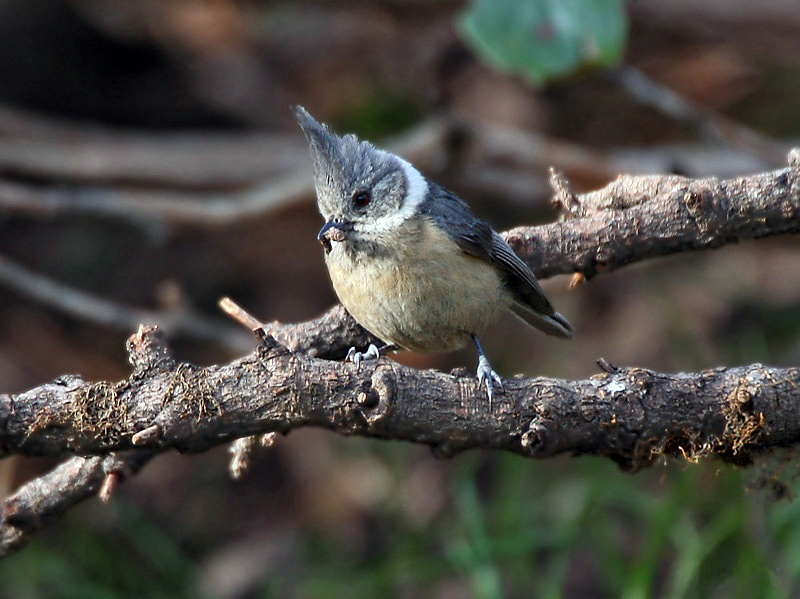
The Black-breasted Tit is easily recognized by its distinctive black cap and throat, contrasting sharply with a white cheek and underparts. Adult plumage is dominated by this striking black and white pattern, with a subtle olive-brown wash on the back and wings, which can appear more pronounced in certain lighting conditions. The wings and tail feathers exhibit a bluish tint, adding to their visual appeal. Juveniles resemble adults but have duller plumage, with a less distinct black cap and throat, making them slightly more challenging to identify at a distance. Both males and females appear similar, with no significant sexual dimorphism in plumage. However, males may exhibit slightly bolder black markings, particularly during the breeding season. The Black-breasted Tit can be confused with other tit species like the Great Tit or the Coal Tit, but its unique black breast and white cheeks serve as clear differentiators. In flight, the Black-breasted Tit presents a short, rounded silhouette typical of the Paridae family, characterized by rapid, undulating flight patterns. When perched, it adopts a confident, upright posture, often seen clinging to vertical branches or twigs as it navigates through the forest canopy.
Having trouble telling birds apart? Upload a photo to our bird identification tool for an instant species match.
Parus dichrous Habitat and Range
Preferred Habitat
The Black-breasted Tit predominantly inhabits subtropical or tropical moist montane forests across the Himalayas. It prefers altitudes between 1,500 and 3,000 meters, favoring areas with dense canopy cover and abundant insect life. This bird shows a preference for mixed forests, where coniferous trees intermingle with broadleaf species, providing a rich and varied diet. Seasonal shifts in habitat are minimal, as the species is largely non-migratory, remaining within its montane range year-round. In urban areas, sightings are rare, though the Black-breasted Tit may occasionally venture into gardens or parklands that offer suitable food resources and tree cover. Its presence in rural and less disturbed natural areas is more common, where it benefits from reduced human interference. The bird's reliance on montane forests highlights the importance of conserving these habitats, which face threats from logging and habitat conversion.
Geographic Range
The Black-breasted Tit's range extends across the Himalayan region, including northern Pakistan, northern India, Nepal, Bhutan, and parts of Tibet. It is a resident species, generally not undertaking long-distance migrations, although some altitudinal movements may occur in response to severe weather conditions. Within this range, the species tends to be more abundant in areas with well-preserved forest habitats. Population density hotspots are often found in protected areas and national parks, where conservation measures help maintain suitable environmental conditions. Despite its relatively restricted range, the Black-breasted Tit is considered widespread within its preferred habitats, benefiting from the expansive montane forests that define much of the Himalayan landscape. While its presence is well-documented in the aforementioned countries, populations outside these regions are not known, underscoring its specialization to the unique ecological conditions of the Himalayas.
Want to know which birds visit your area? Browse our backyard birds by location guides for region-specific species lists.
What Does the Parus dichrous Eat?
The Black-breasted Tit primarily feeds on insects, making it an insectivore with a diet heavily reliant on caterpillars, beetles, and spiders. During the breeding season, this focus on high-protein food sources supports the energy demands of raising young. In the colder months, when insect availability declines, the tit's diet shifts to include seeds and berries, showcasing its dietary adaptability. Foraging techniques involve acrobatic maneuvers among branches, where the tit deftly picks insects from leaves and bark. The bird's diminutive size allows it to exploit food resources inaccessible to larger species. Prey size generally remains small, consistent with the tit's size and foraging capabilities. The Black-breasted Tit primarily forages during daylight hours, often as part of mixed-species flocks. This behavior not only facilitates efficient food location but also provides safety in numbers against potential predators.
Parus dichrous Behavior and Social Structure
The Black-breasted Tit exhibits a complex social structure, often participating in mixed-species foraging flocks. This behavior enhances foraging success and reduces predation risk. Territorial behavior becomes prominent during the breeding season, with pairs defending nesting sites against intruders. Courtship displays include aerial chases and vocalizations, with males displaying their striking black and white plumage to attract females. Flocking occurs predominantly outside the breeding season, as the birds join other small passerines to form cohesive groups. In response to predators, the Black-breasted Tit relies on alarm calls to alert flock members, often retreating to dense foliage for cover. Daily activity patterns involve active foraging from dawn to dusk, with a brief midday lull during the hottest part of the day. This bird's adaptability in social interactions and response to environmental challenges underscores its ecological success.
Parus dichrous Nesting and Reproduction
The Black-breasted Tit constructs its nest in tree cavities, often utilizing abandoned woodpecker holes or natural crevices in decaying wood. Nest materials include moss, feathers, and animal hair, providing insulation and comfort for the eggs. Preferred nesting locations are typically within dense forested areas, where the birds can easily access food resources and nesting materials. Clutch size ranges from 4 to 6 eggs, which are incubated primarily by the female for about two weeks. Post-hatching, both parents participate in feeding the young, which fledge approximately 18 to 21 days after hatching. The parental roles are well-defined, with males often defending the territory while females focus on brooding. The Black-breasted Tit usually raises one or two broods per year, depending on environmental conditions and food availability.
Parus dichrous Sounds and Vocalizations
The primary song of the Black-breasted Tit is a series of clear, melodic whistles, often described as a repetitive 'pee-pee-pee' sound. These calls serve both territorial and mate-attraction purposes, with variations in rhythm and pitch observed between individuals. Call notes include short, sharp 'chip' sounds used in social interactions and as alarm calls. During the dawn chorus, the Black-breasted Tit's song contributes to the symphony of forest sounds, establishing its presence within its habitat. Alarm calls are more rapid and harsher, alerting flock mates to potential threats. The tit's vocal repertoire is not as varied as some songbirds, but its distinctive calls play a crucial role in communication and survival.
Interesting Facts About the Parus dichrous
- 1The Black-breasted Tit can hover briefly like a hummingbird to pick insects off leaves.
- 2It is often one of the first species to join mixed-species foraging flocks in montane forests.
- 3Despite its small size, the Black-breasted Tit can aggressively defend its territory against larger birds.
- 4The species has a remarkably wide vocal range, with over 20 different call types documented.
- 5Black-breasted Tits sometimes use shed snake skins in their nests to deter predators.
- 6This tit can adapt to a variety of altitudes, from 1,500 to 3,000 meters, showcasing its ecological flexibility.
- 7Their nests are often lined with animal fur, providing warmth essential for egg incubation in cooler climates.
Parus dichrous Conservation Status
The Black-breasted Tit holds a 'Least Concern' status on the IUCN Red List, with populations considered stable. Primary threats include habitat destruction due to logging and agricultural expansion, which reduce available montane forest areas. Conservation efforts focus on habitat protection and creating reserves that safeguard critical breeding areas. Historical population changes are not well-documented, but current stability suggests resilience in the face of moderate environmental pressures. Continued monitoring and habitat preservation remain essential to ensure the long-term survival of this species, particularly as human activities encroach on its natural habitat.
Other Paridae Species


Birds Similar to the Parus dichrous
These species are often confused with the Parus dichrous due to similar appearance or overlapping range.

