
Philippine Cockatoo
Cacatua haematuropygia
Order: Psittaciformes / Family: Psittacidae
Wikimedia Commons
About the Philippine Cockatoo
The Philippine Cockatoo (Cacatua haematuropygia), also known as the Red-vented Cockatoo, is an endemic species found exclusively in the Philippines. This bird plays a crucial ecological role in its native habitats by dispersing seeds and maintaining the health of forest ecosystems. Historically widespread across the archipelago, its presence is now confined to a few regions due to severe habitat loss and illegal wildlife trade. The few remaining populations are primarily found on Palawan, with smaller groups on islands such as Rasa, Dumaran, and Pandanan. These cockatoos inhabit lowland forests and mangrove swamps, preferring areas abundant in fruit-bearing trees. The Philippine Cockatoo is a vital part of the forest's ecosystem, aiding in forest regeneration through their feeding habits, which involve the consumption and subsequent dispersal of seeds. During the breeding season, these birds become especially vocal and more frequently observed as they engage in courtship and nesting activities. They exhibit seasonal movements between islands and forests in search of food, which is crucial for their survival given the increasing pressure on their natural habitats. Conservation efforts are underway to protect their dwindling numbers, involving habitat restoration, captive breeding, and public education to reduce poaching. These efforts are vital for the survival of this vibrant species, which serves as an emblem of the Philippines' rich biodiversity.
The Philippine Cockatoo belongs to the family Psittacidae, within the order Psittaciformes. These birds typically live average 40 years, with a maximum recorded of 50 years..
How to Identify a Philippine Cockatoo
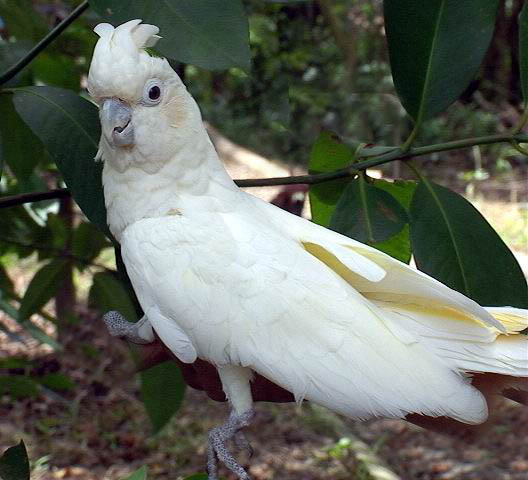
The Philippine Cockatoo is easily identifiable by its predominantly white plumage and distinctive red undertail coverts, which give it the name Red-vented Cockatoo. Adult individuals display a striking contrast between their pure white feathers and the red patch beneath the tail. Their beak is a pale, horn color, complementing their overall appearance. Juveniles resemble adults but with a more faded undertail coloration and slightly shorter crest. Males and females appear similar, though males are generally larger with more robust bills. In flight, the Philippine Cockatoo presents a broad, rounded silhouette, with wings that appear slightly translucent in strong sunlight. When perched, these cockatoos often raise their crest, revealing a slight yellowish tint at the base. Confusion with other species is unlikely due to their unique combination of white plumage and red vent, though novice observers might mistakenly identify them as the Sulphur-crested Cockatoo, which lacks the red undertail.
Having trouble telling birds apart? Upload a photo to our bird identification tool for an instant species match.
Philippine Cockatoo Habitat and Range
Preferred Habitat
The Philippine Cockatoo primarily inhabits lowland forests and mangrove swamps, favoring areas with a high density of fruit-bearing trees and a rich canopy. These birds thrive at elevations from sea level up to about 500 meters, although they are most frequently found in coastal regions. Seasonal habitat shifts occur as they move between forested areas and nearby islands to exploit food resources. While they may occasionally be spotted on the fringes of urban areas, they are predominantly found in more remote and undisturbed environments, where human activity is minimal. Conservation areas such as the Rasa Island Wildlife Sanctuary provide crucial habitat for their survival, offering protected spaces free from the threats of logging and human encroachment.
Geographic Range
Historically, the Philippine Cockatoo's range spanned much of the Philippines, but today, their presence is limited to a few key areas. The primary stronghold for this species is the island of Palawan, where conservation efforts are concentrated. Smaller populations persist on the islands of Rasa, Dumaran, and Pandanan. These birds do not migrate over long distances but exhibit local movements between islands and forest patches in search of food. Population density is significantly higher in protected areas like Rasa Island, where conservation programs have helped bolster numbers. Outside these protected zones, the cockatoo faces severe threats, making sightings rare and sporadic.
Want to know which birds visit your area? Browse our backyard birds by location guides for region-specific species lists.
What Does the Philippine Cockatoo Eat?
The diet of the Philippine Cockatoo consists primarily of seeds, nuts, and fruits, with a particular preference for those from native tree species. They play a crucial role in seed dispersal, aiding forest regeneration. During the wet season, their diet expands to include flowers and occasionally small insects. Foraging typically occurs in the early morning and late afternoon when temperatures are cooler. These cockatoos use their strong, curved beaks to crack open hard nuts and extract seeds, demonstrating remarkable dexterity. They often feed in small groups, increasing their foraging efficiency and providing safety in numbers from potential predators.
Philippine Cockatoo Behavior and Social Structure
Philippine Cockatoos are social birds that often form small flocks, especially outside the breeding season. During the breeding period, pairs become more territorial as they establish and defend nesting sites. Courtship displays involve mutual preening and synchronized calls. These birds exhibit a distinct daily activity pattern, being most active during the cooler parts of the day. In the presence of predators, they give loud alarm calls to alert the flock and retreat to higher branches. Their social structure is complex, with established hierarchies within flocks. Roosting occurs communally in large trees, offering protection and maintaining social bonds.
Philippine Cockatoo Nesting and Reproduction
The Philippine Cockatoo nests in tree cavities, often selecting tall, mature trees with suitable hollows. Nesting materials are minimal, as they rely on the natural cavity structure for protection. Females lay 2 to 3 eggs per clutch, with an incubation period lasting about 28 to 30 days. Both parents share incubation duties, though the female predominantly performs this role. Once hatched, chicks remain in the nest for approximately 8 weeks before fledging. Parents continue to feed and care for fledglings until they are fully independent. Typically, these cockatoos raise one brood per year, though in optimal conditions, a second brood may occur.
Philippine Cockatoo Sounds and Vocalizations
The vocalizations of the Philippine Cockatoo are distinct, characterized by loud, harsh squawks and screeches that carry over long distances. The primary call is a rhythmic series of piercing notes, often used for communication within the flock. These birds also produce softer chattering sounds during social interactions. Alarm calls are sharper and more rapid, signaling potential threats. During the dawn chorus, their calls are more frequent and varied, creating a vibrant soundscape in their habitat. Comparatively, their calls are harsher and more varied than those of other cockatoos, reflecting their dynamic social interactions.
Interesting Facts About the Philippine Cockatoo
- 1The Philippine Cockatoo can live up to 50 years in captivity, highlighting their long-term commitment to mates and social groups.
- 2They are known for their intelligence and problem-solving skills, often observed using tools to extract seeds from tough shells.
- 3Philippine Cockatoos have a specialized tongue that helps manipulate seeds and nuts, enhancing their feeding efficiency.
- 4This species plays a crucial role in forest ecosystems by dispersing seeds of at least 30 different tree species.
- 5The distinct red undertail of the Philippine Cockatoo is not only a visual marker but also aids in species recognition during flight.
Philippine Cockatoo Conservation Status
The Philippine Cockatoo is listed as Critically Endangered by the IUCN due to rapid population declines driven by habitat destruction and illegal trapping for the pet trade. Conservation efforts focus on habitat restoration, strict enforcement of wildlife protection laws, and public education to reduce demand for captured birds. Captive breeding programs have shown promise, with successful reintroductions into protected areas. Historically, the population has suffered significant losses, but ongoing conservation initiatives offer hope for stabilization and recovery. The commitment of local communities and international support remains crucial for the future of this iconic species.


