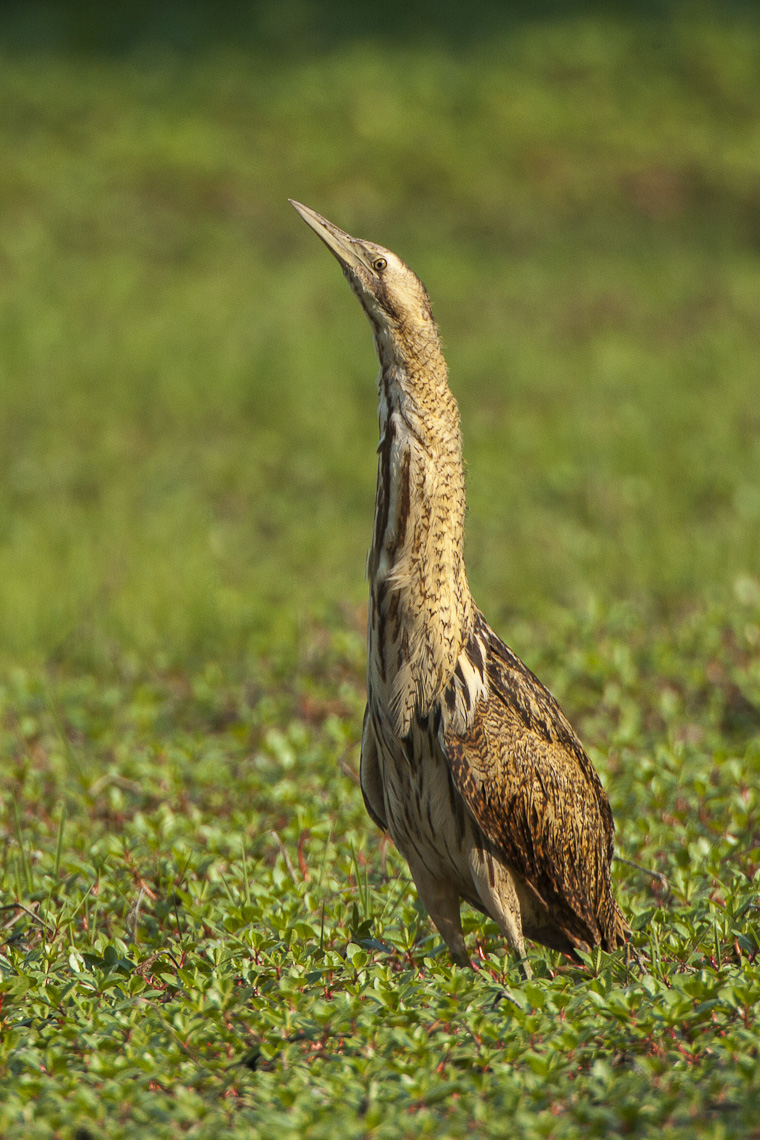
Pinnated Bittern
Botaurus pinnatus
Order: Pelecaniformes / Family: Ardeidae

Wikimedia Commons
About the Pinnated Bittern
The Pinnated Bittern (Botaurus pinnatus) is a large yet elusive member of the Ardeidae family, closely related to herons and egrets. This wading bird inhabits the freshwater marshes, reed beds, and wet grasslands of Central and South America, often blending seamlessly into its surroundings with its cryptic plumage. Its range extends from southern Mexico through Central America and into South America, reaching as far south as Argentina and Uruguay. The Pinnated Bittern plays a crucial ecological role in these wetland habitats, acting as both predator and prey within the food web.
With a length of around 76 cm and a wingspan reaching up to 115 cm, the Pinnated Bittern is a formidable hunter. It primarily feeds on fish, amphibians, and insects, using its long, pointed bill to capture prey with precision. Its stealthy hunting technique involves remaining motionless for extended periods, allowing it to ambush unsuspecting prey. While it is most active during dawn and dusk, this bittern may also forage during the day, especially in undisturbed areas.
Seasonally, the Pinnated Bittern displays some variation in behavior. During the breeding season, which often coincides with the rainy season, males become vocal and engage in elaborate courtship displays to attract females. These displays include wing spreading and a series of low, booming calls that resonate across the wetland. The bittern's dependence on wetland habitats makes it vulnerable to habitat destruction and degradation, particularly due to agriculture and urban development.
The Pinnated Bittern's presence in a wetland ecosystem indicates a healthy environment, as it requires clean water and abundant prey to thrive. Conservation efforts aimed at preserving wetland habitats benefit not only the bittern but also a myriad of other species that share its habitat. By understanding and protecting these ecosystems, we ensure the continued survival of the Pinnated Bittern and the rich biodiversity it supports.
The Pinnated Bittern belongs to the family Ardeidae, within the order Pelecaniformes. These birds typically live average 8-10 years in the wild.
How to Identify a Pinnated Bittern
Identifying the Pinnated Bittern involves noting several key features. Adult Pinnated Bitterns exhibit tawny brown plumage adorned with dark streaks running vertically along the neck and breast, providing excellent camouflage among reeds and grasses. Their backs are mottled with brown and black, while the underparts are lighter. The bird's bill is long, pointed, and yellowish, ideal for spearing prey. When in flight, the Pinnated Bittern's broad wings reveal a distinctive pattern of dark and light bands.
Juveniles resemble adults but tend to have a slightly duller appearance with less defined streaking. There is little sexual dimorphism in Pinnated Bitterns, meaning males and females look similar, though males may be slightly larger. This species can be confused with other bitterns, such as the American Bittern, but can be distinguished by its larger size and more pronounced streaking.
In terms of posture, the Pinnated Bittern often stands motionless with its bill pointed upward, a behavior known as 'bitterning,' which enhances its camouflage among tall vegetation. When startled, it may freeze in this pose or take to the air with slow, deliberate wingbeats, showcasing its broad wings and striking plumage.
Having trouble telling birds apart? Upload a photo to our bird identification tool for an instant species match.
Pinnated Bittern Habitat and Range
Preferred Habitat
The Pinnated Bittern thrives in a variety of wetland habitats, including marshes, swamps, and wet grasslands. It is particularly associated with areas rich in aquatic vegetation, such as reeds and cattails, which provide cover and breeding sites. In Central America, it is commonly found in the lowland regions of countries like Costa Rica and Panama.
This species typically occupies elevations from sea level up to 1,000 meters. During the dry season, Pinnated Bitterns may shift to areas with permanent water sources, such as large lakes or slow-moving rivers, to maintain access to food. While primarily found in rural and wild settings, the Pinnated Bittern can occasionally be sighted in urban wetlands, provided these areas retain sufficient natural vegetation.
The loss of wetland habitats due to agricultural expansion and urbanization poses a significant threat to the Pinnated Bittern's preferred environments. Conservation of these habitats is crucial for the species' survival.
Geographic Range
The Pinnated Bittern's range spans a broad swath of the Americas, covering parts of Central and South America. It breeds in countries such as Mexico, Belize, Honduras, and Nicaragua, where it finds suitable wetland habitats. As a non-migratory species, it remains within its range year-round, though some local movements may occur in response to water availability.
In South America, the Pinnated Bittern is present in Colombia, Venezuela, and further south into Brazil, Paraguay, and Argentina. The species is more abundant in regions with extensive wetlands, such as the Pantanal in Brazil, where it can be observed relatively easily compared to other areas.
Despite being widespread, population density varies, with certain hotspots exhibiting greater concentrations. These include major wetland complexes where water levels and prey abundance remain stable throughout the year, providing ideal conditions for the Pinnated Bittern.
Want to know which birds visit your area? Browse our backyard birds by location guides for region-specific species lists.
What Does the Pinnated Bittern Eat?
The Pinnated Bittern's diet primarily consists of small fish, amphibians, and invertebrates such as insects and crustaceans. Its foraging strategy involves a combination of stealth and patience. The bird often stands motionless in shallow water, waiting for prey to approach before striking quickly with its sharp bill.
Fish and frogs make up a significant portion of its diet, particularly during the wet season when these prey items are abundant. During drier periods, the bittern may rely more heavily on insects and crustaceans, which are easier to capture in reduced water levels.
The Pinnated Bittern typically feeds during low-light conditions, such as early morning or late afternoon, taking advantage of its camouflage and the cover of darkness to ambush prey. Its ability to adapt its diet based on seasonal availability is key to its survival in fluctuating wetland environments.
Pinnated Bittern Behavior and Social Structure
Pinnated Bitterns exhibit a solitary and secretive lifestyle, often remaining hidden within dense wetland vegetation. During the breeding season, males become more conspicuous, using their deep, booming calls to attract mates and establish territories. Their courtship displays involve dramatic wing spreading and vocalizations that resonate across the marsh.
Outside of the breeding season, Pinnated Bitterns are less vocal and continue their solitary habits. They maintain territories that provide access to sufficient food resources, often defending these areas from intrusions by other bitterns or similar species.
While generally solitary, Pinnated Bitterns may occasionally form loose aggregations in areas of high prey density. They exhibit strong site fidelity, often returning to the same breeding and feeding grounds year after year. This behavior highlights the importance of preserving their preferred habitats.
Pinnated Bittern Nesting and Reproduction
Pinnated Bitterns construct nests in dense wetland vegetation, such as reeds or tall grasses, providing camouflage and protection from predators. The nests are typically built a few feet above water, composed of plant materials like twigs, reeds, and leaves.
The female lays a clutch of 3 to 5 eggs, which she incubates for approximately 24 to 28 days. Both parents participate in feeding the chicks, which fledge about 45 days after hatching. The fledglings remain dependent on their parents for several weeks post-fledging, learning essential survival skills.
Pinnated Bitterns usually raise one brood per year, with breeding closely linked to the wet season when food is most abundant. The availability of suitable nesting sites and food resources significantly influences their reproductive success.
Pinnated Bittern Sounds and Vocalizations
The Pinnated Bittern's vocalizations are distinctive, especially during the breeding season. Its primary song is a series of deep, resonant booming calls that can carry over long distances, often described as 'pumping' sounds. These calls serve to establish territory and attract mates.
Aside from the booming calls, Pinnated Bitterns may produce softer clucking or croaking sounds, particularly when interacting with mates or offspring. Alarm calls are more abrupt and harsh, used to warn of potential threats.
The dawn chorus in wetland habitats often includes the Pinnated Bittern's calls, adding to the symphony of sounds created by other avian species in the area.
Interesting Facts About the Pinnated Bittern
- 1The Pinnated Bittern's booming calls can be heard over a kilometer away, even through dense vegetation.
- 2Despite their size, Pinnated Bitterns can remain almost invisible in their habitats due to their cryptic plumage.
- 3Unlike many other bitterns, the Pinnated Bittern occupies a broad range across both Central and South America.
- 4Pinnated Bitterns are known for their 'bitterning' behavior, where they freeze with their bills pointed upwards to avoid detection.
- 5Their breeding season often coincides with the rainy season, ensuring a plentiful food supply for raising chicks.
- 6The Pinnated Bittern uses its long, sharp bill not only for catching prey but also for warning potential threats.
- 7These bitterns are often considered indicators of wetland health due to their reliance on clean water and abundant prey.
Pinnated Bittern Conservation Status
The Pinnated Bittern is currently listed as Least Concern by the IUCN, although its population trend is thought to be decreasing. Habitat destruction, particularly the drainage and conversion of wetlands for agriculture, poses the greatest threat to its survival. Conservation efforts focus on protecting and restoring wetland habitats, ensuring they remain viable for Pinnated Bitterns and other wetland-dependent species. Efforts include establishing protected areas and promoting sustainable land-use practices. Historical data suggest that the Pinnated Bittern's population has faced declines in areas where extensive habitat modification has occurred. Continued conservation actions are necessary to prevent further losses and support population stability.
Other Ardeidae Species


Birds Similar to the Pinnated Bittern
These species are often confused with the Pinnated Bittern due to similar appearance or overlapping range.