
Pirre Warbler
Basileuterus ignotus
Order: Passeriformes / Family: Parulidae
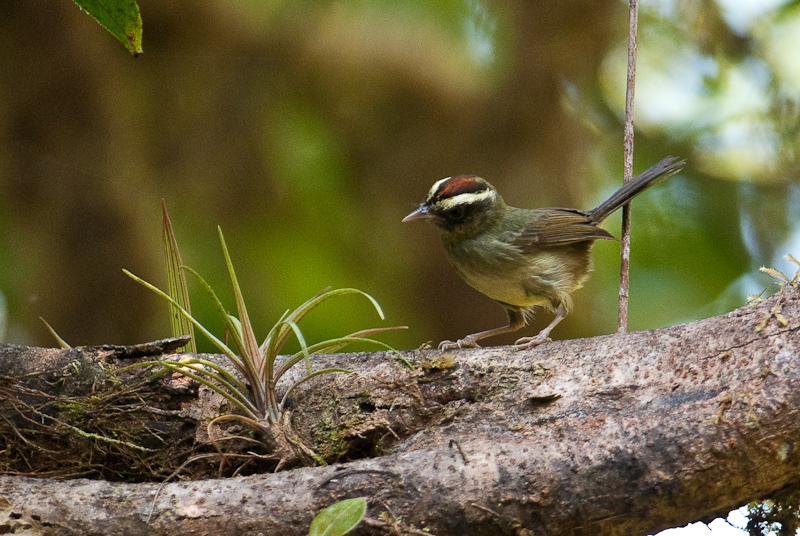
Wikimedia Commons
About the Pirre Warbler
The Pirre Warbler, scientifically known as Basileuterus ignotus, is a small songbird endemic to the Darién region in Panama. This elusive bird inhabits the dense montane and foothill forests, thriving in altitudes ranging from 900 to 1,800 meters. Its preference for such specific environments makes it a fascinating subject of study for ornithologists interested in Central American birdlife.
The significance of the Pirre Warbler extends beyond its striking appearance. It plays a crucial ecological role as an insectivore, contributing to the control of insect populations within its habitat. This bird's presence indicates a healthy forest ecosystem, as it relies on undisturbed canopy and understory vegetation for foraging and nesting.
The Pirre Warbler exhibits seasonal behaviors that align with the climatic conditions of its high-elevation habitat. During the wetter months, it becomes more vocal and active, engaging in breeding activities. These seasonal patterns provide critical insights into its life history and the broader ecological dynamics of the Darién forests. Observations of the Pirre Warbler contribute to understanding biodiversity in this biodiverse hotspot, highlighting the importance of preserving its unique habitat.
Basileuterus ignotus is a symbol of the rich avian diversity found in the Neotropical region. Its restricted range emphasizes the need for targeted conservation efforts to protect its delicate ecosystem. The bird's reliance on pristine forest environments underlines the impact of habitat degradation, making it a key species for conservationists working in Central America.
The Pirre Warbler belongs to the family Parulidae, within the order Passeriformes. These birds typically live typically 4-5 years, with some individuals reaching up to 7 years..
How to Identify a Pirre Warbler
The Pirre Warbler is a small songbird, measuring approximately 13 cm in length. Its most striking feature is its bright yellow underparts, contrasted by olive-green upperparts. The bird's crown is adorned with a subtle grayish coloration, providing a distinct field mark for identification. Unlike many other warblers, both male and female Pirre Warblers display similar plumage, making them challenging to distinguish in the field.
Juveniles can be recognized by their duller coloration, lacking the vibrant yellow of the adults. However, they retain the characteristic olive tones on their dorsal side. Observers might confuse the Pirre Warbler with similar species, such as the Buff-rumped Warbler, but the latter typically displays a more buffy rump and lacks the vivid yellow underparts.
In flight, the Pirre Warbler shows a compact silhouette with rapid wingbeats, typical of small warblers. When perched, it holds a slightly upright posture, often flicking its tail as it moves through the dense underbrush. These subtle behaviors, along with its distinctive coloration, aid in accurate identification in its natural habitat.
Having trouble telling birds apart? Upload a photo to our bird identification tool for an instant species match.
Pirre Warbler Habitat and Range
Preferred Habitat
The Pirre Warbler inhabits dense montane and foothill forests within the Darién Gap, primarily between elevations of 900 and 1,800 meters. Its favored habitats include cloud forests and mature evergreen forests, where it frequents the understory and mid-level canopies. This bird thrives in environments with abundant insect life and minimal human disturbance.
Unlike some bird species that adapt to urban settings, the Pirre Warbler remains closely tied to its pristine forest habitats. Seasonal shifts do not significantly alter its habitat preference, as it remains year-round in its high-elevation territories. Its presence is often indicative of a well-preserved forest ecosystem, underlining its importance in biodiversity conservation efforts.
Geographic Range
The Pirre Warbler is endemic to a small range within Central America, primarily confined to the Darién region of eastern Panama. Its breeding range encompasses the montane forests of the Serranía de Pirre and surrounding areas, where it resides throughout the year. This restricted range makes it particularly vulnerable to habitat changes and underscores the importance of habitat protection.
Unlike migratory warblers, the Pirre Warbler does not embark on long-distance migrations. Instead, it remains resident within its breeding range, relying on the stable climate and resources of the high-elevation forests. Population density hotspots occur in undisturbed forest areas, where the bird contributes to the rich avian biodiversity of the region.
Want to know which birds visit your area? Browse our backyard birds by location guides for region-specific species lists.
What Does the Pirre Warbler Eat?
The Pirre Warbler primarily feeds on insects and other arthropods, making it an important insectivore within its forest ecosystem. Its diet includes caterpillars, beetles, spiders, and various small invertebrates. The bird forages actively in the understory and mid-level canopy, often seen hopping between branches in search of prey.
Seasonal diet changes occur as different insect populations fluctuate. During the wetter months, when insect activity peaks, the Pirre Warbler takes advantage of the abundant food supply to support breeding and raising young. Its foraging technique involves gleaning insects from foliage and sometimes probing into crevices to extract hidden prey. This efficient feeding strategy ensures the Pirre Warbler maintains its energetic lifestyle throughout the year.
Pirre Warbler Behavior and Social Structure
The Pirre Warbler exhibits solitary or paired behavior, typically seen alone or in pairs during the breeding season. It maintains a well-defined territory, engaging in vocal displays to ward off intruders. Its song, a series of clear and melodious notes, serves both as a territorial marker and a courtship display.
Courtship involves elaborate displays, including fluttering flights and vocal exchanges between paired individuals. The bird demonstrates strong site fidelity, often returning to the same breeding grounds each year. Despite its generally solitary nature, the Pirre Warbler may join mixed-species flocks outside the breeding season, benefiting from increased foraging efficiency and predator vigilance.
In response to predators, the Pirre Warbler employs evasive tactics, quickly retreating into dense cover. Its active and agile movements make it a challenging target for predators, enhancing its survival in the wild. The bird follows a diurnal activity pattern, with peak foraging and vocalizing during early morning and late afternoon.
Pirre Warbler Nesting and Reproduction
Pirre Warblers build cup-shaped nests, carefully concealed in dense vegetation or among the roots of epiphytic plants. The nests, constructed primarily from moss, leaves, and plant fibers, provide excellent camouflage against predators. Preferred nest locations include the understory of montane forests, where humidity and temperature remain stable.
The typical clutch size ranges from 2 to 3 eggs, with both parents sharing incubation duties. The incubation period lasts approximately 12 to 14 days, after which the chicks hatch. Fledging occurs around 10 to 12 days post-hatching, with both parents actively involved in feeding and protecting the young.
Pirre Warblers usually raise one brood per year, although favorable conditions may occasionally allow for a second brood. Nesting success depends heavily on habitat quality and the availability of food resources, making conservation of their forest habitat critical for population stability.
Pirre Warbler Sounds and Vocalizations
The primary song of the Pirre Warbler consists of a series of clear, melodious notes, often described as a sweet and repetitive warble. The song serves both territorial and courtship purposes, echoing through the dense forest canopy. Call notes are softer and more subtle, used for communication between paired individuals or to signal alarm.
The bird's alarm calls are sharp and abrupt, alerting nearby birds to potential threats. During the dawn chorus, the Pirre Warbler's song stands out as a prominent and consistent contribution, marking its presence in the area. Compared to other warblers, its song is distinctive yet harmonious, making it a favorite among bird enthusiasts.
Interesting Facts About the Pirre Warbler
- 1The Pirre Warbler is one of the few bird species exclusively found in the Darién Gap, a region known for its biodiversity.
- 2Despite its vibrant coloration, the Pirre Warbler's camouflage is effective due to the dense foliage of its habitat.
- 3The bird's diet primarily consists of insects, but it occasionally supplements with small fruits during the dry season.
- 4Pirre Warblers have a strong territorial instinct, often returning to the same breeding sites each year.
- 5Their nests are ingeniously hidden within epiphytes, reducing the risk of predation in their high-elevation habitats.
- 6The song of the Pirre Warbler is a favorite among birdwatchers due to its melodious and distinctive quality.
- 7Research on the Pirre Warbler provides insights into the ecological health of the Darién forests, highlighting its role as an indicator species.
Pirre Warbler Conservation Status
The IUCN currently lists the Pirre Warbler as Near Threatened, with its population trend considered stable but vulnerable to habitat loss. The primary threat to its survival is deforestation, driven by logging and agricultural expansion in the Darién region. Conservation efforts focus on preserving the bird's montane forest habitat, with several protected areas established to safeguard biodiversity. Historical population changes underscore the impact of habitat degradation, emphasizing the need for continued conservation initiatives. Collaborative efforts between local communities and conservation organizations aim to balance human development with the preservation of this unique avian habitat.


