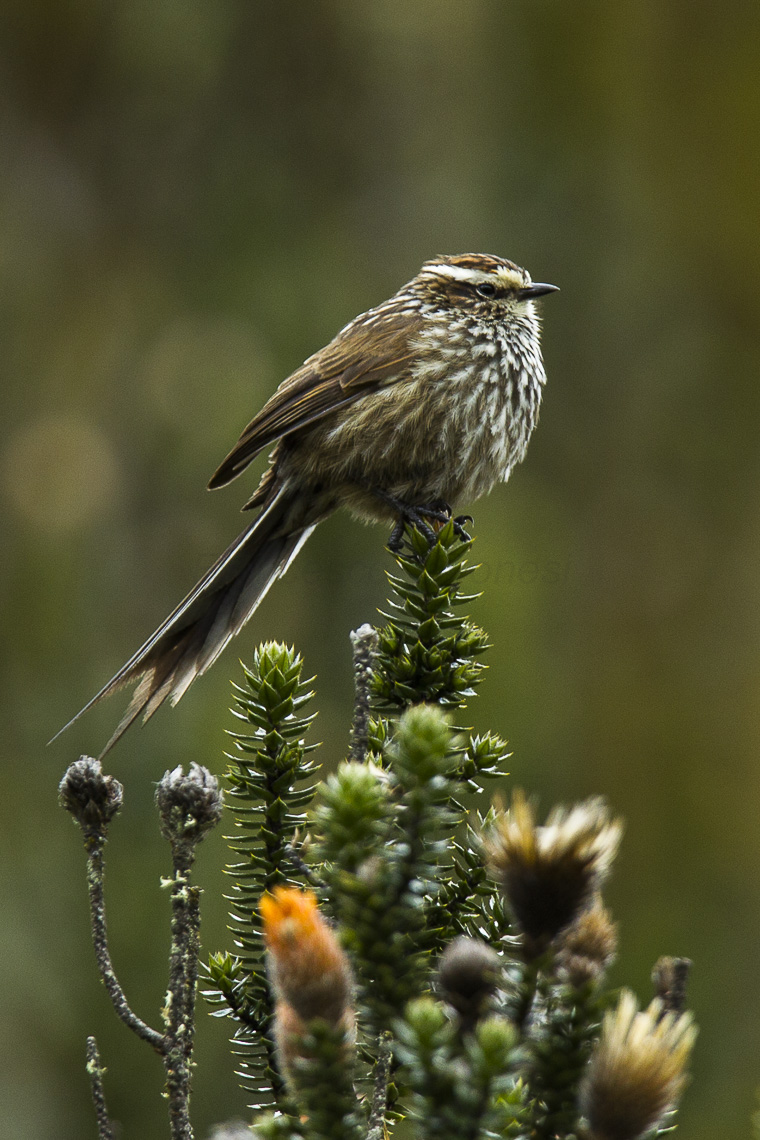
Plain-mantled Tit-Spinetail
Leptasthenura aegithaloides
Order: Passeriformes / Family: Furnariidae

Wikimedia Commons
About the Plain-mantled Tit-Spinetail
The Plain-mantled Tit-Spinetail (Leptasthenura aegithaloides) is a small passerine bird belonging to the family Furnariidae. This bird is widely recognized for its adaptability to various harsh environments across South America. With a presence ranging from Chile and Argentina to Bolivia and Peru, it inhabits regions characterized by rocky outcrops and arid landscapes. Its ability to thrive in such challenging conditions underscores its ecological significance as a resilient species among the avian community in these areas. The bird plays a crucial role in its ecosystem, particularly in seed dispersal and controlling insect populations. During the breeding season, predominantly from September to February, the Plain-mantled Tit-Spinetail is highly active in constructing nests in crevices or using abandoned nests of other birds. It often prefers nesting sites that are elevated and sheltered, ensuring protection from predators and harsh weather. Outside the breeding season, it exhibits seasonal behaviors such as forming mixed-species foraging flocks, which enhances its ability to locate food resources efficiently. The bird's adaptability is further reflected in its varied diet, which changes with seasonal availability of food sources. By understanding the ecological role and behavior of the Plain-mantled Tit-Spinetail, one gains insight into the broader ecological dynamics of the regions it inhabits. Its presence indicates a healthy ecosystem and offers a glimpse into the intricate web of life that sustains the diverse landscapes of South America.
The Plain-mantled Tit-Spinetail belongs to the family Furnariidae, within the order Passeriformes. These birds typically live average 3-5 years, with a maximum recorded of 7 years..
How to Identify a Plain-mantled Tit-Spinetail
The Plain-mantled Tit-Spinetail is a small bird, measuring about 14-16 centimeters in length. Its plumage is predominantly brown, with a notably plain mantle that gives the bird its name. The underparts are paler, often with a hint of buff or cream. This bird's tail is long and graduated, a characteristic feature of the tit-spinetail group, often held upright when perched. Juveniles resemble adults but may exhibit slightly duller plumage. There is little sexual dimorphism in this species, making males and females difficult to differentiate in the field. Similar species include other spinetails and foliage-gleaners, but the Plain-mantled Tit-Spinetail can be distinguished by its more uniform brown coloration and distinctive tail shape. In flight, its silhouette is characterized by rapid wing beats and a slightly undulating pattern. When perched, it often adopts a horizontal posture, with its tail cocked upwards. Observers should note the bird's behavior and habitat choice, which can aid in distinguishing it from other similar species.
Having trouble telling birds apart? Upload a photo to our bird identification tool for an instant species match.
Plain-mantled Tit-Spinetail Habitat and Range
Preferred Habitat
The Plain-mantled Tit-Spinetail primarily inhabits arid and semi-arid environments, often found in scrublands, rocky slopes, and areas with sparse shrubbery. It is most commonly observed at elevations ranging from 1,000 to 4,000 meters, where it forages among low vegetation and rocky terrains. In some regions, such as the Patagonian steppe, it is also present in open grasslands with scattered bushes. Unlike many birds, the Plain-mantled Tit-Spinetail does not frequent dense forests, preferring open areas where it can forage and nest. Its presence in urban areas is limited, although it can occasionally be found in suburban gardens that mimic its natural habitat's arid conditions. Seasonal habitat shifts are minimal, as this bird is largely sedentary, staying within its preferred environment year-round.
Geographic Range
The Plain-mantled Tit-Spinetail's range extends across several South American countries, including Chile, Argentina, Bolivia, and Peru. In Chile, it is found from the Atacama Desert in the north to the Magellanic region in the south. In Argentina, its range covers the Andes and adjacent lowlands. It does not engage in long-distance migration, typically remaining within its breeding range throughout the year. Population density hotspots include the Andean slopes and the Patagonian steppe, where it is relatively common. Despite its broad range, the bird's preference for specific habitats results in patchy distribution, with higher concentrations in areas that offer suitable nesting and foraging opportunities.
Want to know which birds visit your area? Browse our backyard birds by location guides for region-specific species lists.
What Does the Plain-mantled Tit-Spinetail Eat?
The diet of the Plain-mantled Tit-Spinetail primarily consists of insects and other arthropods, which it diligently searches for among rocks and low vegetation. During the breeding season, its diet is supplemented with seeds and berries, which provide essential nutrients for raising its young. The bird employs a variety of foraging techniques, including gleaning from leaves and branches, probing into crevices, and occasionally hawking for flying insects. Prey size ranges from small beetles and spiders to larger caterpillars, depending on availability. This species is most active in its feeding during the early morning and late afternoon, taking advantage of cooler temperatures and increased insect activity. Seasonal diet changes are influenced by the availability of different prey items, with a greater emphasis on seeds and plant material during the drier months when insect abundance may decline.
Plain-mantled Tit-Spinetail Behavior and Social Structure
The Plain-mantled Tit-Spinetail exhibits a range of intriguing behaviors, reflective of its adaptability to challenging environments. It often forms small flocks, particularly outside the breeding season, and may join mixed-species groups to enhance foraging success. This social behavior is beneficial for predator detection and resource location. The bird is territorial during the breeding season, defending its nesting area from intruders through vocalizations and displays. Courtship involves males performing aerial displays accompanied by rapid wing beats and vocal calls to attract females. Throughout the day, the Plain-mantled Tit-Spinetail is active, with peak activity periods in the morning and late afternoon. In the presence of predators, it employs a variety of strategies, including alarm calls and evasive flight maneuvers, to protect itself and its young. Its daily activities are closely tied to the availability of food and suitable nesting sites, reflecting a well-adapted lifestyle to its habitat.
Plain-mantled Tit-Spinetail Nesting and Reproduction
Nesting for the Plain-mantled Tit-Spinetail involves meticulous selection of sites, often in rocky crevices or scrubby vegetation. Nest construction is a collaborative effort, with both sexes contributing to building. Nests are typically cup-shaped, constructed from twigs, grasses, and lined with softer materials such as feathers. The typical clutch size ranges from two to four eggs, which are incubated primarily by the female for approximately 14-16 days. After hatching, both parents participate in feeding the chicks. Fledging occurs about 18-20 days post-hatching, with the young leaving the nest but remaining in the vicinity as they develop their foraging skills. The species generally raises one brood per year, although in regions with favorable conditions, a second brood may occasionally be attempted. Nest success is influenced by factors such as predation and environmental conditions, making site selection a critical aspect of the breeding cycle.
Plain-mantled Tit-Spinetail Sounds and Vocalizations
The Plain-mantled Tit-Spinetail is vocal, particularly during the breeding season, when its primary song can be heard. This song consists of a series of rapid, high-pitched notes delivered in a rhythmic pattern that echoes through its arid habitat. The pitch is generally sharp, with a clear, musical quality that makes it distinctive. Call notes are simpler, often serving as contact calls between individuals or as alarms when predators are nearby. These calls are short, sharp, and can be repeated in quick succession. During the dawn chorus, the bird's vocalizations contribute to the symphony of sounds that characterize its environment. The alarm calls, in particular, are crucial for alerting other birds to potential dangers, aiding in the survival of the flock.
Interesting Facts About the Plain-mantled Tit-Spinetail
- 1The Plain-mantled Tit-Spinetail is often seen in mixed-species flocks, enhancing its foraging success and predator awareness.
- 2Despite its small size, this bird's long tail is a prominent feature, aiding in balance and maneuverability among rocky terrains.
- 3The species' adaptability to arid conditions makes it a valuable indicator of ecosystem health in South America's semi-arid regions.
- 4Its vocalizations are not only diverse but also serve multiple functions, from courtship to territorial defense and predator alerts.
- 5The Plain-mantled Tit-Spinetail's diet shifts with seasonal changes, showcasing its flexibility in resource utilization.
- 6With a broad range across South America, it is particularly abundant in the Andes and Patagonian steppe, thriving in these challenging environments.
- 7The bird's preference for nesting in rocky crevices offers protection from both predators and harsh weather, a testament to its adaptability.
Plain-mantled Tit-Spinetail Conservation Status
The Plain-mantled Tit-Spinetail is currently listed as Least Concern by the IUCN, with a stable population trend. Its adaptability to a range of habitats, including arid and semi-arid regions, has contributed to its resilience. However, habitat degradation, particularly through agricultural expansion and land use changes, poses potential threats. Conservation efforts focus on habitat preservation and monitoring population dynamics to ensure long-term stability. Historically, the population has remained stable, with no significant declines reported. Continued vigilance and conservation initiatives are essential to prevent future threats from impacting this adaptable species.
Other Furnariidae Species


Birds Similar to the Plain-mantled Tit-Spinetail
These species are often confused with the Plain-mantled Tit-Spinetail due to similar appearance or overlapping range.