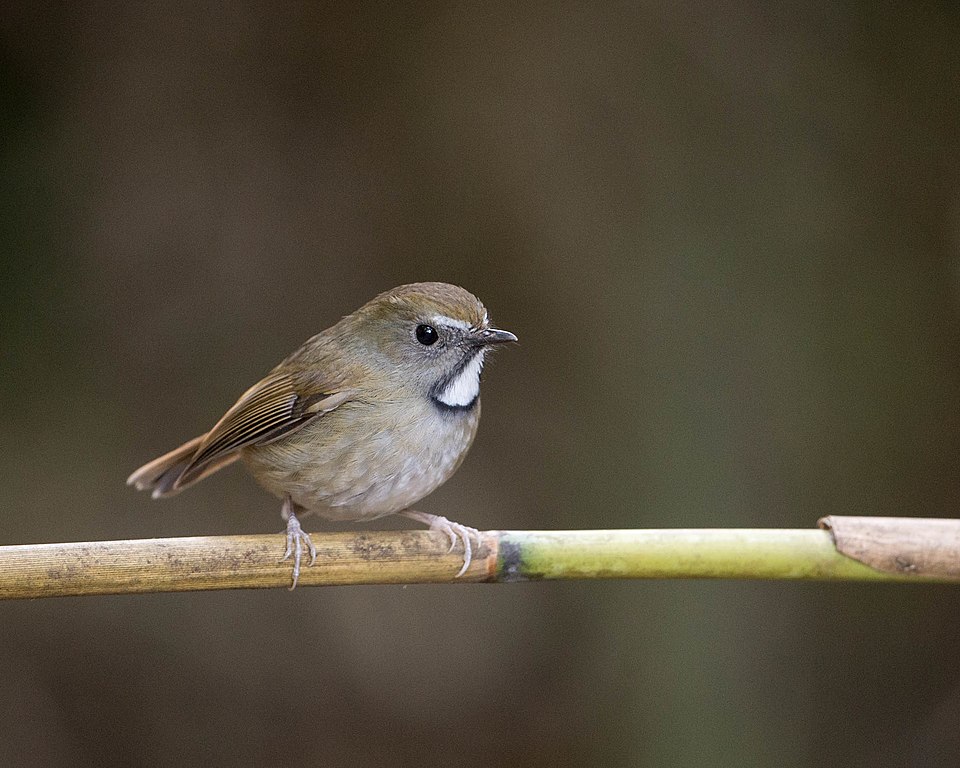
Plumbeous Redstart
Phoenicurus fuliginosus
Order: Passeriformes / Family: Muscicapidae

Wikimedia Commons
About the Plumbeous Redstart
The Plumbeous Redstart (Phoenicurus fuliginosus) is a small, lively bird found predominantly in the mountainous regions of Asia. Known for its striking slate-blue plumage in males and the more subdued ashen-brown of females, this species commands attention as it flits about rocky streams. Widely distributed across the Himalayas, from Afghanistan through northern India and Nepal to China and Southeast Asia, the Plumbeous Redstart thrives in fast-flowing waters, where its agile movements are a common sight. The bird plays a significant ecological role as both predator and prey in its environment. As an insectivore, it helps control insect populations, while also serving as a food source for larger birds and mammals. Its presence along streams contributes to the dynamic ecological balance of these areas. During the breeding season, from April to July, the Plumbeous Redstart becomes particularly active, displaying increased vocal behaviors and territorial aggression. Seasonal behaviors are marked by altitudinal migrations, where individuals move to higher elevations in summer and descend in winter, following the availability of food and suitable nesting sites. This seasonal movement underscores the adaptability of the species to varying environmental conditions in its mountainous habitats.
The Plumbeous Redstart belongs to the family Muscicapidae, within the order Passeriformes. These birds typically live typically 5-6 years, with some individuals reaching up to 8 years..
How to Identify a Plumbeous Redstart
Adult male Plumbeous Redstarts are easily identifiable by their deep slate-blue bodies contrasted with a bright chestnut tail. Females, while lacking the vivid blue, possess a subtle beauty with their dark brownish-grey plumage and slightly paler underparts, though they too exhibit a chestnut tail. Juveniles resemble females but have more mottled brown and grey feathering. The differences between males and females become less distinct in poor lighting conditions, leading to potential confusion. However, male redstarts are unmistakable when in flight due to their striking tail coloration. In flight, these birds exhibit a rounded wing shape and a slightly undulating flight pattern, which is a key identifying feature. When perched, their posture is upright, often with a flicking tail motion, which is a typical behavior of the species. This motion, combined with their bright tails, helps differentiate them from other similar-sized birds found in the same habitats, such as the White-capped Water Redstart, which has more striking white and black plumage.
Having trouble telling birds apart? Upload a photo to our bird identification tool for an instant species match.
Plumbeous Redstart Habitat and Range
Preferred Habitat
Plumbeous Redstarts inhabit fast-flowing mountain streams and rivers, where they are often seen darting among rocks and boulders. These birds favor elevations ranging from 300 to 4,000 meters, although they are most commonly found between 1,500 and 3,000 meters. Seasonal changes influence their habitat preferences, with individuals moving to lower elevations during colder months. While predominantly found in forested and rural mountainous areas, they can occasionally be seen near human settlements in high-altitude villages where appropriate water sources exist. The habitat preferences of the Plumbeous Redstart highlight their reliance on pristine aquatic environments rich in insect life, underscoring the importance of clean water bodies for their survival.
Geographic Range
The breeding range of the Plumbeous Redstart spans the Himalayas, extending from Afghanistan through northern India and Nepal to southern China and northern Myanmar. In winter, some populations exhibit altitudinal migration, moving to lower elevations within the same geographic range. They are particularly abundant in India, Nepal, and Bhutan, where suitable habitats are widespread. Migration corridors are primarily altitudinal, allowing the species to adapt to seasonal variations in temperature and food availability. While not considered migratory in the traditional sense, their movements are crucial for accessing optimal breeding and feeding sites throughout the year. Population density is highest in regions with a combination of clean, flowing streams and ample insect prey.
Want to know which birds visit your area? Browse our backyard birds by location guides for region-specific species lists.
What Does the Plumbeous Redstart Eat?
The diet of the Plumbeous Redstart consists primarily of aquatic and terrestrial insects, including mayflies, dragonflies, and various larvae. During breeding season, their diet expands to include a wider variety of insects to meet the increased energy demands of raising young. The birds employ a distinctive foraging technique known as 'sallying,' where they take off from a perch to catch prey mid-air before returning to the same or a nearby perch. This hunting method is complemented by ground foraging, where they hop along stream banks or rocks to capture prey. The size of prey typically ranges from small to medium-sized insects, suitable for their small beaks. Their feeding schedule is diurnal, with peak activity in the early morning and late afternoon when insect movement is greatest.
Plumbeous Redstart Behavior and Social Structure
Plumbeous Redstarts exhibit territorial behavior, especially during the breeding season. Males often sing from prominent perches to establish dominance and attract females. Their courtship involves aerial displays and vocalizations, with males chasing potential mates in a show of agility. These birds typically do not form large flocks, preferring to maintain individual territories or small family groups. When faced with predators, such as larger birds or mammals, they employ alarm calls and erratic flight patterns to evade capture. The daily activity of the Plumbeous Redstart revolves around foraging, with periods of rest interspersed between bouts of feeding. Their resilience and adaptability are evident in their ability to thrive in the challenging environments of high-altitude streams.
Plumbeous Redstart Nesting and Reproduction
The nesting habits of the Plumbeous Redstart demonstrate their adaptation to rugged environments. They construct cup-shaped nests using moss, grass, and feathers, often placing them in crevices or on ledges close to water. These locations provide both concealment from predators and access to abundant food sources. A typical clutch consists of three to four eggs, which the female incubates for about 12-14 days. Both parents participate in feeding the chicks once hatched, with fledging occurring approximately 14-16 days after hatching. The species often raises one to two broods per year, depending on environmental conditions and food availability. The strategic selection of nesting sites reflects the species' need for protection and proximity to feeding areas.
Plumbeous Redstart Sounds and Vocalizations
The song of the Plumbeous Redstart is a series of high-pitched, melodious notes that rise and fall in a rhythmic pattern. Males often sing from prominent perches near water, their song resonating over the sound of rushing streams. Call notes are sharp and clipped, functioning as communication between mates or as an alert to intruders. In addition to their primary song, the birds emit a softer, more subdued call during dawn and dusk, contributing to the dawn chorus. Alarm calls are harsher and more urgent, serving to warn of predators. The vocal repertoire of the Plumbeous Redstart plays a critical role in territory defense and mate attraction.
Interesting Facts About the Plumbeous Redstart
- 1The Plumbeous Redstart's bright tail contrasts sharply with its slate-blue body, making it a standout along rocky streams.
- 2This species exhibits a unique 'sallying' feeding technique, catching insects mid-flight before returning to a perch.
- 3Plumbeous Redstarts are known to be altitudinal migrants, moving to lower elevations during the colder months.
- 4During courtship, males perform aerial displays and sing to attract females and deter rival males.
- 5Their nests are often tucked into natural crevices or rock ledges, providing protection from both predators and the elements.
- 6The Plumbeous Redstart's song can often be heard over the sound of rushing water, a testament to its vocal strength.
- 7Despite their small size, Plumbeous Redstarts show remarkable agility, darting swiftly among rocks and over water.
Plumbeous Redstart Conservation Status
Currently, the Plumbeous Redstart is listed as Least Concern by the IUCN, with stable population trends across much of its range. Despite this status, local threats such as water pollution, habitat loss, and climate change pose potential risks to specific populations. Conservation efforts focus on preserving natural habitats and maintaining water quality in mountain streams. Historical population changes have been minimal, but continued monitoring is essential to detect any emerging threats. Protecting the pristine environments these birds rely on is crucial for their ongoing survival and ecological role.