
Moa-nalo
Ptaiochen pau
Order: Anseriformes / Family: Anatidae
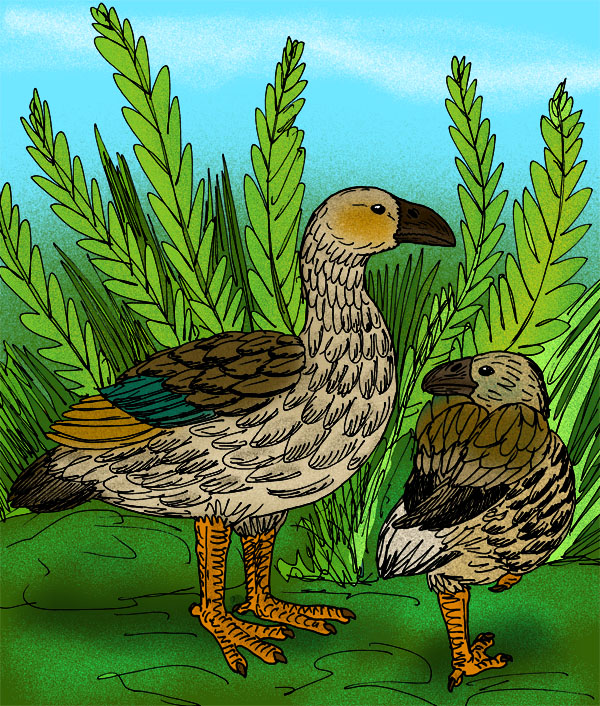
Wikimedia Commons
About the Moa-nalo
The Moa-nalo, scientifically named Ptaiochen pau, is an extinct genus of flightless ducks that once thrived in the Hawaiian Islands. This unique bird belonged to the family Anatidae and was notably different from other waterfowl due to its inability to fly. The Moa-nalo played a significant ecological role in its habitat, primarily browsing on vegetation much like a terrestrial grazer. It existed until humans arrived in Hawaii, bringing with them changes that led to its extinction. The bird's significance lies in its unique evolutionary path, adapting to a niche where it fed on ferns and other low-lying vegetation in the absence of terrestrial herbivorous mammals.
Moa-nalos were found across several Hawaiian islands, including Kauai, Oahu, and Maui. These islands provided lush environments that supported a variety of plant life, which the Moa-nalo relied upon. The bird's presence in these locations suggests a rich and complex ecosystem where it coexisted with other endemic species. Due to their flightlessness, Moa-nalos contributed to the shaping of the island flora, as their feeding habits likely influenced plant growth and distribution.
The ecological role of the Moa-nalo was comparable to that of large land birds or small mammals in other regions. By browsing on shrubs and ferns, it helped maintain the balance of plant species. Seasonal behaviors are less documented, as there are no living specimens to observe. However, it is reasonable to infer that these birds had established routines and breeding seasons aligned with the climatic patterns of their island homes. Their extinction highlights the delicate balance within island ecosystems and the impact of human colonization, as their habitats were altered and invaded by non-native predators and competitors.
The Moa-nalo belongs to the family Anatidae, within the order Anseriformes. These birds typically live Unknown, as it is extinct..
How to Identify a Moa-nalo
The Moa-nalo presented a distinctive appearance, easily distinguishable from other waterfowl. Adults exhibited a robust body, similar in size to a large duck but with a more pronounced, goose-like build. Their plumage was primarily brown, providing camouflage among the island's dense vegetation. The birds possessed strong legs adapted for an exclusively terrestrial lifestyle, indicative of their ground-dwelling nature.
Juvenile Moa-nalos likely resembled adults in coloration, though definitive differences are hard to confirm due to the absence of living examples. Male and female Moa-nalos probably showed little dimorphism, a common trait among many flightless birds where sexual selection pressures differ from flying counterparts.
While Moa-nalos shared habitat with other bird species, their unique size and shape made them unlikely to be confused with other species. Their lack of flight differentiated them from migratory ducks and geese that occasionally visited the islands. In terms of posture, Moa-nalos would have had a more upright stance when browsing, using their robust legs to navigate the forest floor.
Having trouble telling birds apart? Upload a photo to our bird identification tool for an instant species match.
Moa-nalo Habitat and Range
Preferred Habitat
Moa-nalos inhabited the Hawaiian Islands, thriving in the montane and lowland forests of Kauai, Oahu, and Maui. These birds preferred dense, forested environments rich in ferns and other low-lying vegetation. They lived at various elevations, from sea level up to the higher mountainous regions, exploiting the island's diverse plant life. Due to their flightlessness, Moa-nalos were restricted to terrestrial habitats, foraging on the forest floor.
No seasonal habitat shifts were necessary, as the Hawaiian climate remained relatively stable year-round. This stability allowed Moa-nalos to maintain consistent territories without the need for migration. The lack of urban areas during their existence meant that Moa-nalos had little interaction with anthropogenic environments, although human arrival ultimately led to their decline.
Moa-nalos played an essential role in the ecosystem of these forests, influencing the composition of plant species and contributing to the overall biodiversity of their habitats.
Geographic Range
The Moa-nalo occupied a limited geographic range, confined to the Hawaiian Islands. Specifically, they were found on the islands of Kauai, Oahu, and Maui. Within these islands, the birds inhabited both lowland and upland areas, exploring various ecological niches. Their range did not extend beyond Hawaii, as they were flightless and isolated from other landmasses.
Because they did not migrate, Moa-nalos remained in their established territories throughout the year, adapting to the consistent climate of the islands. Their population density was likely highest in areas with abundant food resources and minimal competition from other herbivores.
The Moa-nalo's range reflects the unique evolutionary pathways that island species can take, adapting to specific environmental conditions and filling ecological roles often occupied by mammals in other parts of the world.
Want to know which birds visit your area? Browse our backyard birds by location guides for region-specific species lists.
What Does the Moa-nalo Eat?
The diet of the Moa-nalo primarily consisted of a variety of ferns and other low-lying vegetation. As a herbivorous bird, it played a critical role in the ecology of the Hawaiian forest understory. The bird used its strong bill to effectively graze on plant material, breaking down tough foliage that other species might avoid.
Seasonal diet changes were minimal, reflecting the consistent availability of their preferred food sources in the stable Hawaiian climate. The Moa-nalo's foraging technique involved browsing close to the ground, using its robust legs to navigate the dense underbrush and reach varied plant species.
Prey size was irrelevant for this herbivore, as its sustenance was entirely derived from plant matter. The Moa-nalo likely maintained a consistent feeding schedule, taking advantage of daylight hours to forage efficiently. This routine, combined with its dietary preferences, helped define the ecological landscape of its habitat, influencing plant distribution and growth patterns.
Moa-nalo Behavior and Social Structure
The Moa-nalo exhibited behaviors typical of many flightless birds, forming small flocks that would forage together in the dense Hawaiian forests. These social structures provided some protection against potential threats, although as an island species, the Moa-nalo faced few natural predators until humans arrived.
Territorial behavior was likely minimal, as the abundance of vegetation reduced competition for resources. However, individuals or small groups may have defended feeding areas from other conspecifics during periods of food scarcity. Courtship displays remain largely speculative, but they may have involved vocalizations or physical displays similar to those of other waterfowl.
In response to predators, the Moa-nalo would have relied on its camouflage and quick maneuvers on foot to escape danger. Daily activity patterns centered on feeding during daylight, with rest periods interspersed to conserve energy. The introduction of predators such as dogs, pigs, and humans disrupted these behaviors, contributing to the bird's eventual extinction.
Moa-nalo Nesting and Reproduction
Moa-nalos nested on the ground within the dense vegetation of their island habitats. Their nests were likely simple scrapes lined with plant material, providing sufficient insulation and camouflage. Nest location preferences included sheltered spots beneath ferns or shrubs, offering protection from the elements and any predators.
Clutch sizes for Moa-nalos remain uncertain, though they may have laid several eggs similar to other waterfowl. The incubation period likely ranged from several weeks to a month, with both parents potentially involved in guarding and turning the eggs.
Once hatched, chicks would have been precocial, quickly leaving the nest to follow their parents and learn foraging techniques. The fledging timeline remains speculative, but the consistent climate and food availability would support relatively rapid development. Moa-nalos likely produced one brood per year, focusing on ensuring the survival of their offspring in a stable environment.
Moa-nalo Sounds and Vocalizations
Due to their extinction, the specific vocalizations of the Moa-nalo remain a mystery. However, one might infer that their primary calls consisted of low, resonant quacks or honks, similar to other large waterfowl. These sounds likely served to maintain contact between individuals in dense forest environments.
Alarm calls would have been more abrupt and sharp, designed to alert other members of the group to potential threats. During dawn and dusk, a chorus of calls might have signified the start and end of daily activities, echoing through the forest.
While we cannot directly compare their vocalizations to modern sounds, the Moa-nalo's calls would have contributed to the unique acoustic landscape of the Hawaiian forests, adding a layer of complexity to the island's ecological interactions.
Interesting Facts About the Moa-nalo
- 1The Moa-nalo's name derives from Hawaiian, with 'moa' meaning chicken and 'nalo' meaning lost, reflecting its flightless nature.
- 2Moa-nalos were discovered through fossil evidence, painting a picture of an ecosystem that existed before human arrival in Hawaii.
- 3Unlike many waterfowl, Moa-nalos evolved in isolation without natural predators, leading to their unique flightless adaptation.
- 4These birds played a crucial role in maintaining the Hawaiian forest understory, acting as natural pruners of vegetation.
- 5The extinction of the Moa-nalo highlights the profound impacts of introduced species and habitat modification on island biotas.
- 6Moa-nalos are an example of convergent evolution, developing similar traits to other flightless island birds worldwide.
- 7Their existence adds to the rich tapestry of Hawaii's natural history, showcasing the incredible diversity of life that once thrived on the islands.
Moa-nalo Conservation Status
The Moa-nalo is classified as extinct, with its population having disappeared shortly after human colonization of the Hawaiian Islands. The introduction of non-native predators such as dogs and pigs, along with habitat destruction, led to the bird's decline. Historically, the Moa-nalo thrived in isolation, but the arrival of humans altered the delicate balance of its ecosystem. Conservation efforts focus on understanding the impacts of human activity on island species, using the Moa-nalo as a case study for ongoing preservation efforts. Research into the bird's ecological role provides insights into protecting other endangered Hawaiian species. Despite the loss of the Moa-nalo, its legacy remains a poignant reminder of the vulnerability of island ecosystems to external threats and the importance of proactive conservation measures.
Other Anatidae Species


Birds Similar to the Moa-nalo
These species are often confused with the Moa-nalo due to similar appearance or overlapping range.
