
Purple Indigobird
Vidua purpurascens
Order: Passeriformes / Family: Viduidae
Wikimedia Commons
About the Purple Indigobird
The Purple Indigobird, scientifically known as Vidua purpurascens, is a captivating species belonging to the family Viduidae. This bird is renowned for its brilliant iridescent plumage, which appears deep purple under natural sunlight. The Purple Indigobird is a brood parasite, meaning it lays its eggs in the nests of other birds, particularly those of waxbills in the genus Estrilda. This ecological strategy allows it to exploit the parental care of its host species, ensuring the survival of its young while the host raises them as its own. Primarily found in Sub-Saharan Africa, the Purple Indigobird inhabits a range of environments, from savannas and open woodlands to agricultural lands and gardens near human settlements. Their presence is notable in countries such as Nigeria, Zambia, and Tanzania, where they often cohabit with their host species. Inhabitants of tropical climates, these birds do not undergo significant migratory movements, preferring to remain within their established territories year-round. The breeding season of the Purple Indigobird is closely aligned with the rainy season, which varies geographically, providing optimal conditions for the availability of food and nesting resources. During this time, males are particularly active, engaging in elaborate courtship displays that involve intricate flights and vocalizations to attract females. Through these behaviors, the Purple Indigobird plays a crucial role in its ecosystem, influencing the population dynamics of its host species and contributing to the avian biodiversity of the regions it inhabits. Its adaptability to various habitats, coupled with its unique reproductive strategy, underscores its ecological significance.
The Purple Indigobird belongs to the family Viduidae, within the order Passeriformes. These birds typically live average 3-4 years, with some living up to 5 years..
How to Identify a Purple Indigobird
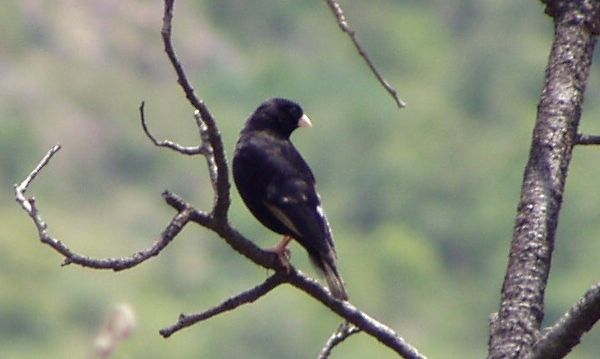
Identifying the Purple Indigobird involves noting several distinct field marks. Adult males exhibit a striking deep purple sheen across their feathers, a trait that is particularly visible in direct sunlight. This iridescence sets them apart from many other bird species. Females, on the other hand, have a more subdued appearance with brownish plumage, which provides better camouflage. Juveniles resemble females but have a lighter, more mottled brown color. During the breeding season, males may display additional features such as elongated tail feathers, which enhance their courtship displays. One might confuse the Purple Indigobird with other indigobird species. However, its specific plumage coloration and song, which closely mimics that of its host species, aid in its identification. In flight, the Purple Indigobird exhibits a compact silhouette with rapid, direct wingbeats. When perched, the bird maintains an upright posture, often on exposed branches, which allows it to observe its territory and potential mates.
Having trouble telling birds apart? Upload a photo to our bird identification tool for an instant species match.
Purple Indigobird Habitat and Range
Preferred Habitat
The Purple Indigobird thrives in diverse habitat types. It is commonly found in open grasslands and savannas, where scattered shrubs and trees provide perching sites. These birds also inhabit agricultural lands and gardens, which offer abundant resources and nesting opportunities. They are adaptable, residing at elevations from sea level to about 2000 meters. While they are less common in dense forests, they can be found in woodland edges where open spaces prevail. Unlike some other avian species, they do not exhibit significant seasonal habitat shifts, maintaining a stable presence in their chosen areas throughout the year.
Geographic Range
The range of the Purple Indigobird spans several regions across Sub-Saharan Africa. It breeds primarily in countries such as Nigeria, Cameroon, and Uganda, where its host species are abundant. These birds do not undertake long migratory journeys. Instead, they maintain a relatively stable range, adjusting locally based on the availability of food and nesting sites. During the non-breeding season, they remain within their territories, taking advantage of the consistent climate of tropical Africa. Population density hotspots include areas where waxbills, their primary hosts, are plentiful.
Want to know which birds visit your area? Browse our backyard birds by location guides for region-specific species lists.
What Does the Purple Indigobird Eat?
The diet of the Purple Indigobird consists mainly of seeds, which it forages from the ground and low vegetation. It shows a preference for the seeds of grass species found in its natural habitat. During the breeding season, when food demands increase, it may also consume small insects to supplement its diet. The bird typically feeds during the cooler parts of the day, such as early morning and late afternoon, to avoid the midday heat. Its foraging technique involves short flights and ground hopping, allowing it to cover significant ground in search of food.
Purple Indigobird Behavior and Social Structure
The Purple Indigobird exhibits fascinating behavior, particularly during the breeding season. Males are territorial and engage in elaborate displays to attract females. These displays include a combination of flight patterns and vocal mimicry, where the male imitates the calls of its host species, enhancing its appeal to potential mates. Socially, these birds may form small flocks outside the breeding season, though they exhibit solitary tendencies when establishing territories. They are diurnal, with peak activity occurring during early morning and late afternoon. When threatened by predators, the Purple Indigobird relies on evasive flight maneuvers and seeks cover in dense vegetation.
Purple Indigobird Nesting and Reproduction
As a brood parasite, the Purple Indigobird does not build its own nest. Instead, females lay their eggs in the nests of other birds, particularly those of waxbills. The host species unwittingly incubates the indigobird's eggs along with its own. The incubation period aligns with that of the host's eggs, ensuring the indigobird chicks hatch simultaneously. A typical clutch consists of a single egg, strategically laid to avoid detection. Once hatched, the chicks compete with their host siblings for food and attention from the foster parents. The fledging timeline mirrors that of the host species, allowing the indigobird chicks to successfully leave the nest alongside their host counterparts.
Purple Indigobird Sounds and Vocalizations
The primary song of the Purple Indigobird is a series of high-pitched notes that closely mimic the calls of its host species. This mimicry is crucial for attracting mates and integrating into host communities. Their call notes are short and sharp, often used in social interactions and during flight. Alarm calls are distinct, with a rapid, repetitive structure that alerts nearby birds to potential threats. During the dawn chorus, males are particularly vocal, using their mimetic abilities to establish territory and attract females.
Interesting Facts About the Purple Indigobird
- 1The Purple Indigobird can mimic the calls of up to six different host species, showcasing remarkable vocal adaptability.
- 2Despite being a brood parasite, the Purple Indigobird has a relatively stable population, unlike some other parasitic birds.
- 3Males engage in complex flight displays that include acrobatics and vocal performances to attract females.
- 4The Purple Indigobird primarily targets waxbills as its host, laying eggs that closely resemble those of the host species.
- 5This bird's iridescent plumage can appear almost black in low light, but shines a vibrant purple in direct sunlight.
- 6The Purple Indigobird's mimicry skills are so refined that even experienced birdwatchers can be deceived by their calls.
- 7Unlike many bird species, the Purple Indigobird remains in its territory year-round, thanks to stable tropical climates.
Purple Indigobird Conservation Status
The Purple Indigobird is currently classified as Least Concern by the IUCN. Its population trend appears stable, largely due to its adaptability to various habitats and its effective brood parasitic strategy. Primary threats include habitat degradation and changes in agricultural practices that affect host species populations. Conservation efforts focus on preserving habitat and managing landscapes to support both indigobirds and their hosts. Historically, the species has maintained a steady population, benefiting from its wide range and the abundance of potential host species.

