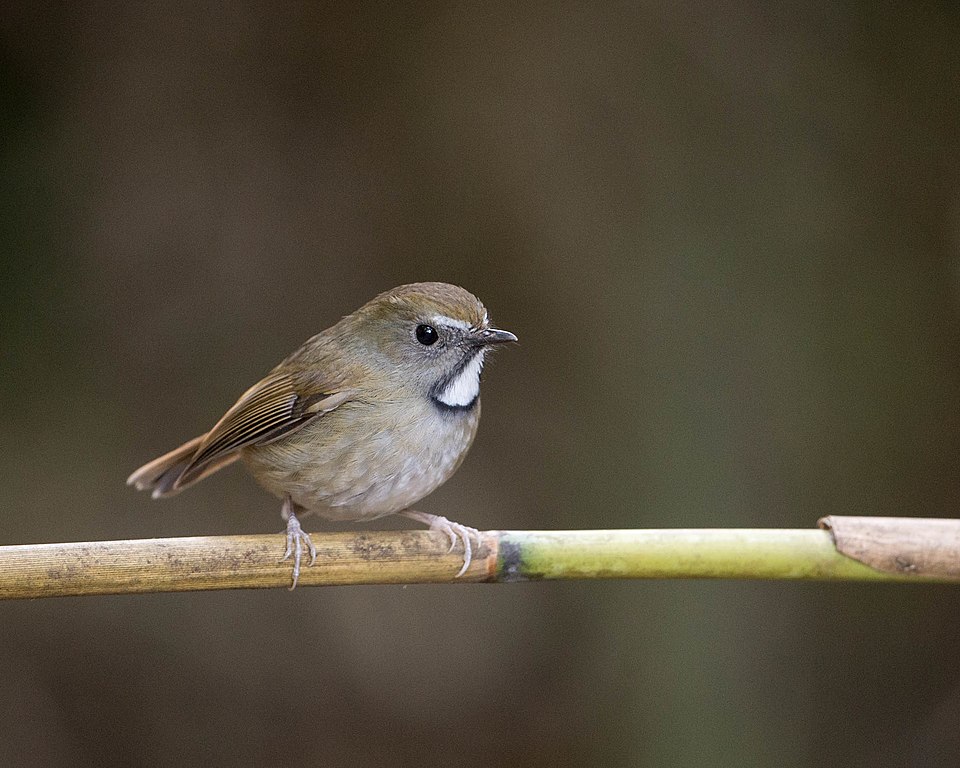
Rüppell's Chat
Myrmecocichla melaena
Order: Passeriformes / Family: Muscicapidae

Wikimedia Commons
About the Rüppell's Chat
Rüppell's Chat (Myrmecocichla melaena) is a captivating species belonging to the Muscicapidae family, recognized for its striking black plumage and adaptability to arid environments. Found primarily in Eastern Africa, this bird inhabits regions such as Ethiopia, Kenya, and Tanzania, where it occupies rocky outcrops and semi-desert areas. Its preference for dry habitats aligns with its ecological role as a resilient insectivore, consuming a variety of insects and small invertebrates. The bird's presence often indicates a healthy ecosystem, as it relies on an abundant supply of prey items. Rüppell's Chat is known for its territorial nature, often seen perched prominently on rocks or shrubs, surveying its domain and delivering its melodic song. During the breeding season, which coincides with the rainy season in its native range, Rüppell's Chat becomes particularly active. Males engage in elaborate courtship displays, showcasing their agility and vocal prowess to attract mates. The bird's adaptability is further demonstrated by its ability to exploit urban environments, where it may be found in gardens and on buildings, benefiting from the proximity to human settlements. This adaptability, however, does not equate to complacency; Rüppell's Chat remains vigilant against potential threats, including predators and environmental changes. Its ecological significance extends beyond mere presence, as it participates in controlling insect populations and thus contributes to the balance of its native ecosystems. Observing Rüppell's Chat in its natural habitat offers insight into the complex interplay between species and environments in Africa's diverse landscapes.
The Rüppell's Chat belongs to the family Muscicapidae, within the order Passeriformes. These birds typically live average 4-6 years with a maximum recorded of 9 years..
How to Identify a Rüppell's Chat
Adult Rüppell's Chats are predominantly black, exhibiting a glossy sheen that makes them stand out against the arid landscapes they inhabit. Their plumage is uniform, with no significant color variations between males and females, although males may appear slightly larger and more robust. Juveniles, in contrast, display a more muted appearance with brownish tones and less gloss, gradually acquiring the adult plumage as they mature. The bird's short, stout bill is adapted for insectivory, and its tail is relatively short, enhancing its agile flight capabilities. Rüppell's Chat could be confused with other Myrmecocichla species, but its uniformly black plumage and lack of white markings assist in proper identification. In flight, the bird appears compact, with rapid wingbeats and a direct flight pattern. When perched, Rüppell's Chat maintains an upright posture, often flicking its tail as it surveys its surroundings.
Having trouble telling birds apart? Upload a photo to our bird identification tool for an instant species match.
Rüppell's Chat Habitat and Range
Preferred Habitat
Rüppell's Chat thrives in arid and semi-arid regions across Eastern Africa, particularly favoring rocky outcrops, dry savannas, and semi-desert habitats. These environments provide the open spaces and vantage points necessary for its foraging and territorial activities. The bird typically inhabits elevations ranging from lowlands to mountainous regions, depending on prey availability and climatic conditions. While primarily associated with rural areas, Rüppell's Chat exhibits a degree of adaptability, occasionally venturing into urban settings where it can exploit new foraging opportunities. Seasonal habitat shifts are minimal, as the bird remains largely resident within its established territory year-round.
Geographic Range
The range of Rüppell's Chat spans several East African countries, including Ethiopia, Kenya, Tanzania, and Eritrea. Within these regions, the bird occupies a variety of arid and semi-arid landscapes, demonstrating a preference for rocky and open terrains. There is no significant migratory behavior observed in this species; instead, it maintains a largely sedentary lifestyle, remaining within its territory throughout the year. Population density hotspots are often linked to areas with abundant insect prey and suitable nesting sites. While its range is somewhat limited to Eastern Africa, Rüppell's Chat is considered widespread within this region, thriving in the diverse habitats it occupies.
Want to know which birds visit your area? Browse our backyard birds by location guides for region-specific species lists.
What Does the Rüppell's Chat Eat?
Rüppell's Chat primarily feeds on insects and small invertebrates, making it an important insectivore in its native habitats. Its diet consists of ants, beetles, termites, and other arthropods, which it captures through skillful ground foraging and aerial pursuits. Seasonal variations in diet are minor, as the bird maintains a consistent insect-based diet year-round. Rüppell's Chat employs a variety of foraging techniques, including sallying from perches to catch flying insects and gleaning prey from the ground and vegetation. Prey size generally ranges from small to medium, reflecting the bird's versatile hunting capabilities. Feeding occurs throughout the day, with peak activity often observed during the cooler morning and late afternoon hours.
Rüppell's Chat Behavior and Social Structure
Rüppell's Chat exhibits a range of fascinating behaviors, particularly in relation to its social structure and territoriality. These birds are generally solitary or found in pairs, with each pair maintaining a well-defined territory that they defend vigorously against intruders. Males perform elaborate courtship displays during the breeding season, involving song, flight, and visual displays to attract females. Flocking behavior is uncommon outside of the breeding context, with the bird showing a strong preference for solitude or the company of a mate. In response to predators, Rüppell's Chat relies on its agility and alertness, often retreating to dense cover or higher perches. Its daily activity pattern includes periods of foraging interspersed with rest and maintenance behaviors, such as preening.
Rüppell's Chat Nesting and Reproduction
Rüppell's Chat constructs its nest in crevices or sheltered spots within rocky terrain, utilizing natural cavities or man-made structures. The nest is a cup-shaped structure made from grass, twigs, and other plant materials, lined with softer substances for insulation. The typical clutch size ranges from two to four eggs, with both parents sharing incubation duties over a period of approximately two weeks. After hatching, the chicks remain in the nest for another two to three weeks, during which time they are fed and cared for by both parents. Rüppell's Chat may raise one to two broods per year, depending on environmental conditions and food availability, allowing it to take advantage of favorable breeding circumstances.
Rüppell's Chat Sounds and Vocalizations
The primary song of Rüppell's Chat is a melodious and varied series of notes, often described as rich and clear, with a rhythmic quality that resonates across its arid habitats. Call notes are typically sharp and distinct, serving as communication between mates or as alarm signals when potential threats are detected. Alarm calls are more insistent and rapid, alerting nearby birds to the presence of predators. Rüppell's Chat participates in the dawn chorus, contributing its unique vocalizations to the symphony of bird song that marks the early hours in its habitat.
Interesting Facts About the Rüppell's Chat
- 1Rüppell's Chat can often be seen perched on rocks, using its vantage point to spot potential prey and survey its territory.
- 2This bird's name honors the German naturalist Eduard Rüppell, known for his explorations in Africa during the 19th century.
- 3Unlike many birds, Rüppell's Chat exhibits little to no sexual dimorphism, with males and females appearing strikingly similar.
- 4Rüppell's Chat has adapted well to urban environments, where it can often be found in gardens and on buildings.
- 5The bird's diet shifts minimally between seasons, with a consistent reliance on insects and small invertebrates.
- 6Rüppell's Chat's song is a key aspect of its breeding behavior, used by males to attract mates and establish territories.
- 7With its distinct black plumage, Rüppell's Chat presents a striking silhouette against the arid landscapes of its native range.
Rüppell's Chat Conservation Status
Rüppell's Chat is currently listed as a species of Least Concern by the IUCN, with populations considered stable across its range. Primary threats include habitat degradation due to human activities such as agriculture and development. Conservation efforts focus on habitat preservation and mitigating the impacts of land-use change. Historically, Rüppell's Chat has maintained stable numbers, benefiting from its adaptability to various environmental conditions and its wide geographic distribution within Eastern Africa.