
Red-fronted Antpecker
Parmoptila rubrifrons
Order: Passeriformes / Family: Estrildidae
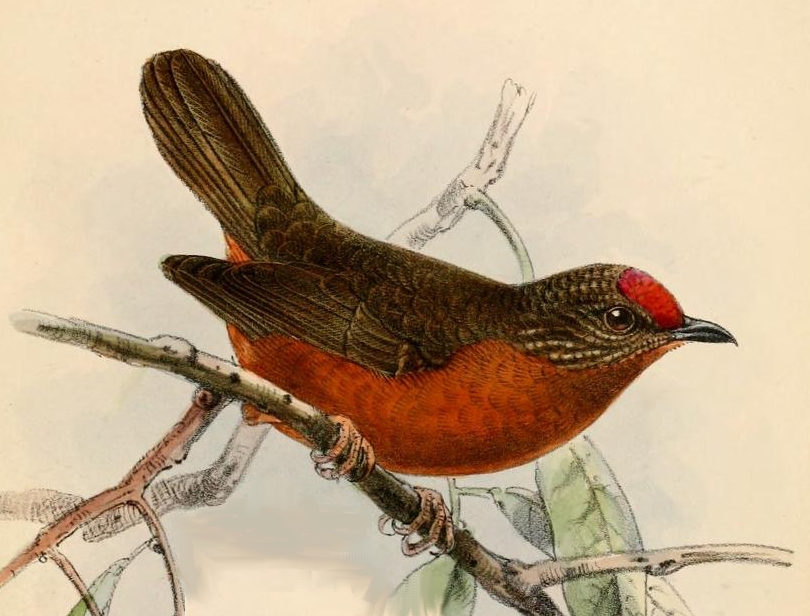
Wikimedia Commons
About the Red-fronted Antpecker
The Red-fronted Antpecker (Parmoptila rubrifrons) is a small, strikingly colored bird belonging to the Estrildidae family. This bird species is primarily recognized for its vibrant red forehead, a feature that gives it its common name. Found predominantly in the dense tropical forests of Central and West Africa, the Red-fronted Antpecker thrives in the undergrowth, where it plays a critical role in the ecosystem. These birds are often observed in Cameroon, Gabon, and the Democratic Republic of the Congo, displaying a preference for humid, dense forest environments that provide ample cover and food resources. Their ecological role is significant, as they contribute to seed dispersal and insect population control, aiding in maintaining the health of their habitat.
The Red-fronted Antpecker is particularly interesting due to its specialized feeding habits and the niches it occupies. Unlike other Estrildids, it frequently forages in the lower strata of the forest, often seen hopping along branches or clinging to tree trunks as it searches for insects and larvae. This behavior not only highlights its adaptability but also underscores its importance in controlling insect populations in these biodiverse regions.
During different seasons, the behavior of the Red-fronted Antpecker can vary significantly. In the breeding season, which typically coincides with the rainy season, these birds become more territorial, and their vibrant plumage is most prominent. Outside the breeding period, they may form small, loose flocks, enhancing their social interactions and foraging efficiency. This seasonal behavioral shift is essential for their survival and reproduction, allowing them to maximize resource availability in the ever-changing forest environment.
The Red-fronted Antpecker belongs to the family Estrildidae, within the order Passeriformes. These birds typically live average 4-6 years, with a maximum recorded of 8 years..
How to Identify a Red-fronted Antpecker
The Red-fronted Antpecker is a small bird, measuring approximately 10 to 12 centimeters in length. Adults are easily identified by their bright red forehead and crown, which contrasts sharply with their otherwise darker plumage. The rest of the body is primarily a rich brown, with subtle variations in shading that can appear almost black in low light conditions. Juveniles, on the other hand, lack the distinctive red markings and are more uniformly brown, which can lead to confusion with similar small, brown forest birds.
Males and females of this species exhibit slight sexual dimorphism. Males tend to have a slightly more vivid red patch on the forehead, whereas females may possess a smaller and less intense red area. This difference, although subtle, can assist seasoned birders in distinguishing between sexes during field observations.
In terms of potential confusion with other species, the Red-fronted Antpecker could be mistaken for other small, brown Estrildidae members. However, the unique red forehead is a reliable field mark. In flight, the bird's silhouette is unremarkable, but when perched, it often adopts a characteristic upright posture with a slight forward lean, aiding in its identification even from a distance.
Having trouble telling birds apart? Upload a photo to our bird identification tool for an instant species match.
Red-fronted Antpecker Habitat and Range
Preferred Habitat
The preferred habitats of the Red-fronted Antpecker include dense, humid lowland tropical forests. These environments provide the necessary cover and food resources that are crucial for their survival. Within these forests, they often occupy the understory and mid-levels, where they can forage efficiently and avoid many predators.
Elevationally, these birds are typically found from sea level up to about 1,500 meters. They are notably absent from higher montane forests, preferring the richer biodiversity of the lowlands. Although primarily associated with pristine forest environments, they can occasionally be found in secondary growth areas, especially if these regions are adjacent to undisturbed forests.
The Red-fronted Antpecker does not typically venture into urban areas, maintaining a strong preference for natural forested environments. However, slight shifts in habitat usage may occur seasonally, especially during periods of food scarcity, when they might edge toward forest fringes or lightly disturbed areas.
Geographic Range
The Red-fronted Antpecker is primarily distributed across the tropical regions of Central and West Africa. Its range includes countries like Cameroon, Gabon, and the Democratic Republic of the Congo, where it occupies the dense forests that are characteristic of these areas. Within these countries, the bird is most commonly found in large, contiguous tracts of forest, avoiding fragmented landscapes.
During the breeding season, this species does not undertake long migrations, remaining relatively sedentary within its established range. However, some local movements may occur, particularly in response to seasonal changes in food availability. These movements are typically short-range, with the birds shifting to areas where insect populations are more abundant.
Population density hotspots for the Red-fronted Antpecker are often located in regions with minimal human disturbance, where the forest remains intact, and ecological conditions support a diverse range of flora and fauna. This preference for undisturbed habitats makes them an important indicator species for assessing forest health and integrity.
Want to know which birds visit your area? Browse our backyard birds by location guides for region-specific species lists.
What Does the Red-fronted Antpecker Eat?
The diet of the Red-fronted Antpecker is predominantly insectivorous, with a particular preference for ants and other small invertebrates. This dietary specialization aligns with their role in forest ecosystems, where they contribute to controlling insect populations. They typically forage by hopping along branches and trunks, using their short, stout bills to probe into crevices and under bark for hidden prey.
Seasonal changes in diet are minimal, as the tropical forest environment provides a relatively stable supply of insects year-round. However, during the rainy season, when insect populations often surge, the Red-fronted Antpecker may increase its intake, taking advantage of the abundance to meet its nutritional needs.
In addition to insects, they occasionally consume small seeds and fruit, particularly when insect prey is scarce. This opportunistic feeding strategy ensures their survival during periods of lower insect availability. Their foraging activity is most intense during the early morning and late afternoon, aligning with the peak activity periods of many insects.
Red-fronted Antpecker Behavior and Social Structure
Red-fronted Antpeckers exhibit a range of intriguing behaviors that reflect their adaptation to life in dense forest environments. These birds are generally solitary or found in pairs, particularly during the breeding season when territorial behavior becomes more pronounced. Males establish and defend small territories through vocal displays and occasional physical confrontations with rival males.
Courtship displays are subtle but significant, involving a combination of vocalizations and visual cues. Males may perform small, hopping dances accompanied by soft calls to attract females. Once paired, the bond between mates is typically strong, with both partners involved in various aspects of nesting and chick rearing.
While not truly gregarious, Red-fronted Antpeckers may form small foraging groups during the non-breeding season. This flocking behavior can increase foraging efficiency and provide added protection from predators. When faced with a threat, these birds are known to freeze or remain motionless, relying on their camouflaged plumage to avoid detection. Daily activity peaks in the cooler parts of the day, with periods of rest during the hottest hours.
Red-fronted Antpecker Nesting and Reproduction
The nesting habits of the Red-fronted Antpecker are quite fascinating and reflect their adaptation to their dense forest habitats. These birds typically build their nests in the lower strata of the forest, utilizing the cover provided by thick foliage to conceal their nest from predators.
Nests are cup-shaped and constructed from a variety of materials such as grass, leaves, and fine twigs. They often incorporate spider webs to help bind the structure together. The preferred nesting sites are often in the forks of small trees or shrubs, where the nest is well shielded by surrounding vegetation.
Clutch sizes generally range from two to four eggs, with both parents sharing the incubation duties. The incubation period lasts approximately 12 to 14 days, after which the chicks hatch. Both parents are actively involved in feeding and caring for the young, ensuring they receive a steady diet of insects. Fledging occurs around three weeks post-hatching, with the young remaining under parental care for a short time afterward. The species typically has one to two broods per year, depending on environmental conditions and food availability.
Red-fronted Antpecker Sounds and Vocalizations
The Red-fronted Antpecker's vocalizations are characterized by soft, melodious calls that are often heard during the early morning hours. Their primary song consists of a series of high-pitched, tinkling notes delivered in a steady rhythm, which serves both to establish territory and attract mates.
In addition to their song, these birds produce a range of call notes that vary in function. Contact calls, used to maintain communication between pairs or small groups, are short and sweet, while alarm calls are sharper and more abrupt, designed to warn others of potential threats.
During the dawn chorus, the Red-fronted Antpecker's song blends harmoniously with those of other forest species, contributing to the rich tapestry of sounds that characterize these biodiverse areas. Their vocalizations, while not loud, are distinctive enough to alert experienced birders to their presence.
Interesting Facts About the Red-fronted Antpecker
- 1The Red-fronted Antpecker's red forehead is not just for show; it plays a role in mate selection during the breeding season.
- 2Despite being a small bird, the Red-fronted Antpecker is a crucial part of its ecosystem, aiding in insect control.
- 3This species' preference for dense, humid forests makes it a good indicator of forest health and biodiversity.
- 4The Red-fronted Antpecker's nest construction often includes spider silk, which adds flexibility and strength to their nests.
- 5While primarily insectivorous, the Red-fronted Antpecker occasionally feeds on small fruits, showing dietary adaptability.
- 6These birds are known to freeze in place when threatened, relying on their camouflaged plumage to avoid detection.
- 7The Red-fronted Antpecker's song is a series of tinkling notes, often heard at dawn, contributing to the forest's soundscape.
Red-fronted Antpecker Conservation Status
Currently, the Red-fronted Antpecker is listed as Least Concern on the IUCN Red List, indicating a stable population trend. However, the species faces threats primarily from habitat loss due to deforestation and land conversion for agriculture. These activities lead to fragmentation of their forest habitats, which can impact their populations. Conservation efforts for the Red-fronted Antpecker focus on preserving large tracts of intact forest and maintaining ecological corridors that allow for genetic exchange between populations. Protection of national parks and reserves in countries like Gabon and Cameroon plays a crucial role in safeguarding their habitats. Historically, the population of the Red-fronted Antpecker has remained relatively stable, attributed to the vastness of their forest habitats. Continued monitoring and habitat preservation are essential to ensure their long-term survival, especially in the face of ongoing environmental pressures.


