
Rhinomyias nicobaricus
Rhinomyias nicobaricus
Order: Passeriformes / Family: Muscicapidae

Wikimedia Commons
About the Rhinomyias nicobaricus
The Nicobar Jungle Flycatcher, Rhinomyias nicobaricus, is a small and elusive bird endemic to the Nicobar Islands, an archipelago in the Indian Ocean. Belonging to the family Muscicapidae, this species is specially adapted to the dense, tropical forests of the region. The significance of the Nicobar Jungle Flycatcher lies in its status as an indicator species for the health of its forest habitat. This bird plays an important ecological role by helping control insect populations, thus maintaining a balanced ecosystem.
The Nicobar Islands, a part of India, provide the only natural habitat for Rhinomyias nicobaricus. These islands feature diverse tropical ecosystems, including evergreen forests and mangroves. The Nicobar Jungle Flycatcher thrives in the humid, under-canopied regions, where it forages for insects.
Seasonal behaviors of Rhinomyias nicobaricus are less pronounced than those of migratory birds, as it remains resident throughout the year. However, fluctuations in food availability may influence subtle shifts in foraging activity within its habitat. The bird's presence in these tropical islands makes it a subject of interest for ornithologists studying island endemism and biodiversity. The ecological role of the Nicobar Jungle Flycatcher is vital, as its feeding habits significantly contribute to insect population control and the dispersal of seeds through the consumption of fruit, aiding in forest regeneration.
The Rhinomyias nicobaricus belongs to the family Muscicapidae, within the order Passeriformes. These birds typically live expected lifespan is 4-6 years, with some individuals living longer..
How to Identify a Rhinomyias nicobaricus
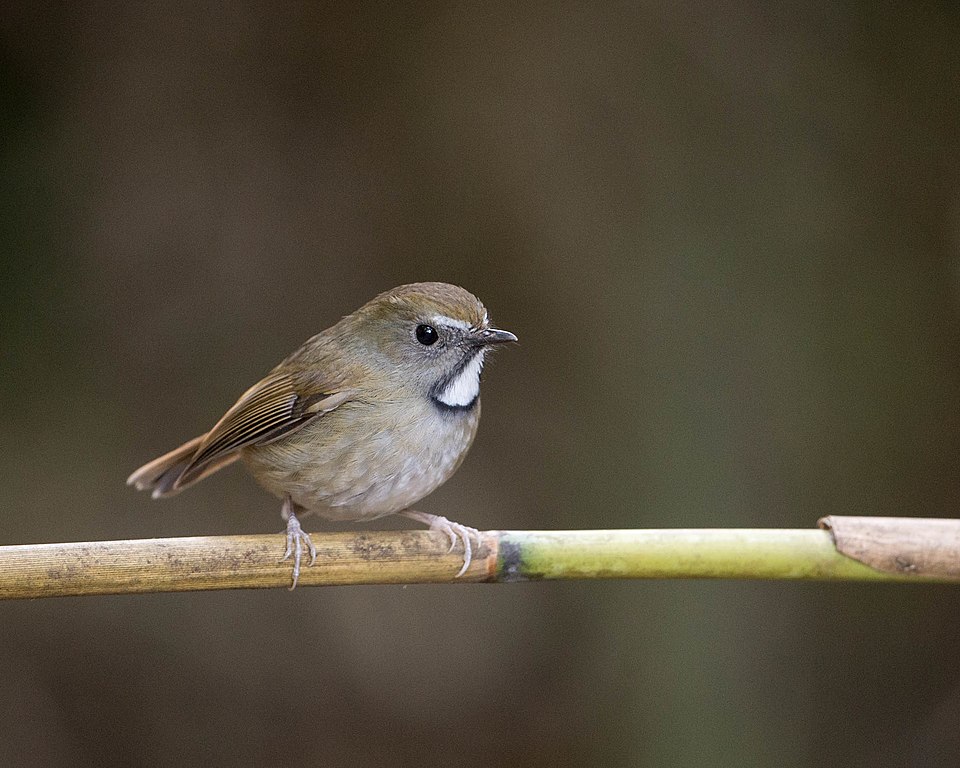
The Nicobar Jungle Flycatcher is relatively small, measuring about 13-15 cm in length. Its plumage is a mix of warm brown and gray tones, providing excellent camouflage against the forest floor and tree branches. Adult birds have an olive-brown upper body, complemented by a paler underbelly. The head features a subtle gray wash that extends to the nape.
Juvenile Nicobar Jungle Flycatchers exhibit more muted colors compared to adults, with a duller brown overall appearance and less distinct markings. There is no significant sexual dimorphism in this species, with males and females appearing quite similar in both size and coloration. This can make field identification challenging in the absence of vocalization cues.
The Nicobar Jungle Flycatcher's flight silhouette is characterized by short, rounded wings and a slightly rounded tail, typical of many forest-dwelling flycatchers. When perched, the bird often sits upright, flicking its tail slightly as it surveys its surroundings. It can be confused with other flycatchers in the region, but its distinct vocalizations and specific habitat preferences help differentiate it from similar species.
Having trouble telling birds apart? Upload a photo to our bird identification tool for an instant species match.
Rhinomyias nicobaricus Habitat and Range
Preferred Habitat
The Nicobar Jungle Flycatcher resides in the dense, lowland evergreen forests of the Nicobar Islands. These forests offer a humid, sheltered environment with abundant insect prey. The bird is typically found at elevations ranging from sea level to about 300 meters.
The flycatcher prefers areas with a thick understory and ample leaf litter, where it can forage effectively. While it is primarily a resident of tropical forests, it may occasionally venture into adjacent mangrove areas during periods of high insect activity.
Rhinomyias nicobaricus shows a strong preference for undisturbed forest habitats, avoiding heavily deforested or urbanized areas. This habitat specificity underscores the bird's vulnerability to habitat loss and environmental change. Seasonal shifts in habitat use are minimal, as the bird remains faithful to its preferred forest environment year-round.
Geographic Range
The range of the Nicobar Jungle Flycatcher is confined to the Nicobar Islands, part of the Union Territory of Andaman and Nicobar in India. This archipelago consists of 22 islands, but the flycatcher is primarily found on the larger, more forested islands such as Great Nicobar and Little Nicobar.
There is no evidence of migration beyond these islands, making Rhinomyias nicobaricus a true island endemic. Its presence is primarily restricted to the evergreen forests and occasionally the mangrove fringes of these islands.
Population density can be higher in regions with optimal forest conditions, where the bird can find suitable nesting sites and abundant food sources. However, due to its restricted range and habitat requirements, the species is considered vulnerable to environmental changes and habitat destruction.
Want to know which birds visit your area? Browse our backyard birds by location guides for region-specific species lists.
What Does the Rhinomyias nicobaricus Eat?
The diet of the Nicobar Jungle Flycatcher primarily consists of insects and other small invertebrates. This includes beetles, ants, and various larvae, which the bird gleans from the forest floor and low vegetation.
During the wet season, when insect populations peak, the flycatcher takes advantage of the abundance, increasing its foraging activity and energy intake. In addition to insects, the bird occasionally supplements its diet with small fruits and berries, which provide essential nutrients and aid in hydration.
Foraging techniques include short, swift flights to catch insects mid-air, as well as gleaning prey directly from leaves and branches. The bird often feeds alone or in small family groups, maintaining a consistent feeding schedule from dawn until dusk.
Rhinomyias nicobaricus Behavior and Social Structure
The Nicobar Jungle Flycatcher exhibits a solitary or small family group social structure, often seen alone or in pairs. It is highly territorial, with males actively defending their breeding territory through vocalizations and displays.
Courtship involves vocal displays, with the male using its song to attract a mate and establish a nesting territory. Once a pair is formed, they remain monogamous for the breeding season. The flycatcher is generally discreet and shy, avoiding areas of high human activity.
Flocking behavior is uncommon, as the bird prefers solitude or small group interactions. When confronted with a predator, such as a snake or raptor, the Nicobar Jungle Flycatcher employs alarm calls and rapid flight to evade capture. Its daily activities revolve around foraging, with peaks in activity during the early morning and late afternoon when the forest is cooler and insect activity is high.
Rhinomyias nicobaricus Nesting and Reproduction
The Nicobar Jungle Flycatcher constructs its nest in the dense foliage of low trees or shrubs, often near a water source. The nest is a compact cup, built primarily from twigs, leaves, and moss, providing excellent camouflage in the forest understory.
Clutch size typically ranges from two to three eggs, with the female responsible for most of the incubation, which lasts approximately 14 days. During this period, the male may assist by providing food and defending the territory.
Once the eggs hatch, both parents participate in feeding the chicks. The fledging period lasts about 14-16 days, after which the young leave the nest but remain under parental care for several more weeks. The Nicobar Jungle Flycatcher usually raises one brood per year, although favorable conditions may allow for a second.
Rhinomyias nicobaricus Sounds and Vocalizations
The primary song of the Nicobar Jungle Flycatcher is a series of melodious whistles, varying in pitch and rhythm. This song serves as both a territorial marker and a courtship display. The call notes are short, sharp whistles, used to communicate with mates or warn of potential threats.
Alarm calls are more rapid and higher-pitched, signaling the presence of predators. During the dawn chorus, the bird's vocalizations contribute to the rich tapestry of forest sounds, marking its presence in the dense tropical habitat.
The song of Rhinomyias nicobaricus is often compared to that of other flycatchers in the region, yet its distinctive pattern and tonal quality make it recognizable to experienced birders.
Interesting Facts About the Rhinomyias nicobaricus
- 1The Nicobar Jungle Flycatcher is endemic to the Nicobar Islands, found nowhere else on Earth.
- 2Rhinomyias nicobaricus plays a crucial role in controlling insect populations in its forest habitat.
- 3Despite its small size, the Nicobar Jungle Flycatcher has a loud, clear song that resonates through the forest.
- 4The species' survival is closely tied to the health of the Nicobar Islands' evergreen forests.
- 5The Nicobar Jungle Flycatcher exhibits strong territorial behavior, especially during the breeding season.
- 6This flycatcher is often more easily heard than seen, blending seamlessly into the forest environment.
- 7The bird's restricted range makes it particularly vulnerable to environmental changes and habitat loss.
Rhinomyias nicobaricus Conservation Status
The Nicobar Jungle Flycatcher is currently listed as Near Threatened on the IUCN Red List. The population trend is decreasing, primarily due to habitat loss from deforestation and development on the Nicobar Islands. Conservation efforts focus on habitat protection and the establishment of reserves to safeguard remaining forest areas. Historical population changes highlight the impact of human activities on island ecosystems, emphasizing the need for sustainable development practices. Local conservation programs aim to educate communities about the importance of preserving natural habitats, benefiting both the Nicobar Jungle Flycatcher and the broader ecological community.
Other Muscicapidae Species


Birds Similar to the Rhinomyias nicobaricus
These species are often confused with the Rhinomyias nicobaricus due to similar appearance or overlapping range.
