
Rufous-fronted Thornbird
Phacellodomus rufifrons
Order: Passeriformes / Family: Furnariidae
Wikimedia Commons
About the Rufous-fronted Thornbird
The Rufous-fronted Thornbird (Phacellodomus rufifrons) is a small bird belonging to the Furnariidae family, renowned for its unique habit of constructing elaborate stick nests in the canopy of trees. This bird is a resident of South America, primarily found in countries such as Brazil, Bolivia, Paraguay, and Argentina. It is most often seen in open woodlands, savannas, and scrubby areas where it can find ample nesting materials and food sources. The Rufous-fronted Thornbird plays a significant ecological role as both a seed disperser and insect controller, contributing to the health of its ecosystem. The bird is known for its adaptability to various habitats, which allows it to thrive in both rural and more developed areas. During the breeding season, which typically occurs from October to March, the Rufous-fronted Thornbird becomes more vocal and active, engaging in complex mating displays and nest-building efforts. These birds are non-migratory, remaining close to their breeding territories year-round. The species thrives in a range of altitudes, from lowland regions to areas up to 2,000 meters above sea level. Despite their adaptability, Rufous-fronted Thornbirds face threats from habitat destruction and fragmentation, which can impact their populations and the availability of suitable nesting sites. Their preference for edge habitats, however, can sometimes mitigate these threats, as they are capable of exploiting second-growth areas. The Rufous-fronted Thornbird's presence in a variety of settings, from urban gardens to remote forests, highlights its adaptability and ecological importance. Observers often note the bird's industrious behavior as it forages for insects and small invertebrates, which form the bulk of its diet. The Rufous-fronted Thornbird's ability to thrive in diverse environments underscores its resilience, making it a fascinating subject for ornithologists and birdwatchers alike. Conservation efforts focused on preserving its natural habitats are crucial to ensuring the continued survival of this species, as it plays a vital role in the maintenance of healthy ecosystems.
The Rufous-fronted Thornbird belongs to the family Furnariidae, within the order Passeriformes. These birds typically live 5-6 years with a maximum recorded age of 9 years.
How to Identify a Rufous-fronted Thornbird
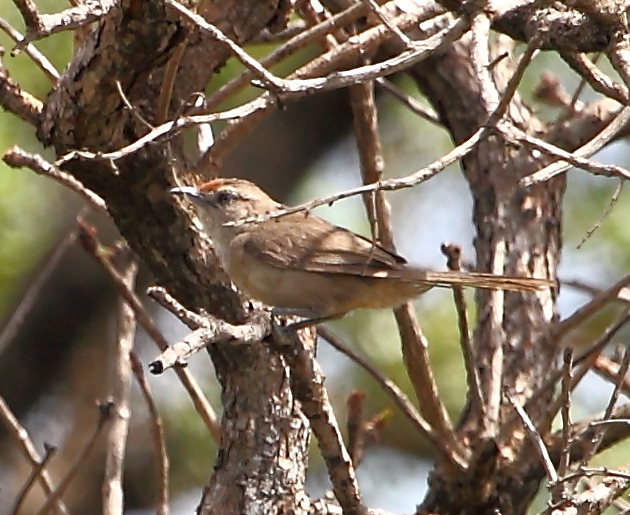
The Rufous-fronted Thornbird is characterized by its medium size, measuring about 18 to 20 centimeters in length. Adults display a striking rufous forehead, which contrasts sharply with their brownish upperparts and pale underparts. The wings and tail are also tinged with rufous, adding to its distinctive appearance. Juveniles resemble adults but typically show a less pronounced rufous coloration, particularly on the forehead. Males and females are similar in appearance, making sexing in the field challenging without observing behavior. When perched, the Rufous-fronted Thornbird often adopts an upright posture, showcasing its distinctive plumage. In flight, its wings appear rounded and its tail is relatively long, aiding in its identification. This bird can be confused with other members of the Furnariidae family, such as the Stripe-crowned Spinetail. However, the Rufous-fronted Thornbird's lack of facial stripes and its more uniform rufous coloration help distinguish it. Observers should note the bird's active behavior and preference for hopping among branches when foraging.
Having trouble telling birds apart? Upload a photo to our bird identification tool for an instant species match.
Rufous-fronted Thornbird Habitat and Range
Preferred Habitat
The Rufous-fronted Thornbird inhabits a variety of open habitats, including scrubby woodlands, savannas, and edge environments. It is frequently found in areas where trees and shrubs provide ample nesting materials and cover. This bird can adapt to elevations ranging from sea level to 2,000 meters. In regions like the Brazilian Cerrado, they thrive in the mosaic of grasslands and wooded savannas typical of the area. Rufous-fronted Thornbirds are also known to inhabit disturbed areas, such as second-growth forests and gardens, where they can exploit available resources. While they do not migrate, they may shift their activity within their territory in response to seasonal changes in food availability.
Geographic Range
The Rufous-fronted Thornbird inhabits much of central and eastern South America. Its range includes southeastern Brazil, eastern Bolivia, Paraguay, and northern Argentina. The bird is resident throughout its range, with populations occupying both lowland and upland habitats. In Brazil, it is commonly found in the Cerrado and Pantanal regions, while in Argentina, it prefers the Gran Chaco landscape. Despite its broad distribution, the bird's presence is often patchy, depending on the availability of suitable habitats. Population densities tend to be higher in areas where open woodlands and scrublands are prevalent.
Want to know which birds visit your area? Browse our backyard birds by location guides for region-specific species lists.
What Does the Rufous-fronted Thornbird Eat?
Rufous-fronted Thornbirds primarily feed on insects and other small invertebrates, which they forage for in the leaf litter and on branches. They are adept at probing into crevices and under bark to extract prey. Their diet includes ants, beetles, and caterpillars, which provide essential proteins for breeding and survival. During the breeding season, they may increase their intake of high-energy foods to support the demands of raising young. These birds are diurnal foragers, with peak feeding activity occurring in the early morning and late afternoon. While primarily insectivorous, they occasionally consume seeds and small fruits, especially during periods when insects are less abundant.
Rufous-fronted Thornbird Behavior and Social Structure
Rufous-fronted Thornbirds are social creatures, often seen in pairs or small family groups. They establish territories, which they defend vigorously, particularly during the breeding season. Courtship involves vocal displays and mutual preening, strengthening pair bonds. The birds exhibit a strong attachment to their nesting sites, often returning to the same location year after year. Their nests are large, conspicuous structures made of sticks, and are often built high in trees. The Rufous-fronted Thornbird's response to predators involves a combination of alarm calls and evasive flight, seeking cover in dense vegetation. While generally non-migratory, these birds may undergo local movements in search of food, especially during the non-breeding season. They are most active during daylight hours, with a peak in activity during the cooler parts of the day.
Rufous-fronted Thornbird Nesting and Reproduction
The nest of the Rufous-fronted Thornbird is a remarkable structure, often resembling a large stick ball, which can reach up to 1 meter in diameter. These nests are usually built high in tall trees or shrubs, providing safety from ground predators. The nest is made of sticks and twigs, intricately woven together to create a durable home. Inside, the nest features a chamber lined with finer materials like grass and feathers. The female typically lays a clutch of 3 to 5 eggs, which she incubates for about 16 to 18 days. Both parents participate in feeding the chicks, which fledge approximately 18 to 20 days after hatching. Rufous-fronted Thornbirds generally produce one brood per year, though in favorable conditions, a second brood may be attempted. Their cooperative breeding behavior and nest reuse contribute to their reproductive success.
Rufous-fronted Thornbird Sounds and Vocalizations
The Rufous-fronted Thornbird has a distinctive vocal repertoire, which includes a series of harsh, chattering calls often described as 'grit-grit-grit.' These calls serve various purposes, including territory defense and communication between mates. During the breeding season, their song becomes more elaborate, incorporating a rapid succession of notes that can carry over long distances. Alarm calls are shorter and more urgent, alerting both mates and neighboring birds to potential threats. The dawn chorus of the Rufous-fronted Thornbird is a notable event, characterized by increased vocal activity as the bird asserts its presence and territory.
Interesting Facts About the Rufous-fronted Thornbird
- 1Rufous-fronted Thornbirds construct nests that can weigh up to 10 kilograms, showcasing their impressive engineering skills.
- 2These birds are known to reuse and refurbish old nests, sometimes adding new materials over several years.
- 3The Rufous-fronted Thornbird's nest is often used by other bird species as a refuge or breeding site, demonstrating its ecological importance.
- 4Despite their name, Rufous-fronted Thornbirds are not closely related to true thornbills, which belong to a different family altogether.
- 5They are one of the few bird species that regularly engage in cooperative breeding, with non-breeding individuals helping to raise young.
- 6The Rufous-fronted Thornbird's vocalizations are so distinctive that they are often used by field researchers as an auditory cue for locating these birds.
- 7Their diet flexibility allows them to survive in diverse environments, from urban gardens to remote savannas.
Rufous-fronted Thornbird Conservation Status
The Rufous-fronted Thornbird is currently listed as a species of Least Concern by the IUCN. Its population appears stable, with no immediate threats causing significant declines. However, habitat destruction, particularly in the form of deforestation and agricultural expansion, poses long-term threats to their habitats. Conservation efforts aimed at preserving open woodland and savanna ecosystems are crucial in maintaining stable populations. The bird's adaptability to secondary habitats provides some resilience against habitat loss, but continued monitoring of population trends is necessary to ensure its long-term survival. Historical population data indicate a stable presence across its range, with no significant declines reported.
Other Furnariidae Species


Birds Similar to the Rufous-fronted Thornbird
These species are often confused with the Rufous-fronted Thornbird due to similar appearance or overlapping range.

