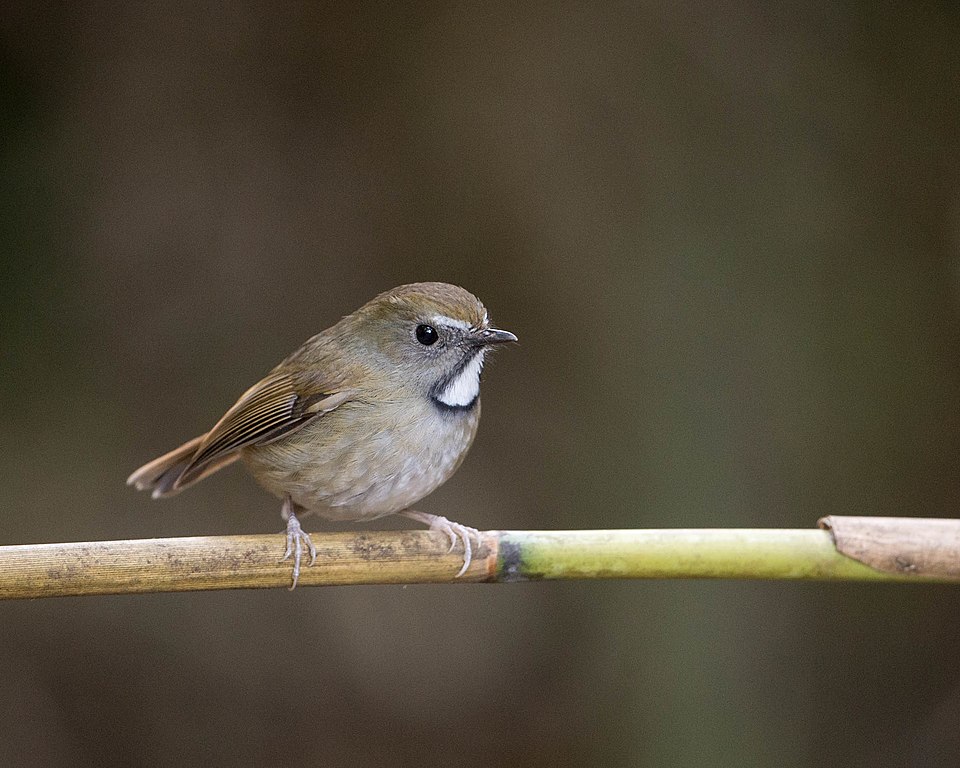
Rufous-headed Robin
Luscinia ruficeps
Order: Passeriformes / Family: Muscicapidae

Wikimedia Commons
About the Rufous-headed Robin
The Rufous-headed Robin, scientifically known as Luscinia ruficeps, is a captivating songbird that belongs to the family Muscicapidae. This bird is primarily found in the mountainous regions of central and southwestern China, with a particular affinity for the dense undergrowth of temperate forests. Its presence is most pronounced during the breeding season, when it occupies the cool, moist environments of the forest floor. The Rufous-headed Robin plays a significant ecological role as both a predator of insects and a seed disperser, influencing the biodiversity of its habitat.
This robin's significance extends beyond its ecological contributions. It holds a special place in the hearts of birders and researchers alike, often sought after for its distinctive plumage and enchanting song. The Rufous-headed Robin's song, a series of melodious whistles and trills, echoes through the forests during the breeding season, establishing territories and attracting mates. Its presence serves as an indicator of healthy forest ecosystems, making it a valuable species for environmental monitoring.
Ecologically, the Rufous-headed Robin interacts with a variety of species within its habitat. It preys on insects and small invertebrates, thus contributing to the control of pest populations. Additionally, its foraging behavior aids in the dispersal of seeds, promoting plant regeneration and forest health. As a seasonal migrant, this robin demonstrates fascinating patterns of movement, often traveling considerable distances between breeding and wintering grounds. Understanding its seasonal behaviors and migratory routes is crucial for conservation efforts, particularly as habitat loss and climate change pose increasing threats to its survival.
The Rufous-headed Robin belongs to the family Muscicapidae, within the order Passeriformes. These birds typically live average 4-6 years with a maximum recorded of 8 years..
How to Identify a Rufous-headed Robin
The Rufous-headed Robin is a small songbird, measuring approximately 16 centimeters in length. Its most distinguishing feature is its vibrant rufous-orange crown, which contrasts sharply with its olive-gray back and wings. The underparts are pale gray, providing a subtle yet elegant appearance. In terms of sexual dimorphism, males and females exhibit similar plumage, making it challenging to differentiate between the sexes in the field.
Juvenile Rufous-headed Robins differ slightly from adults, possessing a more subdued coloration with hints of buff and brown in their plumage. This difference aids in camouflage among the leaf litter where they often reside. In flight, the Rufous-headed Robin displays a characteristic silhouette with rounded wings and a short, straight tail. This bird perches confidently, often tilting its head inquisitively while scanning for insects.
When identifying the Rufous-headed Robin, one might confuse it with other similar-sized robins or thrushes. However, its unique rufous crown and melodic song are reliable identifiers. Birders should note its preference for dense undergrowth and its habit of singing from concealed perches, making patience and keen observation essential for successful identification.
Having trouble telling birds apart? Upload a photo to our bird identification tool for an instant species match.
Rufous-headed Robin Habitat and Range
Preferred Habitat
The Rufous-headed Robin inhabits temperate forests, particularly favoring areas with dense underbrush and abundant ground cover. These forests are typically located at elevations ranging from 1,500 to 3,000 meters, where the climate is cool and moist. Such environments provide the necessary resources for nesting, foraging, and avoiding predators.
During the breeding season, the Rufous-headed Robin is often found in the understory of broad-leaved and mixed coniferous forests. It shows a preference for regions with a thick canopy that offers protection and ample food resources. In the non-breeding season, this robin may move to lower elevations or slightly different habitats, reflecting its adaptability to seasonal changes.
While primarily a forest dweller, the Rufous-headed Robin has occasionally been observed in more open areas, such as forest edges and clearings. However, it remains largely absent from urban environments, indicating its reliance on undisturbed natural habitats.
Geographic Range
The breeding range of the Rufous-headed Robin is concentrated in central and southwestern China, particularly within the provinces of Sichuan, Shaanxi, and Gansu. These regions provide the ideal elevation and habitat conditions for breeding and raising young. During the breeding season, population densities are higher in these areas, where suitable habitats are abundant.
In winter, the Rufous-headed Robin undertakes a partial migration, moving to lower altitudes or slightly different geographic areas within its range. Some individuals may travel as far south as the northern parts of Myanmar, reflecting a degree of flexibility in its wintering behavior. However, the species generally remains within its broad breeding range throughout the year.
Migration corridors are not well-documented, but observations suggest that the Rufous-headed Robin follows a pattern of altitudinal migration, descending to more temperate zones within its range as temperatures drop. Understanding these migration patterns is crucial for conservation efforts, particularly in light of habitat fragmentation and climate change.
Want to know which birds visit your area? Browse our backyard birds by location guides for region-specific species lists.
What Does the Rufous-headed Robin Eat?
The Rufous-headed Robin's diet primarily consists of insects and small invertebrates, which it actively forages for on the forest floor. Its preference for beetles, caterpillars, and spiders makes it an effective pest controller within its habitat. During the breeding season, when energy demands are high, the robin increases its consumption of protein-rich prey to nourish its young.
In addition to insects, the Rufous-headed Robin occasionally supplements its diet with seeds and berries, particularly during the non-breeding season when insect availability decreases. This dietary flexibility allows it to adapt to seasonal changes in food resources and maintain its energy levels throughout the year.
The Rufous-headed Robin employs a variety of foraging techniques, including gleaning insects from leaves and branches and probing the leaf litter for hidden prey. Its keen eyesight and agile movements enable it to efficiently capture prey even in dense undergrowth. The bird typically forages during the early morning and late afternoon, when insect activity is highest.
Rufous-headed Robin Behavior and Social Structure
The Rufous-headed Robin exhibits intriguing behaviors that are characteristic of its ecological niche. It is generally a solitary bird, particularly during the breeding season when it becomes highly territorial. Males establish and defend territories through song, using their melodious calls to deter rivals and attract mates. This territoriality ensures access to resources and optimal nesting sites.
Courtship displays are an essential aspect of the Rufous-headed Robin's behavior. Males often engage in intricate song displays, sometimes incorporating mimicry of other bird species to impress potential mates. These performances are accompanied by visual displays, such as wing flicking and tail spreading, adding to the spectacle.
Outside of the breeding season, the Rufous-headed Robin may exhibit more social behavior, occasionally forming small, loose flocks during migration or in wintering areas. In the presence of predators, the robin relies on its cryptic coloration and quick, agile movements to escape detection. It remains vigilant, often seeking cover in dense vegetation when threatened.
Daily activity patterns show the Rufous-headed Robin to be most active during dawn and dusk, taking advantage of the cooler temperatures and higher insect activity. This crepuscular behavior aligns with its foraging needs and helps reduce competition with other diurnal species.
Rufous-headed Robin Nesting and Reproduction
The Rufous-headed Robin constructs its nest with care, selecting well-hidden locations within dense undergrowth or low shrubs. The nest is typically cup-shaped, built from a variety of materials such as grasses, leaves, and moss, providing excellent camouflage against predators.
Females primarily undertake the task of constructing the nest, though males may assist in gathering materials. The chosen site is usually close to the ground, often in a fork of a low branch or among thick foliage. This positioning helps protect the eggs and chicks from both aerial and ground predators.
Clutch size for the Rufous-headed Robin generally ranges from three to five eggs, which are pale blue with reddish-brown spots. The female is responsible for most of the incubation, which lasts approximately 12 to 14 days. Once hatched, both parents share in the duties of feeding and caring for the chicks.
Fledging occurs about 12 to 16 days after hatching, with young birds quickly learning to forage and avoid predators. The Rufous-headed Robin typically produces one brood per year, although favorable conditions may occasionally allow for a second.
Rufous-headed Robin Sounds and Vocalizations
The song of the Rufous-headed Robin is a delightful series of melodious whistles and trills. It possesses a clear, flute-like quality that resonates through its forest habitat. The rhythm is varied, with phrases that rise and fall in pitch, creating an enchanting auditory experience.
In addition to its primary song, the Rufous-headed Robin emits various call notes, including soft "tut" sounds used for communication between mates or signaling alarm. Its alarm calls are sharp and piercing, effectively alerting others to potential threats.
During the early morning hours, the Rufous-headed Robin participates in the dawn chorus, contributing its song to the symphony of the forest. This behavior not only strengthens pair bonds but also reinforces territorial boundaries. The song of the Rufous-headed Robin can be compared to that of the Nightingale, though it is slightly less varied and more repetitive.
Interesting Facts About the Rufous-headed Robin
- 1The Rufous-headed Robin was first described scientifically in 1902, making it a relatively recent discovery in ornithology.
- 2Unlike many other robins, the Rufous-headed Robin is not closely related to the European Robin, despite similar names.
- 3This robin's song is often compared to that of the Nightingale, noted for its melodious and complex patterns.
- 4The Rufous-headed Robin is one of the few bird species that inhabits the dense undergrowth of Chinese forests, making it a unique ecological contributor.
- 5Its preference for specific forest types makes the Rufous-headed Robin a valuable indicator species for assessing forest health.
- 6The Rufous-headed Robin's migratory behavior is not fully understood, prompting ongoing research into its seasonal movements.
- 7During winter, the Rufous-headed Robin may join mixed-species flocks, a behavior that aids in foraging efficiency and predator avoidance.
Rufous-headed Robin Conservation Status
The Rufous-headed Robin is currently classified as Near Threatened on the IUCN Red List. Its population is believed to be declining, primarily due to habitat loss and degradation. Deforestation and agricultural expansion in its breeding and wintering ranges pose significant threats to its survival. Conservation efforts are underway to protect the Rufous-headed Robin's habitats. These include the establishment of protected areas and the implementation of sustainable land-use practices. Monitoring programs aim to track population trends and identify critical habitats for preservation. Historically, the Rufous-headed Robin's population has experienced fluctuations in response to environmental changes. Continued research and conservation initiatives are essential to ensure the long-term survival of this unique species.