
Rufous-tailed Scrub Robin
Erythropygia galactotes
Order: Passeriformes / Family: Muscicapidae

Wikimedia Commons
About the Rufous-tailed Scrub Robin
The Rufous-tailed Scrub Robin (Erythropygia galactotes) is a medium-sized songbird that thrives in diverse habitats ranging from the Iberian Peninsula to northern Africa and even parts of Central Asia. This species is notable for its adaptability to various environments, including arid scrublands, which contribute to its widespread presence. The bird's ecological significance is profound, as it plays a crucial role in controlling insect populations in these areas.
During the breeding season, the Rufous-tailed Scrub Robin migrates northwards, establishing territories in southern Europe and Central Asia. The bird is a trans-Saharan migrant, wintering in sub-Saharan Africa, where it inhabits dry savannas and open wooded landscapes. Its seasonal movements highlight the species' remarkable adaptability to changing environments.
In its role as both predator and prey, the Rufous-tailed Scrub Robin contributes to the ecological balance of the ecosystems it inhabits. By preying on insects, it helps regulate pest populations, thereby indirectly supporting agricultural activities. The bird's presence in diverse geographic regions also makes it an important subject of study for ornithologists interested in migration patterns and habitat utilization. Due to these factors, the Rufous-tailed Scrub Robin is not just a common sight in its range but also a species of considerable ecological importance.
The Rufous-tailed Scrub Robin belongs to the family Muscicapidae, within the order Passeriformes. These birds typically live 6-8 years, with a maximum recorded of 11 years.
How to Identify a Rufous-tailed Scrub Robin
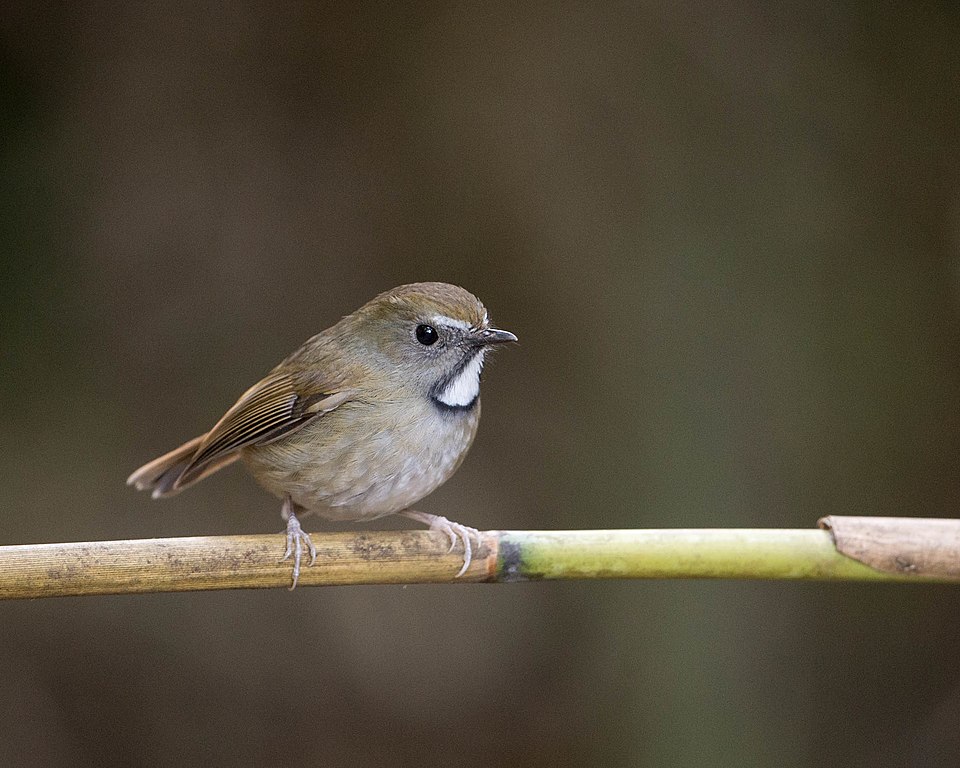
The Rufous-tailed Scrub Robin is easily identifiable by its reddish-brown tail, which contrasts with its overall sandy brown plumage. The bird's underparts are buff-colored, while its wings display a mix of brown and white, creating a striking pattern during flight. Notably, the Rufous-tailed Scrub Robin lacks the pronounced supercilium or 'eyebrow' seen in some related species, simplifying identification.
Adults and juveniles exhibit similar plumage, though juveniles have a slightly duller appearance and less pronounced wing markings. Males and females are similar in appearance, making sexing in the field challenging without behavioral context. Similar species, such as the Common Nightingale, may be confused with the Rufous-tailed Scrub Robin; however, the latter's rufous tail and distinctive flight pattern serve as reliable distinguishing features.
In flight, the Rufous-tailed Scrub Robin displays a unique silhouette, characterized by rounded wings and a slightly forked tail, which it often fans out while perching. This perching posture, with the tail held aloft and often flicked, is a common behavior observed throughout its range, aiding identification even from a distance.
Having trouble telling birds apart? Upload a photo to our bird identification tool for an instant species match.
Rufous-tailed Scrub Robin Habitat and Range
Preferred Habitat
The Rufous-tailed Scrub Robin favors open, dry habitats such as scrublands, thorny bushes, and semi-arid regions. It is commonly found in Mediterranean-type climates, thriving in areas with sparse vegetation that allows for ground foraging. In southern Europe, it occupies dry open fields and olive groves, while in Africa, it is often seen in savannas and dry forest edges.
This species can also adapt to anthropogenic landscapes, including orchards and rural gardens, provided there is adequate ground cover. It is typically found at elevations up to 1,500 meters, though it primarily favors lower altitudes during migration and breeding.
Seasonal habitat shifts occur as the bird migrates between breeding and wintering grounds. While breeding in Europe and parts of Asia, the Rufous-tailed Scrub Robin prefers habitats that offer ample nesting sites and food resources. In winter, it shifts to more open landscapes in Africa, where insect abundance supports its dietary needs.
Geographic Range
The Rufous-tailed Scrub Robin breeds across southern Europe, North Africa, and into Central Asia. Key breeding areas include Spain, Portugal, and southern France, extending eastward through Turkey and into parts of the Middle East, including Iran and western Pakistan.
During migration, the bird travels through the Mediterranean, crossing the Sahara Desert to reach its wintering grounds in sub-Saharan Africa. Countries such as Mali, Niger, and Nigeria host large populations during the winter months. The migration corridors are well-defined, following traditional routes that provide stopover habitats.
Population density is highest in regions like the Iberian Peninsula and North Africa during the breeding season, while winter densities are more dispersed across the African savannas. This seasonal distribution highlights the Rufous-tailed Scrub Robin's adaptability but also underscores the challenges it faces, such as habitat fragmentation and climate change impacts along its migratory path.
Want to know which birds visit your area? Browse our backyard birds by location guides for region-specific species lists.
What Does the Rufous-tailed Scrub Robin Eat?
The Rufous-tailed Scrub Robin primarily feeds on insects, which it captures through agile ground foraging. Its diet includes beetles, ants, and grasshoppers, with a preference for small to medium-sized insects that are abundant in its habitat. During the breeding season, the bird's diet diversifies to include spiders and small invertebrates, ensuring sufficient nutrition for chick rearing.
Seasonal changes impact its dietary habits, with the bird consuming more plant material, such as seeds and berries, during leaner months. This dietary flexibility supports its survival across diverse environments, from Mediterranean scrublands to African savannas.
Foraging occurs at dawn and dusk when insects are most active. The bird employs a distinctive hopping technique to disturb leaf litter and flush out prey, a method that reflects its adaptation to ground-level hunting. This technique, combined with its sharp eyesight, makes the Rufous-tailed Scrub Robin an effective predator in its ecological niche.
Rufous-tailed Scrub Robin Behavior and Social Structure
The Rufous-tailed Scrub Robin is a solitary and territorial species during the breeding season. Males establish and defend territories through song and display, often perching conspicuously to advertise their presence. The bird's song is a complex mix of whistles and trills, which plays a crucial role in attracting mates and deterring rivals.
Courtship displays involve males engaging in aerial chases and offering food to potential mates. Once paired, both partners contribute to nest building and chick rearing, although males often take a more active role in territorial defense.
Outside the breeding season, the Rufous-tailed Scrub Robin becomes less territorial and more social, occasionally joining mixed-species flocks in wintering grounds. Its response to predators includes alarm calls and evasive flight, with a preference for seeking cover in dense vegetation.
Daily activity patterns are crepuscular, with peak activity during the cooler hours of the day. This behavior optimizes foraging efficiency while minimizing exposure to heat and predators.
Rufous-tailed Scrub Robin Nesting and Reproduction
The Rufous-tailed Scrub Robin constructs a cup-shaped nest using twigs, grass, and leaves, often lined with softer materials like feathers and hair. Nests are typically located in low shrubs or small trees, at heights between 1 to 3 meters, providing both concealment and accessibility.
A typical clutch consists of 3 to 5 eggs, with incubation lasting about 12 to 14 days. Both parents share incubation duties, though the female often takes on a larger share. After hatching, the altricial chicks remain in the nest for approximately 10 to 12 days, during which both parents feed and protect them.
The Rufous-tailed Scrub Robin may produce one or two broods per breeding season, depending on environmental conditions and food availability. This reproductive strategy allows for flexibility in resource-poor or unstable environments, contributing to the bird's resilience and wide distribution.
Rufous-tailed Scrub Robin Sounds and Vocalizations
The Rufous-tailed Scrub Robin's song is a varied and melodious sequence of whistles, trills, and chatters. The rhythm is irregular but fluid, with a mixture of high and low pitches that create a distinctive soundscape in its territory. This song is most commonly heard during the early morning and late afternoon, coinciding with peak activity periods.
Its call notes are sharp and abrupt, often used as contact calls between mates or as alarms in response to threats. Compared to familiar sounds, the song can resemble a more complex version of the Common Nightingale's repertoire, though with a distinctly rufous-tailed twist.
During the dawn chorus, the Rufous-tailed Scrub Robin's song stands out due to its clarity and variety, often dominating the acoustic environment of its habitat. Alarm calls are more staccato, serving as an effective warning to conspecifics and other nearby birds.
Interesting Facts About the Rufous-tailed Scrub Robin
- 1The Rufous-tailed Scrub Robin can sing up to 100 different song variations, showcasing an impressive vocal range.
- 2This bird's migration can cover distances over 4,000 kilometers, demonstrating remarkable endurance and navigational skill.
- 3Despite its name, the Rufous-tailed Scrub Robin is not closely related to true robins, belonging instead to the Muscicapidae family.
- 4The bird's tail-flicking behavior is thought to be a form of communication, both as a territorial display and a method to startle prey.
- 5Young Rufous-tailed Scrub Robins undergo a rapid growth phase, doubling their weight in the first week after hatching.
- 6During migration, the Rufous-tailed Scrub Robin can travel over 200 kilometers in a single night, utilizing favorable winds.
- 7This species can adapt to urban environments, occasionally nesting in gardens and parks where natural habitats overlap with human activity.
Rufous-tailed Scrub Robin Conservation Status
The Rufous-tailed Scrub Robin is currently classified by the IUCN as Least Concern, reflecting its stable population across much of its range. However, localized declines have been observed in parts of its breeding range, particularly in areas affected by habitat destruction. Primary threats include agricultural expansion, which reduces suitable breeding grounds, and climate change, which can alter migration patterns and habitat availability. Conservation efforts focus on habitat preservation and monitoring population trends to ensure long-term stability. Historically, the Rufous-tailed Scrub Robin has maintained a relatively stable population, though ongoing environmental changes necessitate continued vigilance. Researchers and conservationists emphasize the importance of protecting key migratory corridors and breeding sites to support this adaptable yet vulnerable species.
Other Muscicapidae Species


Birds Similar to the Rufous-tailed Scrub Robin
These species are often confused with the Rufous-tailed Scrub Robin due to similar appearance or overlapping range.

