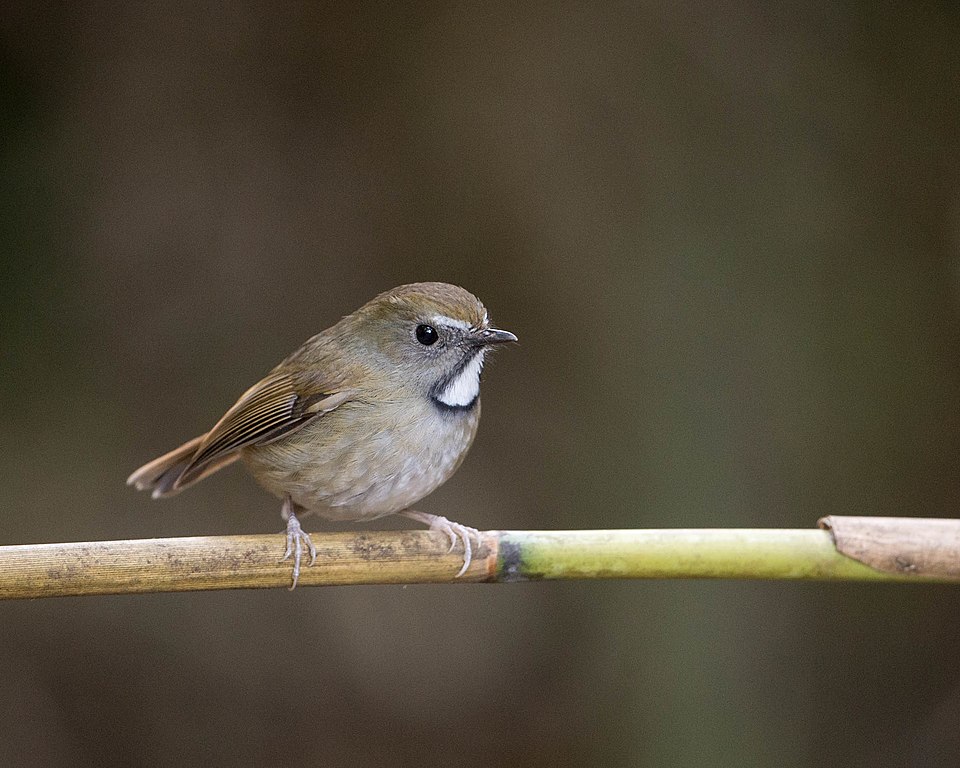
Rufous-vented Niltava
Niltava sumatrana
Order: Passeriformes / Family: Muscicapidae

Wikimedia Commons
About the Rufous-vented Niltava
The Rufous-vented Niltava (Niltava sumatrana) is a captivating bird found primarily in the subtropical and tropical moist lowland forests of Southeast Asia. Revered for its vibrant plumage, this species plays a crucial role in the ecosystems it inhabits, contributing to insect population control and seed dispersal. The conservation of this species is significant as it provides insights into the health of forest ecosystems across its range.
This species is primarily found in countries such as Malaysia, Thailand, and Indonesia, with notable populations in Sumatra and Borneo. These regions offer the dense, humid forests that the Rufous-vented Niltava calls home. Within these forests, the bird thrives in the understory and mid-level canopy, where it actively participates in the ecosystem as both predator and prey. The bird's presence is a strong indicator of forest health, as it requires a stable environment with ample food supply and suitable nesting sites.
During the breeding season, the Rufous-vented Niltava becomes more vocal and territorial, a behavior common among the Muscicapidae family. Its breeding habits and ecological role underscore the interconnectedness of avian and forest health. Understanding the Rufous-vented Niltava's habits and needs can aid in conservation efforts, ensuring that these vital forest areas remain protected for future generations.
The Rufous-vented Niltava belongs to the family Muscicapidae, within the order Passeriformes. These birds typically live average 5-6 years with a maximum recorded of 11 years..
How to Identify a Rufous-vented Niltava
The Rufous-vented Niltava is a medium-sized songbird with a distinct appearance that aids in its identification. Adult males boast a vivid blue crown, nape, and upperparts, contrasted with a striking rufous vent and underparts. The females, while less flamboyant, display a more subdued palette of olive-brown with a hint of blue on the wings and tail.
Juveniles tend to resemble the females but with a more mottled appearance, providing them with better camouflage among the forest foliage. When observing these birds in the field, note the male's vibrant blue coloration, which distinguishes it from other sympatric species. The Rufous-vented Niltava's silhouette is typical of flycatchers, with a compact body and moderately long tail.
In flight, they exhibit a direct but somewhat undulating flight pattern, often moving between perches with swift, short flights. Perched Rufous-vented Niltavas maintain an upright posture, a key feature to watch for when scanning the underbrush.
Having trouble telling birds apart? Upload a photo to our bird identification tool for an instant species match.
Rufous-vented Niltava Habitat and Range
Preferred Habitat
The Rufous-vented Niltava thrives in the dense, humid environments of Southeast Asia's lowland and montane forests. These birds prefer areas with thick understory vegetation, providing ample cover and foraging opportunities. In regions like Sumatra and Borneo, they are most frequently found in primary and well-developed secondary forests.
Typically found at elevations ranging from sea level up to 1500 meters, they may adjust their habitat use slightly with seasonal changes. While less common in urban settings, the Rufous-vented Niltava can occasionally be spotted in forest edges near human settlements, particularly where suitable habitat is preserved.
Geographic Range
The geographical range of the Rufous-vented Niltava spans the tropical regions of Southeast Asia, predominantly within Indonesia, Malaysia, and southern Thailand. This bird is not migratory, instead residing in its preferred forest habitats year-round.
In Indonesia, it is most prevalent on the islands of Sumatra and Borneo, where dense forest cover supports its ecological needs. While not considered rare within its range, the bird's population density is tied closely to the availability of intact forest habitats, making conservation of these areas crucial.
Want to know which birds visit your area? Browse our backyard birds by location guides for region-specific species lists.
What Does the Rufous-vented Niltava Eat?
The Rufous-vented Niltava primarily feeds on a diet of insects and other small invertebrates, which it skillfully captures through sallying flight from a perch. This hunting technique involves quick, short flights to snatch prey mid-air or from the foliage.
During different seasons, its diet may shift to incorporate more fruit, particularly when insect prey is less abundant. The bird's ability to adjust its diet seasonally highlights its adaptability and resourcefulness in securing food.
Rufous-vented Niltava Behavior and Social Structure
The Rufous-vented Niltava is known for its solitary nature outside the breeding season, often seen alone or in pairs. Males are particularly territorial, using their song to establish and defend breeding territories. During courtship, males perform elaborate displays, showcasing their vivid plumage to attract mates.
These birds demonstrate a clear daily activity pattern, being most active during the cooler morning and late afternoon hours. When threatened by predators, they may emit alarm calls and exhibit mobbing behavior if in proximity to others.
Rufous-vented Niltava Nesting and Reproduction
Nesting for the Rufous-vented Niltava involves selecting dense forest undergrowth or low shrubs for their nest sites. The birds construct cup-shaped nests using materials such as moss, leaves, and small twigs, which offer camouflage and protection.
Typically, the female lays a clutch of 2-3 eggs, with an incubation period lasting approximately 14-16 days. Both parents participate in feeding the chicks, which fledge after about two weeks. The species generally produces one brood per year.
Rufous-vented Niltava Sounds and Vocalizations
The Rufous-vented Niltava's primary song is a melodious series of clear, whistling notes, often described as a pleasant, flowing tune that resonates through the forest. Its call notes are sharp and slightly metallic, used for communication between mates or signaling alarm.
Dawn chorus participation is common, with the males' songs providing a prominent component of the forest's soundscape. Comparatively, these calls can be likened to a more melodic and fluid version of a robin's song.
Interesting Facts About the Rufous-vented Niltava
- 1The Rufous-vented Niltava's striking coloration makes it a favorite among birdwatchers visiting Southeast Asia.
- 2During breeding season, the male's song can be heard echoing through the dense forests, especially at dawn.
- 3This species is a member of the Muscicapidae family, known for their flycatching abilities and diverse vocalizations.
- 4The Rufous-vented Niltava plays a role in controlling insect populations, making it an ecological asset to its habitat.
- 5It prefers dense forest habitats but can adapt to secondary growth, reflecting its resilience in changing environments.
- 6Despite its vivid colors, the bird's elusive nature and preference for dense cover make it a challenging species to observe.
- 7The species' presence is a reliable indicator of forest health, due to its reliance on intact ecosystems for survival.
Rufous-vented Niltava Conservation Status
Classified as Least Concern by the IUCN, the Rufous-vented Niltava faces habitat loss as its primary threat. Deforestation and land conversion for agriculture pose significant challenges to its habitat. Conservation efforts focus on preserving forest habitats and promoting sustainable land use practices. Despite stable population trends, continuous monitoring is essential to ensure the species' long-term survival.