
Salvadori's Serin
Crithagra xantholaema
Order: Passeriformes / Family: Fringillidae
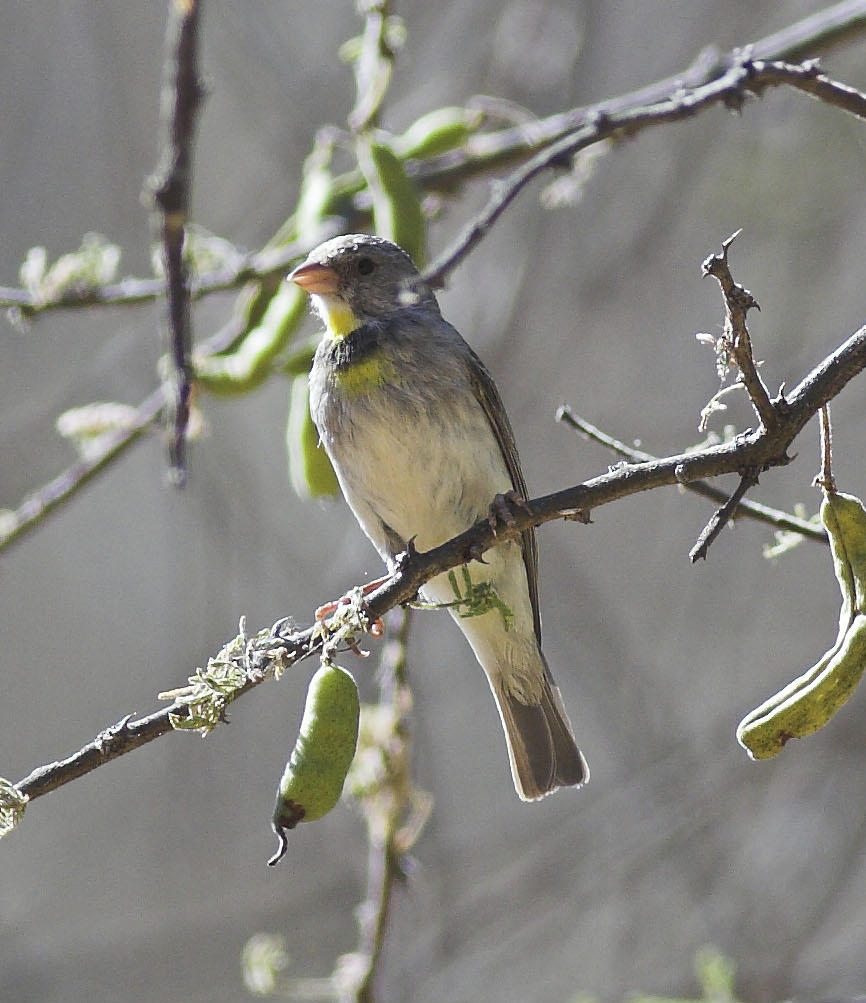
Wikimedia Commons
About the Salvadori's Serin
The Salvadori's Serin (Crithagra xantholaema) is a small passerine bird endemic to the high-altitude regions of Ethiopia, renowned for its striking yellow plumage and melodic song. As a member of the Fringillidae family, this species plays a vital role in the montane ecosystems it inhabits, which are characterized by open grasslands and sparse tree cover. The Salvadori's Serin occupies a niche where it can exploit the abundant seeds available in these grasslands, contributing to seed dispersal and plant diversity. This bird's presence is a key indicator of healthy montane environments in Ethiopia, as it thrives in areas with ample ground cover and minimal human disturbance. During the breeding season, typically from April to June, the Salvadori's Serin becomes more vocal and conspicuous, engaging in elaborate singing displays to establish territory and attract mates. The species is monogamous, and pairs often return to the same breeding sites each year, highlighting their strong site fidelity. Outside the breeding season, the Salvadori's Serin forms small flocks, which forage together in search of seeds and insects. These flocks are an essential aspect of their survival strategy, as they provide increased vigilance against predators and improve foraging efficiency. The Salvadori's Serin is particularly important in the context of Ethiopian biodiversity, serving as a flagship species for conservation efforts in the region. Its restricted range and specialized habitat requirements make it vulnerable to habitat loss due to agricultural expansion and climate change. Conservation efforts targeting this species often focus on preserving its montane grassland habitat, promoting sustainable land use practices, and raising awareness about the ecological significance of the highlands it inhabits.
The Salvadori's Serin belongs to the family Fringillidae, within the order Passeriformes. These birds typically live approximately 4-5 years in the wild..
How to Identify a Salvadori's Serin
The Salvadori's Serin is a small finch, with adults measuring around 12 cm in length. Distinctive features include its bright yellow underparts and olive-brown upperparts, which provide effective camouflage in its grassy environment. The bird's head displays a subtle grayish hue with a prominent yellow supercilium, and its bill is stout and conical, well-adapted for seed consumption. Juveniles resemble adults but have a more muted coloration, with less pronounced yellow and more streaking on the underparts. Males and females are similar in appearance, though males may exhibit slightly brighter plumage, especially during the breeding season. In flight, the Salvadori's Serin shows a bounding flight pattern typical of finches, with rapid wingbeats followed by short glides. Its flight silhouette is compact, with a short tail and rounded wings. When perched, this serin often adopts an upright posture, allowing for efficient scanning of its surroundings. While the Salvadori's Serin is unlikely to be confused with other species due to its restricted range, similar species in the wider region, such as the Yellow-fronted Canary, can be distinguished by their more extensive yellow plumage and different vocalizations.
Having trouble telling birds apart? Upload a photo to our bird identification tool for an instant species match.
Salvadori's Serin Habitat and Range
Preferred Habitat
The Salvadori's Serin primarily inhabits high-altitude grasslands and montane regions in Ethiopia, typically at elevations between 2000 and 3000 meters. These areas are characterized by a mosaic of open grassy fields, scattered shrubs, and occasional small trees, providing ample foraging opportunities and nesting sites. The species shows a preference for areas with abundant ground cover, which offer protection from predators and harsh weather conditions. During the non-breeding season, Salvadori's Serins may venture into adjacent habitats such as agricultural fields and fallow lands, where they exploit additional food resources. Despite this, they remain closely tied to their montane origins, rarely descending into lowland areas. Urban presence is minimal, as the species favors rural and semi-natural landscapes that offer the necessary ecological conditions for its survival.
Geographic Range
Endemic to Ethiopia, the Salvadori's Serin has a relatively limited range confined to the country's central and northern highlands. Key regions include the areas around the Simien Mountains and the Ethiopian Highlands, where population densities are highest. The species does not undertake long-distance migrations but may engage in altitudinal movements in response to seasonal changes in food availability and weather conditions. During the breeding season, they are most concentrated in undisturbed montane grasslands, while in the non-breeding period, they may disperse slightly to exploit lower elevation resources. The restricted distribution of the Salvadori's Serin underscores its vulnerability to habitat degradation and highlights the importance of conservation efforts within its limited range.
Want to know which birds visit your area? Browse our backyard birds by location guides for region-specific species lists.
What Does the Salvadori's Serin Eat?
The diet of the Salvadori's Serin predominantly consists of seeds from grasses and herbaceous plants, which are abundant in its montane grassland habitat. During the breeding season, its diet becomes more varied, incorporating a higher proportion of insects and other invertebrates, providing additional protein necessary for chick development. The Salvadori's Serin forages primarily on the ground, using its conical bill to deftly extract seeds from husks and probe for insects among the vegetation. Foraging activity peaks during the cooler parts of the day, such as early morning and late afternoon, when the birds move in small flocks to cover more ground and increase feeding efficiency. In periods of scarcity, the Salvadori's Serin may exploit agricultural areas, feeding on crop residues and weeds, yet it remains primarily dependent on natural grassland resources.
Salvadori's Serin Behavior and Social Structure
Salvadori's Serins exhibit a social structure that revolves around small flocks, particularly outside the breeding season. These groups provide benefits such as increased vigilance against predators and more efficient foraging. During the breeding season, typically from April to June, pairs become territorial, with males engaging in song displays to defend their area and attract mates. The courtship involves aerial displays and mutual preening, strengthening pair bonds. The species is diurnal, with peak activity occurring in the morning and late afternoon. Salvadori's Serins are generally wary and quick to take cover in dense grass or bushes when threatened. Their flocks may include mixed-species assemblages, where they collaborate with other small seed-eaters to exploit food resources. When predators are detected, these serins emit high-pitched alarm calls, alerting other flock members and prompting a swift retreat to cover.
Salvadori's Serin Nesting and Reproduction
Salvadori's Serins construct cup-shaped nests using grasses, moss, and other fine plant materials, often lined with feathers or animal hair for added insulation. Nests are typically situated close to the ground, sheltered within tufts of grass or low shrubs, which provide concealment from predators. The typical clutch size ranges from three to five eggs, with both parents involved in incubation, which lasts approximately 12 to 14 days. After hatching, chicks remain in the nest for about two weeks, during which time both parents participate in feeding and caring for the young. The species usually raises one to two broods per year, depending on environmental conditions and food availability. Parental care continues even after fledging, as the young birds remain dependent on the adults for guidance and protection as they learn to forage independently.
Salvadori's Serin Sounds and Vocalizations
The primary song of the Salvadori's Serin is a melodious sequence of trills and warbles, characterized by a rhythmic and bright quality that makes it a delightful presence in its montane habitat. This song serves both to establish territory and to attract mates during the breeding season. In addition to its song, the Salvadori's Serin produces several call notes, including a sharp 'tink' used for communication between flock members during foraging. The alarm call is a rapid series of high-pitched notes, designed to alert other birds to potential threats. During the dawn chorus, the Salvadori's Serin's song is most prominent, often overlapping with the calls of other montane bird species, creating a rich tapestry of sound that signals the start of a new day.
Interesting Facts About the Salvadori's Serin
- 1The Salvadori's Serin is one of the few bird species endemic to Ethiopia's highlands, highlighting its ecological significance.
- 2Despite its small size, the Salvadori's Serin's song can be heard over great distances, a vital trait for communication in open landscapes.
- 3This species' name honors Tommaso Salvadori, an influential 19th-century Italian ornithologist.
- 4Salvadori's Serins engage in 'anting', a behavior where they apply ants to their plumage, likely for pest control.
- 5Studies suggest that the Salvadori's Serin relies heavily on seed dispersal, playing a key role in maintaining the genetic diversity of grass species.
- 6The Salvadori's Serin has a relatively long lifespan for a small bird, with individuals living up to 10 years in the wild.
- 7During courtship, Salvadori's Serins perform aerial displays that involve rapid climbs followed by steep dives.
Salvadori's Serin Conservation Status
The IUCN lists the Salvadori's Serin as Near Threatened, with its population trend showing signs of decline primarily due to habitat loss. The expansion of agriculture into montane grasslands and increased grazing pressure pose significant threats to its habitat. Conservation efforts focus on habitat protection and sustainable land management practices to curb further degradation. Historically, the species has experienced population fluctuations due to environmental changes, but targeted conservation measures have shown promise in stabilizing certain populations. Continued monitoring and habitat restoration are crucial for ensuring the long-term survival of the Salvadori's Serin in its native Ethiopian highlands.


