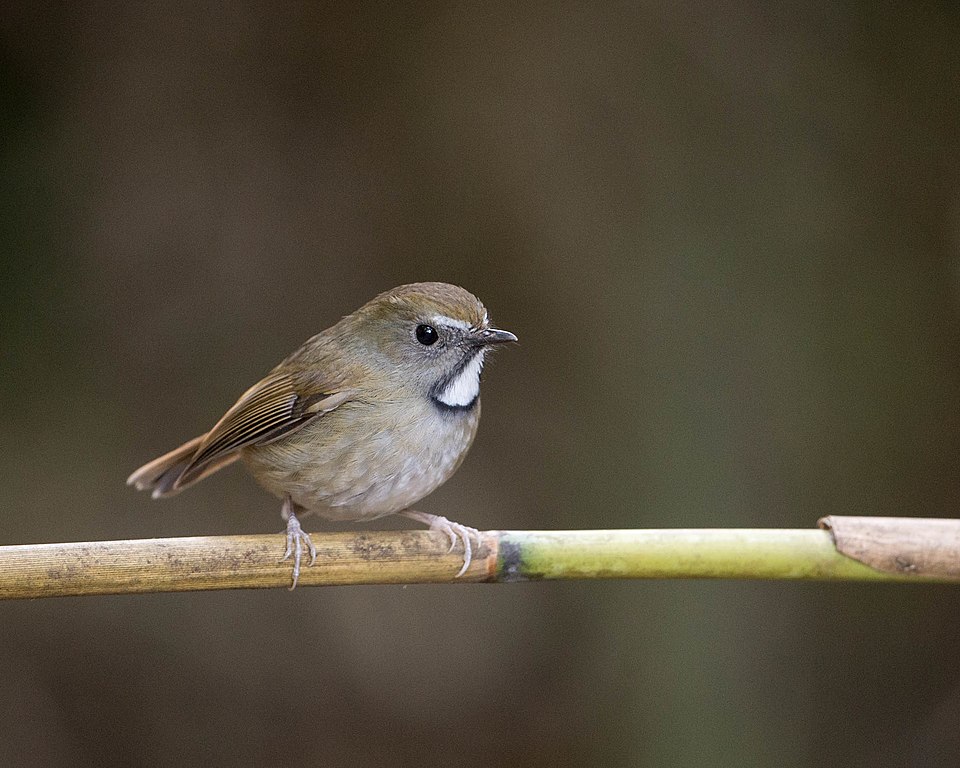
Saxicola merula
Saxicola merula
Order: Passeriformes / Family: Muscicapidae

Wikimedia Commons
About the Saxicola merula
The Saxicola merula, more commonly known as the Black Stonechat, is an intriguing member of the family Muscicapidae. This bird is a delight for many birdwatchers due to its striking black plumage and the rich array of vocalizations it produces. Saxicola merula thrives in a variety of habitats, from open grasslands to shrubby areas, and is often found in regions spanning Eastern Europe, into Central Asia, and parts of the Middle East. The Black Stonechat plays a significant role in its ecosystem, primarily as an insectivore, helping to control insect populations. Its presence is a marker of a healthy ecosystem, indicating balanced insect populations and appropriate habitat management. During the breeding season, this bird can be seen engaging in territorial displays, a behavior crucial for securing a breeding area and attracting a mate. The ecological role of Saxicola merula extends beyond insect control. It serves as prey for several larger bird species, thereby contributing to the food web. In seasonal behaviors, the Black Stonechat is partially migratory. Some populations move to warmer regions during the winter months while others remain resident year-round, particularly in milder climates. This adaptability in its migratory patterns allows it to exploit a range of environments and presents an interesting study in avian adaptability. The bird's significance is not only ecological but also cultural, as it is often featured in regional folklore and is a favored subject in birdwatching communities. Observing Saxicola merula can provide insights into the health and dynamics of the habitats it frequents, making it a valuable indicator species for conservationists and ecologists. As with many bird species, the Black Stonechat faces challenges due to habitat loss and climate change. Understanding its behaviors, distribution, and ecological needs is crucial for developing effective conservation strategies. Efforts to preserve its habitat, coupled with research on its migratory patterns and breeding habits, are essential for ensuring the survival of this captivating bird.
The Saxicola merula belongs to the family Muscicapidae, within the order Passeriformes. These birds typically live average 3-5 years with a max recorded of 7 years.
How to Identify a Saxicola merula
The Saxicola merula, or Black Stonechat, is easily identified by its glossy black plumage, a feature that makes it stand out in its natural habitat. Adult males exhibit a deep black coloration with a slight sheen, which can appear almost blue in certain lighting conditions. Their wings are also black but are fringed with white, creating a distinctive pattern that is visible during flight and while perched. Females, while also dark, tend to have a more muted brown-black tone, with less of the sheen seen in males. Juvenile birds are generally browner than adults, lacking the full black intensity and sheen, and they may have some streaking on their underparts. These differences make it possible to distinguish between adults and young birds, as well as between males and females. The Black Stonechat is often confused with similar species such as the European Stonechat or the African Stonechat. However, its darker overall plumage and the absence of bright chestnut or orange hues help differentiate it. In flight, Saxicola merula displays a fluttery silhouette with rapid wingbeats, and its tail is often cocked upwards when perched, a typical characteristic of the species. Observers will note its upright posture, often seen on low perches like fence posts or bush tops, from where it can survey its territory.
Having trouble telling birds apart? Upload a photo to our bird identification tool for an instant species match.
Saxicola merula Habitat and Range
Preferred Habitat
Saxicola merula favors open landscapes and can be frequently found in grasslands, shrublands, and agricultural fields. These habitats provide ample opportunities for foraging and nesting. The Black Stonechat is adaptable and also occupies areas with sparse vegetation, such as steppe regions and semi-arid zones. It is typically found at elevations ranging from sea level to about 2,000 meters, although it tends to prefer lower elevations when possible. In urban areas, the Black Stonechat can sometimes be spotted in parks and gardens, but it is more commonly associated with rural and semi-rural environments where its natural habitat is more prevalent. Seasonal shifts in habitat use may occur, especially during migration, when the bird may be found in more diverse environments as it moves through different regions. Despite its adaptability, the Black Stonechat requires habitats that provide adequate cover and food resources year-round.
Geographic Range
The range of Saxicola merula is quite extensive, covering parts of Eastern Europe, Central Asia, and the Middle East. The breeding range includes countries such as Turkey, Iran, and into parts of Kazakhstan and Russia. During the non-breeding season, some populations migrate southward, reaching as far as the Arabian Peninsula, while others remain in more temperate climates. Migration corridors are well-documented, with birds typically following routes that provide sufficient stopover sites for rest and feeding. Population densities vary across its range, with higher concentrations observed in regions where suitable habitats are abundant, such as the vast steppe regions of Central Asia. In countries like Iran and Turkey, the Black Stonechat is a common sight, whereas its presence becomes more sporadic towards the edges of its range. Understanding its distribution patterns helps in conservation planning and identifying key areas for habitat protection.
Want to know which birds visit your area? Browse our backyard birds by location guides for region-specific species lists.
What Does the Saxicola merula Eat?
The diet of Saxicola merula primarily consists of insects, reflecting its role as an insectivore. During the breeding season, it consumes a high number of caterpillars, beetles, and grasshoppers, which provide the necessary protein for raising young. In the winter months, when insect availability decreases, the Black Stonechat may supplement its diet with seeds and small fruits. Its foraging technique is typical of the stonechat genus, involving short flights from a perch to the ground to capture prey. This 'sit-and-wait' strategy is efficient and allows the bird to conserve energy while maintaining vigilance for predators. The Black Stonechat is known to forage throughout the day, although it is particularly active during morning and late afternoon when insect activity peaks. Prey size typically ranges from small to medium-sized insects, which the bird can easily manage with its slightly hooked bill.
Saxicola merula Behavior and Social Structure
The Black Stonechat is notably territorial, especially during the breeding season when males engage in song displays and aerial chases to defend their territory. These territories are crucial for nesting and foraging, and males will vigorously deter intruders. Courtship displays involve males singing from prominent perches, often accompanied by wing flicks and tail fanning to attract females. Saxicola merula typically exhibits solitary or paired behavior during the breeding season, but it may form small flocks during migration or in winter. The bird's response to predators is typically to retreat to dense cover or to employ distraction displays, thereby protecting vulnerable nest sites. Its daily activity patterns show a strong preference for early morning and late afternoon periods, coinciding with peak foraging times. The Black Stonechat's behavior varies with the seasons, reflecting changes in food availability and breeding conditions.
Saxicola merula Nesting and Reproduction
Saxicola merula builds cup-shaped nests, predominantly constructed from grass, leaves, and twigs, and lined with softer materials such as hair or feathers. Nests are usually situated close to the ground, often concealed within dense shrubs or tall grass, providing protection from predators and harsh weather. The typical clutch size ranges from 3 to 5 eggs, with females primarily responsible for incubation over a period of about 12 to 14 days. After hatching, both parents participate in feeding the chicks, which fledge approximately 14 to 16 days post-hatching. The Black Stonechat is capable of raising two broods per year under favorable conditions, although this can vary with environmental factors such as food availability and weather. Parental roles are well defined, with males primarily defending the territory and females focusing on incubation and initial chick care.
Saxicola merula Sounds and Vocalizations
The primary song of the Black Stonechat is a series of melodic phrases that vary in pitch and rhythm, often described as a rich, warbling tune. These songs are most frequently heard during the breeding season when males sing to establish territory and attract mates. In addition to its song, Saxicola merula produces a variety of call notes, including sharp, repetitive 'check' sounds used as contact calls between pairs or as alarm calls when predators are nearby. The dawn chorus features prominently in its vocal repertoire, with individuals joining in a collective display of sound that marks the start of the day. The quality of its song is often likened to that of other songbirds in the Muscicapidae family, characterized by clarity and complexity.
Interesting Facts About the Saxicola merula
- 1Saxicola merula can be observed performing a distinctive tail flicking behavior, which serves as a territorial display.
- 2During migration, the Black Stonechat can travel distances exceeding 1,000 kilometers, showcasing its impressive endurance.
- 3The Black Stonechat's nest is often lined with animal hair, providing additional insulation for the eggs and chicks.
- 4This species' vocalizations are studied for their complexity, offering insights into avian communication and song learning.
- 5In some cultures, the Black Stonechat is considered a symbol of good fortune, often associated with the arrival of spring.
- 6Research indicates that Saxicola merula can adjust its breeding timing in response to changing environmental conditions.
- 7The Black Stonechat is known to hybridize with closely related species, occasionally resulting in unique plumage variations.
Saxicola merula Conservation Status
The IUCN currently lists Saxicola merula as a species of Least Concern, with stable population trends across much of its range. However, habitat loss due to agricultural expansion and urban development poses ongoing threats. Conservation efforts focus on habitat preservation and management, particularly in regions where land-use changes have been most significant. Historical population changes have shown resilience, but continued monitoring is necessary to detect and respond to potential declines. Initiatives to protect critical breeding and wintering habitats are crucial for ensuring the species' long-term survival, along with efforts to mitigate the impacts of climate change on its migratory patterns.