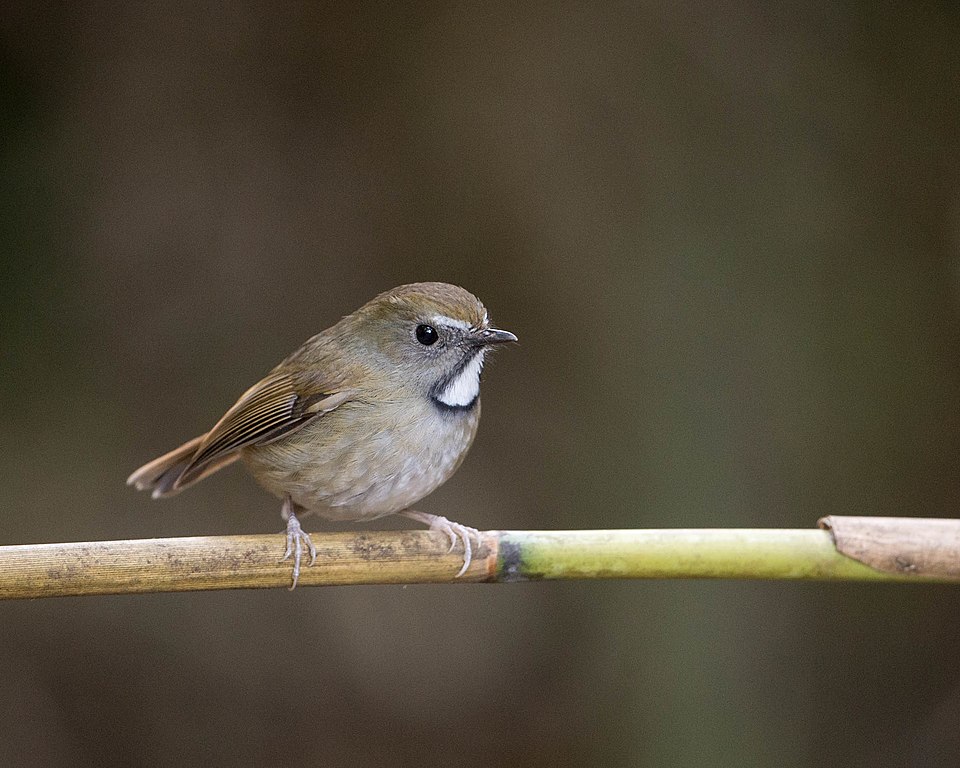
Saxicola spec
Saxicola spec
Order: Passeriformes / Family: Muscicapidae

Wikimedia Commons
About the Saxicola spec
The Saxicola spec, commonly referred to as the Stonechat or Whinchat depending on the region, belongs to the Muscicapidae family within the order Passeriformes. Noted for its vibrant plumage and distinctive vocalizations, this small passerine thrives in a variety of habitats, showcasing its adaptability. Found prominently across Europe, Asia, and parts of Africa, the Stonechat is a staple in open landscapes such as grasslands, heathlands, and scrubby areas. The bird's common name derives from its habit of perching on stones or rocks, an advantageous location for spotting prey and singing to attract mates.
The ecological significance of the Saxicola spec is substantial, particularly in grassland ecosystems where it plays a role in insect population control. Its diet primarily consists of insects, which it adeptly captures through aerial sallies or by gleaning from foliage. This dietary preference helps maintain a balanced ecosystem, reducing the prevalence of agricultural pests. Additionally, the Stonechat serves as a bioindicator, signaling environmental changes through shifts in its population dynamics and distribution patterns.
Seasonally, the Saxicola spec exhibits marked behavioral adaptations. During the breeding season, typically from April to August, the bird establishes territories and engages in elaborate courtship displays to secure mates. As a partial migrant, some populations undertake seasonal movements, driven by food availability and climatic conditions. In autumn and winter, the bird may relocate to lower altitudes or more southerly regions, seeking milder climates and abundant food sources. This seasonal mobility highlights the adaptability and resilience of the Saxicola spec in the face of changing environmental conditions.
The Saxicola spec belongs to the family Muscicapidae, within the order Passeriformes. These birds typically live Data not available..
How to Identify a Saxicola spec
Identifying the Saxicola spec involves observing several distinctive field marks. Adult males typically display a striking orange to rust-colored breast and flanks, contrasted by a black head and white throat, which is particularly noticeable during the breeding season. The back is a mottled brown, providing excellent camouflage against rocky or earthy backgrounds. Females, while similarly patterned, exhibit more muted tones with a paler overall appearance, aiding in nesting camouflage.
Juveniles resemble females but with a streakier appearance, especially on the breast, which gradually loses its streaking as the bird matures. This age-related difference aids in identifying younger birds during field observations. The Stonechat's flight silhouette is characterized by a short, rounded wing and a relatively long tail, which it often flicks while perching. This behavior, coupled with its habit of perching conspicuously on tall stems or stones, makes the Stonechat a prominent figure in open landscapes.
When comparing the Saxicola spec to similar species, such as the Common Redstart, note the latter's red tail and more vivid coloration. The Stonechat's rounder body shape and more subdued plumage set it apart from the more brightly colored Redstart. These identification cues are crucial for birdwatchers aiming to distinguish between similar species in the field.
Having trouble telling birds apart? Upload a photo to our bird identification tool for an instant species match.
Saxicola spec Habitat and Range
Preferred Habitat
The Saxicola spec favors open habitats rich in low vegetation, such as grasslands, heathlands, and agricultural fields. It thrives in regions ranging from sea level to alpine meadows, though it predominantly occupies elevations below 1500 meters. The bird's preference for areas with scattered shrubs and rocks allows it to hunt effectively while maintaining visibility for detecting predators and competitors.
Seasonal habitat shifts are common for the Saxicola spec. In breeding seasons, it occupies territories with abundant insect life and suitable nesting sites. During winter, the bird may move to milder coastal areas or lowland regions in search of warmer climates and reliable food sources. Rural landscapes, especially those with hedgerows and unplowed fields, provide ideal conditions for the Stonechat, though it can occasionally be found in urban parks and gardens where conditions mimic its natural preferences.
Geographic Range
The Saxicola spec's range spans a considerable geographical area, encompassing parts of Europe, Asia, and Africa. During the breeding season, it is widely distributed across Europe from the British Isles to Eastern Europe and into temperate Asia, including regions such as the Ural Mountains and western Siberia.
Wintering ranges extend into southern Europe, northern Africa, and parts of the Middle East, where milder climates offer refuge from harsh northern winters. Migration corridors are well-defined, with birds often following coastal routes or river valleys to reach their wintering grounds. Key population density hotspots include the Iberian Peninsula, the Mediterranean basin, and the Middle East, where suitable habitats provide ample winter sustenance.
While some populations are sedentary, residing year-round in the same region, others display partial migratory patterns, influenced by local environmental conditions and resource availability. This range flexibility underscores the Saxicola spec's adaptability and resilience across diverse climatic zones.
Want to know which birds visit your area? Browse our backyard birds by location guides for region-specific species lists.
What Does the Saxicola spec Eat?
The Saxicola spec primarily feeds on a diet rich in invertebrates, with insects forming the bulk of its intake. Beetles, ants, spiders, and caterpillars constitute significant proportions of its diet, especially during the breeding season when the demand for protein to support offspring is high. The bird employs a variety of foraging techniques, including sit-and-wait strategies from elevated perches and active ground foraging.
Seasonal dietary shifts occur as the availability of prey changes. During autumn and winter, when insect populations decline, the Stonechat supplements its diet with seeds and berries. This seasonal flexibility aids the bird in surviving adverse conditions and limited food availability.
Prey size is generally small, less than 1 cm in length, which the Stonechat captures with precision and agility. Its feeding schedule is diurnal, with peak activity during early morning and late afternoon, coinciding with periods of high insect activity. This efficient foraging behavior ensures the bird meets its energetic needs across varying environments.
Saxicola spec Behavior and Social Structure
The Saxicola spec exhibits a range of behaviors that illustrate its social and ecological roles. Its social structure is typically monogamous during the breeding season, with pairs forming strong territorial bonds. Males engage in conspicuous courtship displays to attract females, showcasing their plumage and vocal skills.
Territorial behavior is pronounced, with males actively defending their nesting areas from intruders. This territoriality ensures resource availability for raising young and maintaining pair bonds. In non-breeding seasons, the Stonechat may form loose flocks, particularly during migration or in winter foraging grounds.
Flocking provides safety in numbers, reducing individual predation risk. The bird's response to predators involves alarm calls and evasive maneuvers, often retreating to dense cover or engaging in distraction displays to protect nests. Daily activity patterns peak during dawn and dusk, aligning with favorable foraging conditions and predator avoidance strategies.
Saxicola spec Nesting and Reproduction
The Saxicola spec constructs its nest low to the ground, often concealed within dense vegetation or tucked among rocks. Nest materials include grass, leaves, and hair, forming a well-insulated cup-shaped structure. This choice of location offers protection from predators and harsh weather.
Clutch sizes typically range from 4 to 6 eggs, with an incubation period lasting approximately 11 to 14 days. Both parents participate in feeding the fledglings, which leave the nest around 13 to 16 days after hatching. The parental roles are shared, though females primarily undertake incubation duties while males guard the territory and supply food.
The Saxicola spec may produce up to two broods per year, depending on environmental conditions and resource availability. This reproductive strategy allows for population stability and resilience in fluctuating environments.
Saxicola spec Sounds and Vocalizations
The Saxicola spec is known for its melodious song, characterized by a series of varied, musical phrases often delivered from a prominent perch. The song's rhythm is lively, with a mixture of chirps and whistles that carry well across open landscapes. Pitch varies, providing a dynamic quality that is both distinctive and identifiable.
Call notes are sharp and metallic, often described as a 'tack-tack' sound, reminiscent of stones being struck together. These calls serve as contact signals and alarms, alerting conspecifics to potential threats. During the dawn chorus, the Stonechat's voice blends with those of other songbirds, contributing to the vibrant auditory tapestry of its habitat.
Alarm calls are more urgent and staccato, designed to deter predators and alert other birds to danger. These vocal behaviors play a crucial role in communication, territory defense, and mate attraction.
Interesting Facts About the Saxicola spec
- 1The Saxicola spec has a wingspan of approximately 21-24 cm, making it a compact and agile flyer.
- 2Stonechats are known to use their perching stones as vantage points to survey for both prey and predators.
- 3During courtship, male Stonechats perform aerial displays, fluttering with exaggerated wingbeats to attract females.
- 4The species name 'Saxicola' translates to 'rock-dweller,' reflective of its preference for rocky habitats.
- 5Stonechats can produce up to 12 different vocalizations, each with specific social or territorial functions.
- 6Migration patterns of the Saxicola spec have shifted northward over the past few decades due to climate change.
- 7Juvenile Stonechats undergo a molt in their first autumn, transitioning from streaky plumage to adult patterns.
Saxicola spec Conservation Status
Currently, the Saxicola spec holds a status of Least Concern on the IUCN Red List, with stable population trends across much of its range. However, regional declines occur due to habitat loss, particularly in agricultural areas where intensive farming practices reduce suitable nesting sites and foraging habitats. Conservation efforts focus on habitat restoration and protection, with emphasis on maintaining traditional agricultural landscapes that support diverse bird communities. Historical population changes have seen fluctuations correlated with land use changes and climatic factors. Continued monitoring and conservation initiatives aim to secure the Saxicola spec's place in its native ecosystems, ensuring it remains a vibrant part of the avian landscape.