
Scaly-naped Parrot
Amazona mercenaria
Order: Psittaciformes / Family: Psittacidae
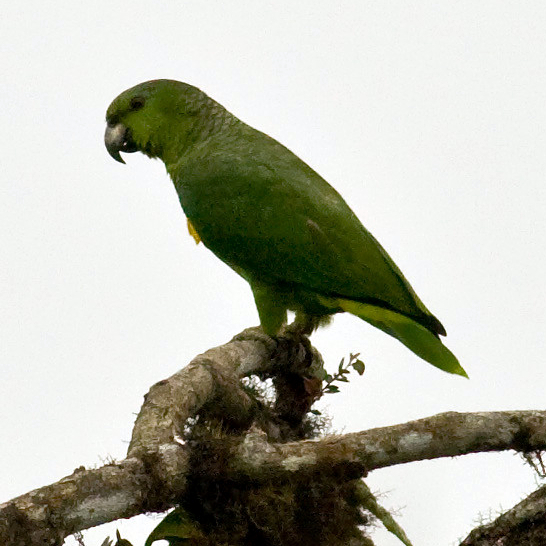
Wikimedia Commons
About the Scaly-naped Parrot
The Scaly-naped Parrot (Amazona mercenaria) is a striking member of the Psittacidae family, indigenous to the lush high-altitude forests of the Andes. This parrot exhibits a unique blend of vibrant green plumage with bluish tints on the nape, making it easily distinguishable. Known locally as the 'Loro de Nuca Escamada,' it plays a vital role in seed dispersal, contributing significantly to the ecological health of its native habitats. These parrots thrive in the montane cloud forests ranging from Venezuela through Colombia, Ecuador, Peru, and into Bolivia.
Living predominantly in the canopy, the Scaly-naped Parrot is an integral part of the forest's avian community. They not only help in propagating plant species but also serve as indicators of forest health due to their sensitivity to environmental changes. Their presence often signifies a well-preserved forest environment. Seasonal movements are evident as they may shift to lower elevations during harsh weather conditions, but they are primarily non-migratory. During the breeding season, they exhibit noticeable changes in behavior, becoming more territorial and vocal as they establish nesting sites.
The ecological role of the Scaly-naped Parrot extends to its interactions with other species. While primarily herbivorous, feeding on a variety of fruits, seeds, and nuts, their feeding activities create opportunities for other species within their ecosystem. Their beaks can crack open tough seed casings that other animals cannot, inadvertently providing food for other forest dwellers. This parrot's ability to adapt to different altitudes within its range highlights its ecological versatility and importance.
The Scaly-naped Parrot belongs to the family Psittacidae, within the order Psittaciformes. These birds typically live 25-30 years with a maximum recorded of 35 years.
How to Identify a Scaly-naped Parrot
The adult Scaly-naped Parrot presents a predominantly green plumage with a characteristic bluish nape, which gives this species its name. The bird's wings exhibit a striking combination of red and blue, becoming visible in flight. Juveniles resemble adults but have a less pronounced nape coloration and less vibrant wing markings.
Both male and female Scaly-naped Parrots look similar, although females may occasionally display slightly duller coloration. The parrot's robust build and medium size make it a formidable presence in its habitat. In flight, it presents a distinctive silhouette with broad wings and a short tail, its flight pattern is strong and direct.
When perched, the Scaly-naped Parrot often adopts an alert posture, with a slightly hunched back and a characteristic head tilt, enabling it to scan its surroundings. Potential confusion might arise with other Amazona species, but the unique nape pattern and vocalizations typically provide clear identification clues.
Having trouble telling birds apart? Upload a photo to our bird identification tool for an instant species match.
Scaly-naped Parrot Habitat and Range
Preferred Habitat
The Scaly-naped Parrot predominantly inhabits tropical and subtropical montane cloud forests typically found at elevations between 1,500 to 3,000 meters. These environments offer a rich diversity of plant life and a complex structure of canopy and understory, supporting the parrot's needs for food and nesting sites.
Seasonal habitat shifts occur, particularly during harsh weather, prompting some individuals to move to lower, more sheltered altitudes temporarily. Unlike many parrots, the Scaly-naped Parrot is rarely found in urban settings, preferring the remote and undisturbed forest interiors.
The species is a true forest dweller, rarely venturing into open areas. Its reliance on dense forest ecosystems makes it susceptible to habitat loss, although the bird's ability to adapt to varied forest types offers some resilience.
Geographic Range
The Scaly-naped Parrot's range extends across the northern Andes, spanning multiple countries including Venezuela, Colombia, Ecuador, Peru, and Bolivia. It is primarily found in montane forests, with populations concentrating in regions where suitable high-altitude habitats exist.
While not a migratory species, the Scaly-naped Parrot may undertake altitudinal movements within its range, especially in response to climatic variations. Colombia and Ecuador host some of the highest population densities, particularly in areas where pristine cloud forests remain.
Unlike many other parrot species, the Scaly-naped Parrot does not undertake long-distance migrations. Instead, it remains relatively stable within its preferred montane environments throughout the year.
Want to know which birds visit your area? Browse our backyard birds by location guides for region-specific species lists.
What Does the Scaly-naped Parrot Eat?
The diet of the Scaly-naped Parrot primarily consists of fruits, seeds, and nuts, with a particular preference for those from native montane forest trees and shrubs. This parrot exhibits a highly specialized foraging technique, using its strong beak to crack open hard seed shells, which many other species cannot.
Seasonal diet variations occur as different fruits and seeds become available. The bird's keen sense of taste and smell guides it to ripe fruits, ensuring a consistent food supply. During certain times of the year, especially when fruits are scarce, the parrot may expand its diet to include leaves and flowers.
The Scaly-naped Parrot typically forages in the early morning and late afternoon, taking advantage of cooler temperatures and lower predation risk. Its role as a seed disperser enhances forest regeneration, making it a key player in its ecosystem.
Scaly-naped Parrot Behavior and Social Structure
The Scaly-naped Parrot exhibits a complex social structure, often forming small flocks outside the breeding season. These flocks facilitate social interactions and provide safety in numbers against predators. Within these groups, parrots engage in mutual preening and vocal communication, reinforcing social bonds.
Territorial behavior becomes pronounced during the breeding season, with pairs defending their nesting sites vigorously against intruders. Courtship displays include synchronized flight patterns and mutual feeding, strengthening pair bonds.
These parrots are highly vocal, employing a range of calls to communicate. Daily activity patterns typically involve periods of active foraging interspersed with resting and socializing. In response to predators, the Scaly-naped Parrot relies on its strong flight capabilities and acute awareness to evade threats.
Scaly-naped Parrot Nesting and Reproduction
The Scaly-naped Parrot nests in tree cavities, a choice that offers protection against the elements and predators. These cavities are often found in large, mature trees, typically within the dense forest interior. Nest materials are minimal, with the parrot relying on the natural cavity structure.
A typical clutch consists of 2-3 eggs, with an incubation period lasting approximately 26-28 days. Both parents participate in feeding the chicks, which fledge after about 8-10 weeks. The extended post-fledging care ensures the young develop the skills necessary for survival.
Generally, the Scaly-naped Parrot produces one brood per year, although in favorable conditions, a second brood may be attempted. Parental roles are shared, with both partners contributing to the care and feeding of the offspring.
Scaly-naped Parrot Sounds and Vocalizations
The Scaly-naped Parrot's primary vocalization is a series of loud, harsh squawks, often delivered in rapid succession. These calls serve both to communicate with flock members and to assert territorial boundaries.
During the dawn chorus, the parrot's calls are most pronounced, forming a key component of the forest's morning soundscape. Alarm calls are sharper and more urgent, used to alert others of potential threats.
In addition to squawks, the parrot can produce softer, more melodious notes during mating rituals, showcasing its vocal versatility. Compared to many other parrot species, the Scaly-naped Parrot's vocalizations are less varied but serve essential communicative functions.
Interesting Facts About the Scaly-naped Parrot
- 1The Scaly-naped Parrot can recognize and respond to individual calls within its flock, demonstrating advanced social intelligence.
- 2During courtship, the Scaly-naped Parrot engages in mutual feeding, a behavior that strengthens pair bonds and ensures mate compatibility.
- 3Scaly-naped Parrots have a lifespan of up to 40 years in the wild, making them one of the longer-lived parrot species in their habitat.
- 4Unlike many parrots, the Scaly-naped Parrot does not exhibit significant sexual dimorphism, meaning males and females look alike.
- 5These parrots play a crucial role in the ecosystem by dispersing seeds of over 20 different plant species, aiding forest regeneration.
- 6Scaly-naped Parrots are known to alter their feeding habits based on seasonal availability, showcasing their adaptability to environmental changes.
- 7The parrot's distinctive nape feathers not only serve as an identification marker but also play a role in social interactions within flocks.
Scaly-naped Parrot Conservation Status
The Scaly-naped Parrot is currently listed as Least Concern by the IUCN, although its population trend is decreasing due to habitat loss. Deforestation poses the most significant threat, reducing available nesting sites and food sources. Conservation efforts focus on habitat protection, with some success in creating reserves in key regions. Public awareness campaigns aim to highlight the parrot's ecological importance, fostering local support for conservation initiatives. Historically, the Scaly-naped Parrot's population has fluctuated in response to habitat changes, but dedicated efforts have helped stabilize numbers in certain areas. Continued vigilance is necessary to prevent further declines.


